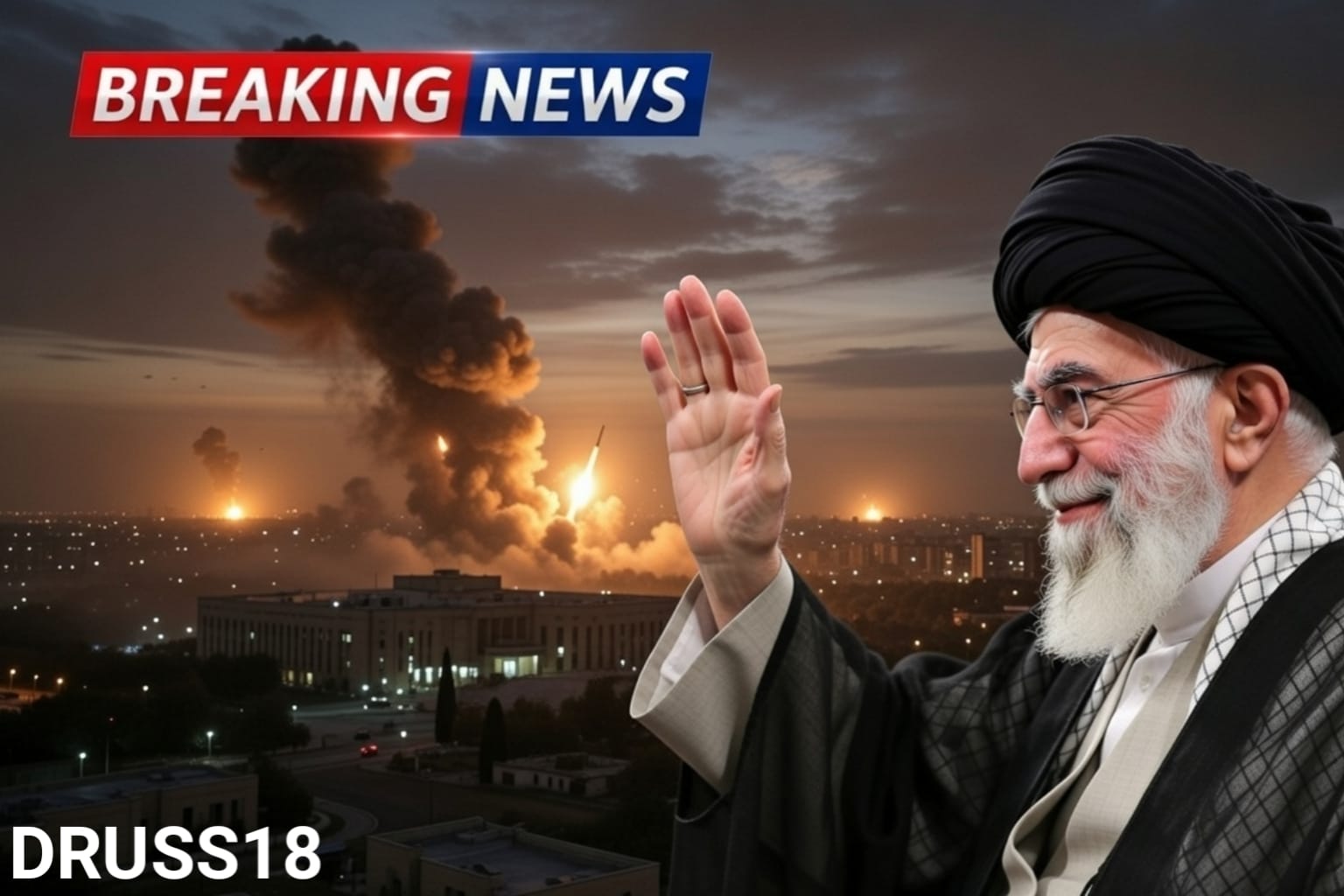
Ali Khamenei killed in U.S.-Israeli strikes, Iranian state media reported early Sunday, marking a major escalation in regional tensions.
The news of Ali Khamenei Confirmed Dead has sent shockwaves across the region.
With reports confirming Ali Khamenei Confirmed Dead, analysts are now reconsidering Iran’s future.
This event follows the shocking announcement of Ali Khamenei Confirmed Dead.
Iran’s state media reported early Sunday that Supreme Leader Ali Khamenei has been killed following large-scale missile and airstrikes carried out by the United States and Israel.
The announcement marks a dramatic escalation in tensions that have pushed the Middle East into open conflict and raised uncertainty about Iran’s political future.
Following the news of Ali Khamenei Confirmed Dead, reactions worldwide are pouring in.
Details surrounding Ali Khamenei Confirmed Dead are still emerging.
As news of Ali Khamenei Confirmed Dead spreads, speculation grows about potential successors.
The confirmation of Ali Khamenei Confirmed Dead has significant implications for the region.
Reports of Ali Khamenei Confirmed Dead have been met with both shock and disbelief.
The death of Ali Khamenei Confirmed Dead changes the landscape of Iranian politics.
In light of Ali Khamenei Confirmed Dead, the world watches closely.
With Ali Khamenei Confirmed Dead, key decisions lie ahead for Iran.
The announcement of Ali Khamenei Confirmed Dead brings uncertainty to the region.
Ali Khamenei Confirmed Dead: The Impact
The confirmation came hours after former U.S. President Donald Trump posted on Truth Social that Khamenei was dead. In his message, Trump said the Iranian leader had been tracked through advanced intelligence systems and described the operation as closely coordinated with Israel.
Khamenei, who had led Iran since 1989, had not appeared publicly since the strikes began. Satellite images circulating after the first wave of attacks showed extensive damage to a secured compound believed to be linked to the supreme leader.
Ali Khamenei Confirmed Dead marks a crucial moment in Iranian history.
Israeli Prime Minister Benjamin Netanyahu said there were “many signs” indicating Khamenei was no longer alive. Israeli officials later told reporters that his body had been recovered.
Iranian outlets also reported that Khamenei’s daughter, son-in-law, and granddaughter were killed in the same strikes. The semi-official Fars news agency said it had confirmed the deaths through sources close to the leader’s household.
A Major Shift in Iran’s Leadership
Khamenei was the most powerful political and religious authority in Iran. As supreme leader, he had final say over the military, judiciary, and state broadcasting, as well as significant influence over foreign policy and nuclear strategy.
Under Iran’s constitution, the Assembly of Experts — a clerical body — is responsible for selecting a new supreme leader. However, analysts have long noted the growing influence of the Islamic Revolutionary Guard Corps (IRGC), which could play a central role in shaping the country’s direction during any leadership transition.
The death of a sitting supreme leader during an active military conflict introduces deep uncertainty. Leadership change in Iran has historically been tightly managed. This situation is unfolding amid direct hostilities with two major powers.
Widening Military Confrontation
The U.S. and Israel began their coordinated operation Saturday morning with waves of airstrikes targeting missile facilities, air defense systems, and sites linked to Iran’s nuclear and ballistic missile programs.
U.S. Central Command said Sunday that it was continuing operations and described its actions as swift and decisive. Israeli officials indicated that additional strikes would focus on individuals and facilities connected to Iran’s nuclear development efforts.
Iran’s Revolutionary Guards responded with missile and drone attacks aimed at U.S. military positions and Israeli locations. Targets reportedly included American facilities in the Gulf region, as well as sites in Bahrain and the United Arab Emirates. U.S. officials said air defense systems intercepted a large number of incoming projectiles and that no American casualties had been reported.
Iranian authorities reported that at least 201 people were killed and more than 700 injured in the initial strikes, including dozens of children at a school. These casualty figures have not been independently verified.
Why This Conflict Matters
The fighting carries consequences far beyond the battlefield. Iran is a major regional power and a key player in global energy markets. Any prolonged disruption could affect oil shipments through the Strait of Hormuz, a critical route for international trade.
Higher oil prices could quickly translate into increased fuel costs for consumers worldwide, including in the United States. Businesses that rely on shipping and manufacturing may also face higher expenses if instability continues.
For Americans living or working in the region, security concerns are likely to rise. Governments across the Middle East may strengthen military readiness as the situation evolves.
What Happens Next
U.S. officials have said the objective of the campaign is to neutralize what they describe as an immediate missile threat and prevent Iran from advancing toward nuclear weapons capability. Iran has denied pursuing nuclear arms, maintaining that its program is for civilian energy purposes.
With Iran’s top leader now reported dead, attention turns to how the country’s political system will respond. A rapid appointment of a successor could stabilize internal control, but ongoing military exchanges make the outcome uncertain.
Diplomatic channels appear limited at this stage. Regional governments and international organizations are likely to call for restraint in the coming days.
Whether this confrontation expands further or shifts toward negotiation will depend largely on how Tehran’s remaining leadership and Washington choose to proceed.
- This report is based on information widely covered across international media platforms. The editorial team at Druss18 has reviewed publicly available reports and presented an independent analysis to provide readers with a clear and contextual understanding of the development.
- Thank you for staying with Druss18 News.