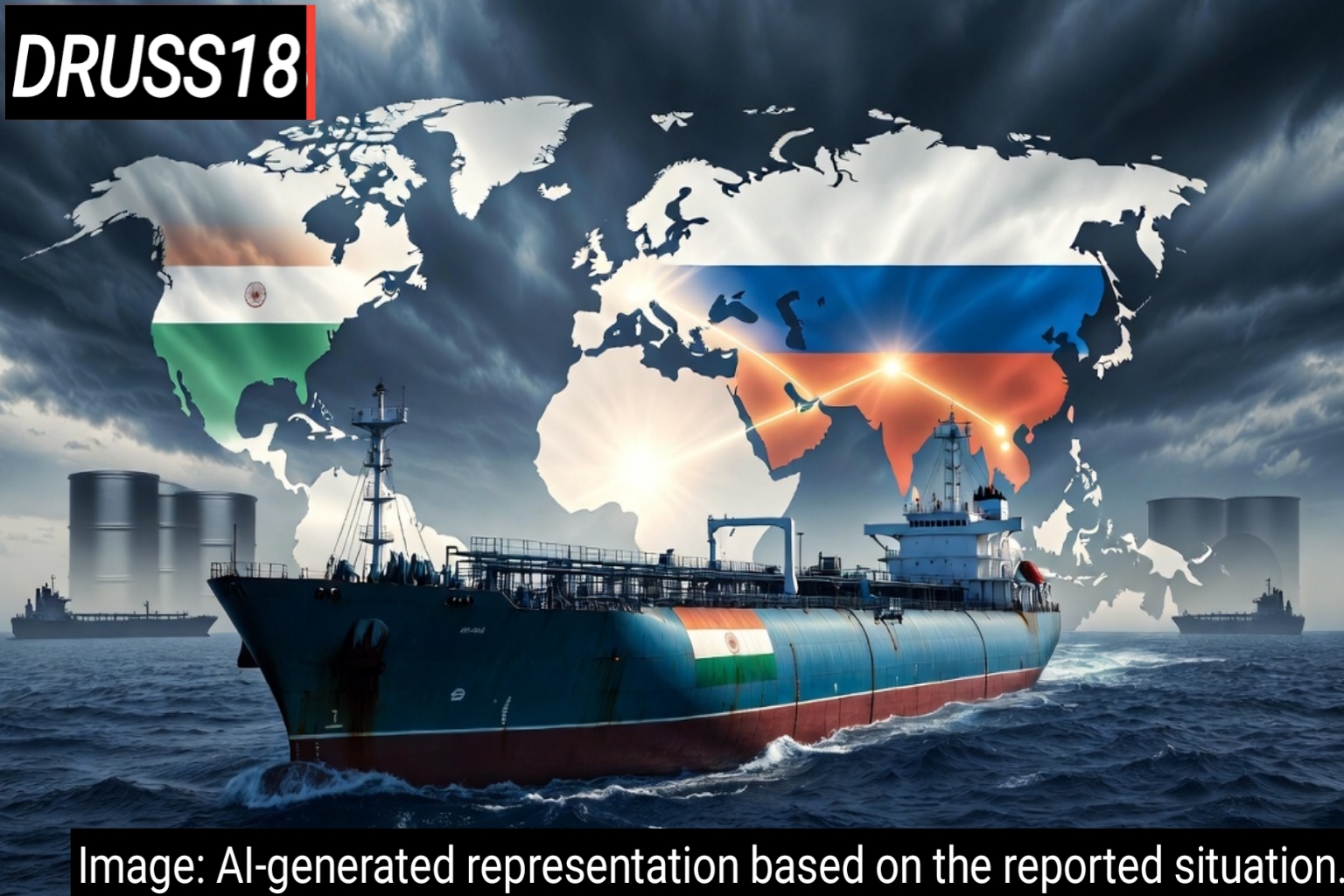
US Grants India Temporary Waiver to Buy Russian Oil Amid Global Supply Crisis
he United States has issued a short-term waiver that will allow Indian companies to continue importing Russian oil for a limited period. The decision comes as tensions and conflict in the Persian Gulf threaten global energy supply routes, creating uncertainty in oil markets.
Officials say the measure is intended to prevent sudden disruptions to global oil supply while addressing cargo shipments that are already in transit.
Temporary License for Russian Oil Cargoes
According to the U.S. Treasury Department, the waiver allows transactions involving Russian crude oil and petroleum products that were loaded onto tankers before March 5. The shipments must be delivered to India and purchased by an Indian company to qualify under the license.
The authorization is temporary and will expire on April 4 at 12:01 a.m. Washington time.
U.S. Treasury Secretary Scott Bessent said the short-term waiver is designed to prevent supply shocks in global oil markets. He noted that the measure mainly applies to cargoes already at sea and therefore is unlikely to generate significant new revenue for the Russian government.
Officials described the move as a practical step to keep oil moving through the global market while broader geopolitical tensions continue.
Oil Supply Disruptions in the Middle East
Energy markets have been under pressure due to escalating conflict in the Persian Gulf, which has disrupted shipping routes and slowed the movement of oil from major producers in the region.
Several key suppliers to India—including Iraq, Saudi Arabia, and the United Arab Emirates—are facing difficulties exporting crude because of disruptions around the Strait of Hormuz, a critical passage for global oil shipments.
The strait normally handles a significant portion of the world’s oil trade. With shipping traffic reduced, millions of barrels of crude supply have been temporarily blocked from reaching global markets.
Industry data shows that roughly 11 million barrels of Russian crude are currently sitting on tankers across Asian waters. Around 70 percent of those ships are located near the Chinese coastline and the Singapore Strait, while additional vessels carrying Russian oil are still on the way.
Why Russian Oil Matters for India
India imports roughly 5 million barrels of crude oil each day to meet domestic demand. The country relies heavily on foreign suppliers to keep its refineries operating and to maintain fuel supplies for transportation, industry, and households.
Russian oil became a larger part of India’s energy mix after the start of the Ukraine war in 2022, when Western sanctions forced Moscow to sell crude at discounted prices. Indian refiners took advantage of those lower prices to reduce import costs.
However, political pressure from Washington in recent months led India to scale back purchases from Russia. At one point, the U.S. imposed tariffs on Indian goods and introduced sanctions targeting major Russian energy producers.
A trade agreement reached last month eased some of those tensions, and Indian imports of Russian oil had remained relatively limited since then.
In February, Russian crude accounted for about one-fifth of India’s total oil imports, according to market data.
Short-Term Relief for Indian Refineries
The waiver may help Indian refineries stabilize operations in the short term, particularly as supply disruptions from the Middle East continue.
Energy analysts say access to Russian cargoes already on the water could allow refiners to secure additional crude quickly and prevent shortages in refinery operations.
Some refiners have already been feeling the strain. Mangalore Refinery and Petrochemicals Ltd. has reportedly halted exports of refined oil products and shut down one of its crude processing units due to limited crude supplies.
Government officials and energy companies in India have also been exploring contingency plans to manage potential shortages, including increasing purchases from alternative suppliers and seeking diplomatic solutions.
Limited Impact on Global Oil Prices
Despite the temporary relief, energy analysts say the waiver is unlikely to significantly change the broader outlook for global oil markets.
If disruptions in the Persian Gulf continue, the loss of supply could reach tens of millions of barrels per day, far exceeding the amount of Russian crude currently stranded at sea.
Market strategists say oil prices are likely to remain sensitive to developments around the Strait of Hormuz. The reopening of the route would be the most effective way to stabilize supply and reduce price pressures.
In addition, the waiver only addresses crude shipments already loaded onto tankers. It does not guarantee continued trade between India and Russia beyond the short authorization period.
What Could Happen Next
The decision highlights the difficult balance governments face between enforcing sanctions and preventing global energy shortages.
For India, the temporary waiver provides time to secure additional fuel supplies and keep refineries operating while the geopolitical situation evolves.
In the coming weeks, markets will closely watch whether tensions in the Persian Gulf ease and whether shipping through the Strait of Hormuz resumes at normal levels.
If the disruption continues, governments and energy companies may need to consider further measures to maintain global oil supply and protect domestic fuel markets.
- This report is based on information widely covered across international media platforms. The editorial team at Druss18 has reviewed publicly available reports and presented an independent analysis to provide readers with a clear and contextual understanding of the development.