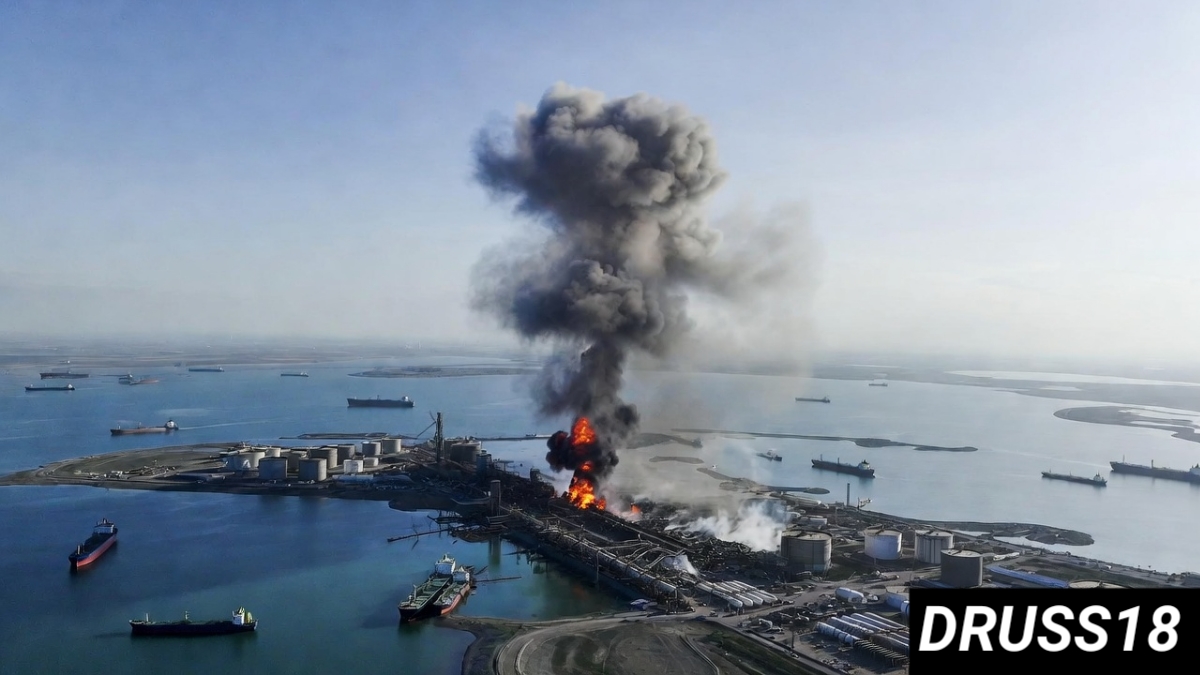
US Strikes Iranian Island Base as American forces targeted military facilities on Kharg Island, a key location linked to Iran’s oil export network.
The United States carried out military strikes on Iran’s Kharg Island, a location closely tied to the country’s oil exports, as tensions between Washington and Tehran continue to escalate. President Donald Trump said the operation targeted military installations and warned that Iran’s oil infrastructure could be attacked if shipping in the Strait of Hormuz remains threatened.
The strike comes during a broader regional conflict involving Iran, Israel, and several Gulf states, raising concerns about energy supplies and stability in the Middle East.
US Targets Military Sites on Kharg Island
According to U.S. officials, American forces struck several military targets on Kharg Island on Friday. The island hosts Iran’s main oil export terminal and is considered a key part of the country’s energy network.
Trump said the operation destroyed military facilities but did not hit oil infrastructure. In a social media statement, he warned that the United States could reconsider that decision if Iran or its allies continue disrupting shipping routes through the Strait of Hormuz.
Iranian authorities had earlier warned that attacks on the islands along its southern coast could trigger stronger retaliation. The islands are strategically important because they support Iran’s oil industry and naval operations in the Persian Gulf.
Iran’s semiofficial Fars news agency reported that the strikes caused several explosions on the island but said the oil facilities themselves were not damaged.
Additional US Forces Head to the Middle East
The United States is also reinforcing its military presence in the region. A U.S. official said about 2,500 additional Marines and an amphibious assault ship are being deployed to the Middle East.
The deployment includes elements of the 31st Marine Expeditionary Unit and the amphibious assault ship USS Tripoli. These units are typically used for rapid-response missions such as evacuating civilians, protecting embassies, or providing disaster relief.
Officials said the move does not necessarily indicate that a ground invasion is planned. However, it increases the number of U.S. forces positioned near the conflict zone.
The ships carrying the Marines were previously operating in the Pacific. Satellite images showed the USS Tripoli sailing near Taiwan earlier this week, meaning it could take several days before it reaches the waters near Iran.
Strait of Hormuz Tensions Raise Energy Concerns
The conflict has also focused attention on the Strait of Hormuz, one of the world’s most critical shipping routes for oil.
Roughly one-fifth of globally traded oil passes through the narrow waterway connecting the Persian Gulf to international markets. Iranian military actions in the area have disrupted shipping and raised fears of supply interruptions.
Energy analysts warn that prolonged instability in the strait could push global oil prices higher, affecting transportation costs, consumer prices, and businesses around the world.
Despite these concerns, U.S. Defense Secretary Pete Hegseth said the United States is managing the situation and believes the strait will remain open.
Iran Threatens Regional Energy Targets
Iran’s military leadership warned that any attack on the country’s oil facilities would lead to retaliation against energy infrastructure connected to the United States.
Ebrahim Zolfaghari, spokesperson for Iran’s Khatam al-Anbiya Central Headquarters, said the military would target oil and energy facilities across the region that involve American companies or cooperation with Washington.
Iran’s joint military command also accused the United Arab Emirates of allowing U.S. forces to use its ports and facilities to launch attacks. Officials warned that cities in the UAE could become targets if the conflict widens.
No evidence was provided to support the claim.
Missile Strike Hits Area Inside US Embassy Compound
In Iraq, a missile landed inside the compound of the U.S. Embassy in Baghdad, according to Iraqi security officials.
Footage showed smoke rising from the area after the strike, which reportedly hit a helipad inside the large diplomatic complex.
The embassy compound has been repeatedly targeted in the past by rockets and drones launched by Iran-aligned militia groups operating in Iraq. There was no immediate statement from U.S. embassy officials regarding casualties or damage.
The embassy recently renewed its highest security alert level for Iraq, warning that U.S. citizens and facilities remain potential targets for attacks.
Thousands of Targets Hit Since Conflict Began
Israel and the United States have both intensified operations against Iranian military infrastructure.
Israeli officials said their air force carried out another round of strikes inside Iran, hitting missile launch systems, air defenses, and weapons production sites. More than 200 targets were reportedly attacked within a 24-hour period.
Meanwhile, U.S. Defense Secretary Hegseth said American forces have struck more than 15,000 targets in Iran since the conflict began, averaging over 1,000 strikes per day.
The growing number of military actions highlights the scale of the confrontation and the risk that it could expand further across the region.
What Could Happen Next
With new troop deployments, continued airstrikes, and threats targeting energy infrastructure, the situation in the Persian Gulf remains highly unstable.
If attacks spread to oil facilities or shipping routes in the Strait of Hormuz, the conflict could have wider economic consequences, including disruptions to global energy supplies and higher fuel costs worldwide.
Diplomatic efforts to reduce tensions have so far made little progress, leaving the region on alert as both sides continue military operations.