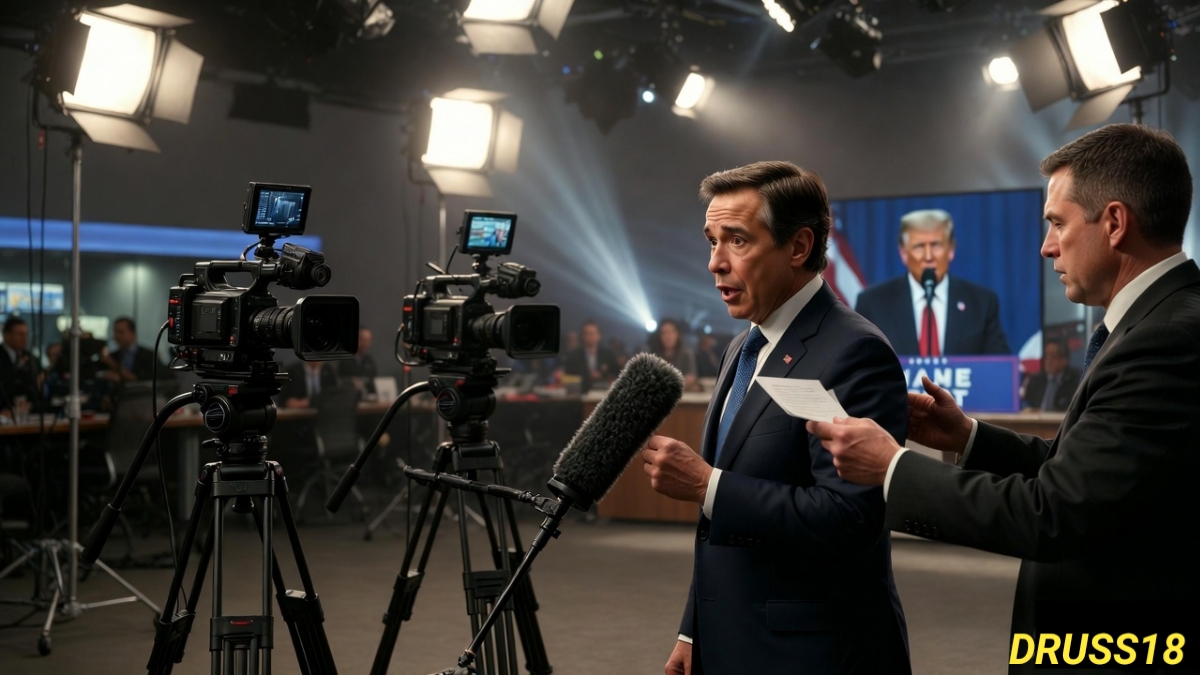
President Wants You”: Trump Suddenly Summons Treasury Secretary During Live InterviewA live television interview involving the U.S. Treasury secretary took an unexpected turn when the official was abruptly called away after receiving a message that former President Donald Trump wanted to speak with him immediately.
The moment, which unfolded during a broadcast discussion about economic policy, quickly drew attention in Washington and across financial circles, highlighting the continuing influence Trump maintains within Republican politics and policy debates.
The interruption occurred while the Treasury secretary was answering questions about inflation, government spending, and the outlook for the U.S. economy. During the exchange, an aide approached and delivered a message stating that “the president wants you,” referring to Trump. The official briefly paused the interview, acknowledged the request, and indicated he would need to step away.
The incident quickly spread across social media and political commentary programs, prompting discussion about the unusual nature of a high-level government official being summoned during a live broadcast.
An Unexpected Moment During a Policy Discussion
The interview had been focused largely on the state of the U.S. economy, including questions about interest rates, federal debt, and efforts to manage inflation pressures that have affected households and businesses over the past several years.
As the conversation progressed, the Treasury secretary was explaining how economic policies could influence consumer prices and employment when the interruption occurred. Viewers saw the official briefly listen to the aide before responding that he needed to leave to take the call.
Moments like this are rare during high-profile government interviews, where officials typically remain for the entire segment. Because the interruption happened live on air, it immediately became a widely discussed political moment.
Trump’s Continued Role in Republican Politics
Although Trump is not currently serving as president, he remains a central figure in American political debate. His influence within the Republican Party has remained strong, particularly as the country moves toward another election cycle.
Many Republican lawmakers and officials continue to align themselves with his policy positions and political messaging. This means that communication between Trump and government officials or political allies often carries significant political weight.
The request delivered during the broadcast reflected that ongoing dynamic. Political analysts noted that even informal contact from Trump can attract attention because of his ability to shape public conversation and influence party strategy.
Why the Treasury Secretary’s Role Matters
The Treasury secretary holds one of the most important economic policy positions in the United States government. The department oversees federal finances, manages government debt, supervises financial regulations, and works closely with the Federal Reserve and international financial institutions.
Because of this role, comments from the Treasury secretary can directly influence financial markets, investor confidence, and economic expectations.
A sudden interruption during a live interview therefore carries broader significance. Investors, policymakers, and economists closely watch such appearances because they can provide clues about future economic decisions or government priorities.
Even a brief pause in a discussion can generate speculation about whether new policy developments or urgent matters are emerging behind the scenes.
Public Reaction and Political Discussion
Clips of the moment circulated widely online, drawing a mix of curiosity and criticism from political observers.
Some commentators viewed the interruption as an unusual example of political influence reaching into a live government discussion. Others described it simply as a scheduling issue or routine communication that happened to occur during a televised interview.
Supporters of Trump pointed to the moment as evidence of his continuing importance in shaping political conversations. Critics, however, questioned whether it was appropriate for a government official to leave an interview to respond to a political figure outside the current administration.
The debate reflects the highly polarized nature of American politics, where even brief moments can quickly become symbols in larger political arguments.
Broader Context: Media, Politics, and Public Communication
The incident also highlights how modern political communication unfolds in real time. Government officials frequently appear on television and digital media platforms to explain policy decisions and answer questions about economic conditions.
Because these appearances are broadcast live, unexpected moments—whether interruptions, unscripted comments, or technical issues—can immediately reach millions of viewers.
Such moments often take on a life of their own online, spreading rapidly through social media clips and commentary. What might otherwise be a minor scheduling matter can quickly become a widely discussed political story.
In recent years, these live exchanges have become an important part of how governments communicate policy and how the public evaluates leaders.
What Could Happen Next
It remains unclear what prompted the call that led to the interruption or what topic was discussed afterward. Neither Trump nor the Treasury Department immediately provided details about the conversation.
However, the episode has already become another example of how closely politics, media, and economic policy intersect in the United States.
As the political environment intensifies ahead of future elections, moments like this may continue to attract attention. High-level officials are increasingly operating in a landscape where public communication happens instantly and is scrutinized by both political supporters and critics.
For viewers and voters, the incident serves as a reminder that even routine interviews about economic policy can suddenly intersect with the broader currents of national politics—and when they do, the ripple effects can spread quickly across the public conversation.