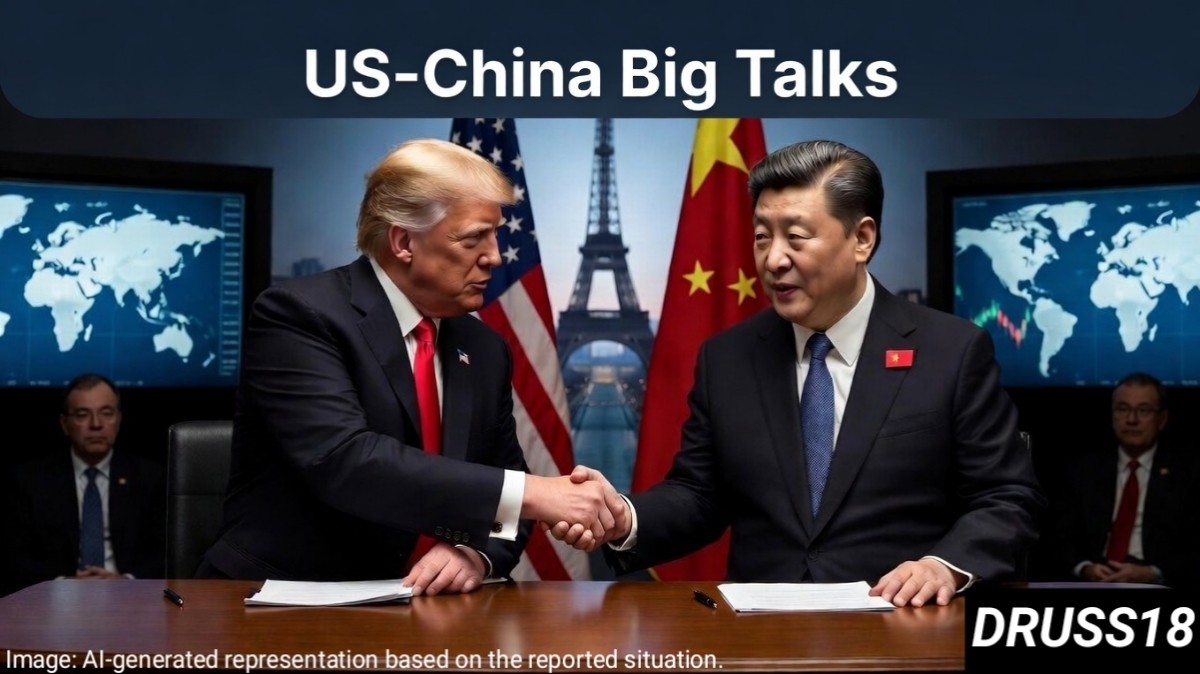
Trump-Xi Summit Closer? US and China Start High-Stakes Talks in Paris Senior officials from the United States and China have opened new trade negotiations in Paris, marking a fresh attempt to stabilize the relationship between the world’s two largest economies. The talks are widely seen as an important step toward a possible meeting between Donald Trump and Xi Jinping, a summit that could influence global trade, technology supply chains, and financial markets.
Diplomats from both countries arrived in the French capital this week for high-level discussions aimed at addressing long-running disputes over tariffs, market access, and economic security. While no immediate agreements are expected, officials say the goal is to reduce tensions and create a pathway for direct talks between the two leaders in the coming months.
Why the Paris Talks Matter
The negotiations in Paris come at a time when trade relations between the United States and China remain strained after years of tariffs, restrictions on technology exports, and political disagreements. Since the late 2010s, both countries have imposed various trade measures against each other, affecting industries ranging from semiconductors and electronics to agriculture and energy.
By holding talks in a neutral European location, diplomats hope to create a more constructive environment for dialogue. The choice of Paris also highlights the global importance of the discussions, as many economies depend heavily on stable trade relations between Washington and Beijing.
Officials familiar with the meetings say the focus is on rebuilding trust and exploring areas where cooperation may still be possible, including supply chain stability and economic transparency.
Key Issues on the Negotiating Table
Several major issues are expected to dominate the discussions. One of the most significant is the long-running dispute over tariffs placed on hundreds of billions of dollars’ worth of goods. Businesses in both countries have argued that these tariffs have increased costs and disrupted global supply networks.
Another critical topic is technology trade. The United States has introduced restrictions on certain advanced technologies, particularly in sectors like semiconductors and artificial intelligence, citing national security concerns. China, meanwhile, has pushed back against these measures and called for fewer limitations on trade and investment.
Market access is also part of the conversation. American companies have long sought greater access to Chinese markets, while Chinese firms have raised concerns about regulatory barriers in the United States.
A Possible Trump-Xi Summit
The Paris negotiations are widely viewed as groundwork for a potential meeting between Donald Trump and Xi Jinping later this year. Such a summit could play a crucial role in determining whether tensions between the two powers escalate or begin to ease.
Past meetings between the two leaders have often led to temporary pauses in trade disputes or announcements of new negotiation frameworks. Diplomats say a successful round of talks in Paris could help rebuild enough trust to allow for a high-level summit focused on broader economic cooperation.
If a meeting is confirmed, it would likely address not only trade issues but also wider geopolitical concerns, including global supply chains and economic stability.
Impact on Businesses and Global Markets
The outcome of these talks could have significant implications for businesses and consumers worldwide. Over the past decade, trade tensions between the United States and China have influenced prices of electronics, manufacturing components, and agricultural goods.
Companies that rely on international supply chains have often faced uncertainty as tariffs and regulations change. Even small developments in negotiations can affect stock markets, commodity prices, and investor confidence.
For ordinary consumers, the results could eventually influence the price of everyday products such as smartphones, household electronics, and vehicles that depend on globally sourced parts.
European governments are also watching the negotiations closely. As major trading partners with both Washington and Beijing, many countries in Europe hope the talks will lead to a more predictable global trading environment.
What Could Happen Next
The Paris meetings are expected to continue through several rounds of technical discussions and policy consultations. While a major breakthrough is unlikely in the early stages, progress on smaller issues could help build momentum for more comprehensive agreements later.
If negotiators manage to narrow key differences, preparations for a Trump-Xi summit could accelerate in the coming months. Such a meeting would likely become a defining moment in the future direction of US-China economic relations.
For now, the talks in Paris represent a cautious but important step toward dialogue between two economic superpowers whose decisions influence global trade, markets, and political stability. Whether the discussions lead to lasting progress or simply another phase of negotiations will depend on the willingness of both sides to find common ground in a complex and often competitive relationship.