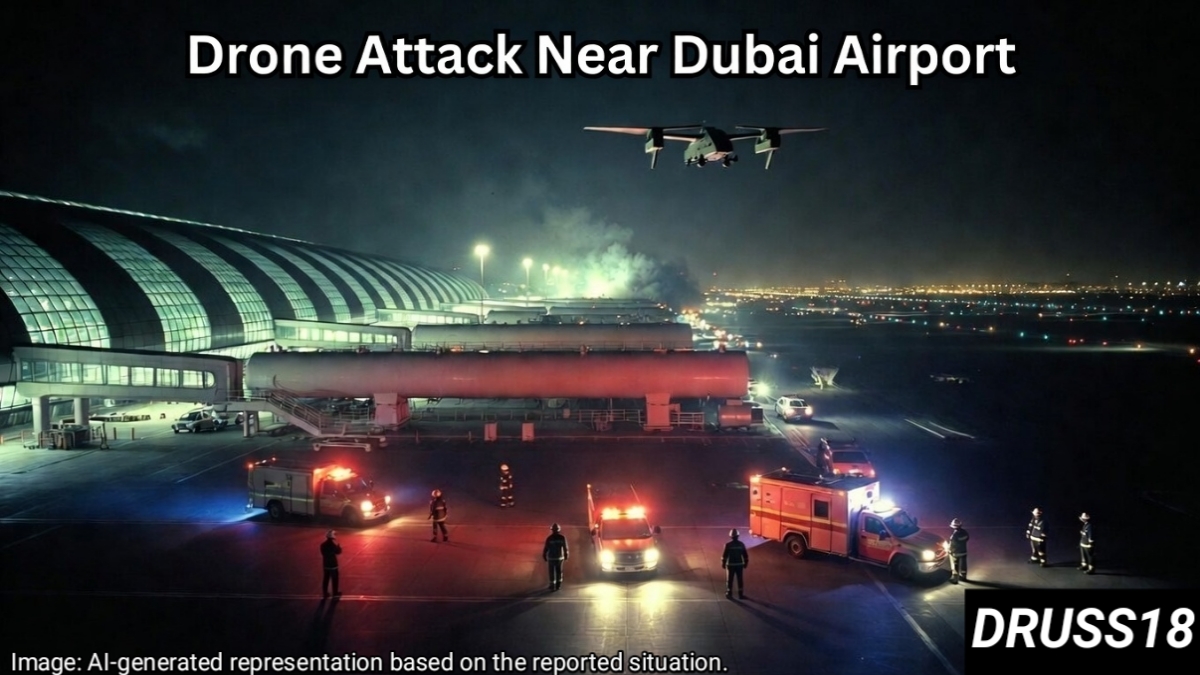
Drone Attack Near Dubai Airport Triggers Fire, Flights Suspended” A fire that broke out near Dubai International Airport after a drone strike was brought under control on Monday, according to local authorities. The incident forced a temporary suspension of flights and led to traffic restrictions around the airport area, though officials reported no injuries.
The situation added to growing concerns about aviation safety across the Middle East as regional tensions continue to disrupt air travel and critical infrastructure.
Drone Incident Triggers Fire Near Airport
Authorities said the fire started after a drone struck an area close to Dubai International Airport, one of the world’s busiest travel hubs. The impact reportedly affected a fuel tank in the vicinity of the airport, prompting emergency crews to respond quickly to contain the blaze.
Officials confirmed that firefighters were able to bring the fire under control within a short period. Despite the proximity to the airport, no casualties were reported.
The incident prompted authorities to halt flight operations temporarily while safety checks were carried out. Airport access roads and tunnels were also closed for a short time as emergency teams worked in the area.
Flights Suspended and Diverted
Air travel was briefly disrupted as airlines adjusted schedules in response to the incident. Some flights were diverted to nearby facilities, including Al Maktoum International Airport, which serves as an alternative aviation hub for the city.
Airlines also paused certain operations involving Dubai while authorities assessed the situation. Officials have not yet confirmed exactly when all flight operations will fully return to normal.
Dubai International Airport handles tens of millions of passengers each year and serves as a major connection point between Asia, Europe, and Africa. Even short disruptions can affect travelers worldwide and force airlines to reroute aircraft.
Third Incident Since Regional Conflict Escalated
Monday’s event marks the third reported incident near Dubai’s airport since regional tensions intensified earlier this year. The attacks began after Iran launched missile and drone strikes across several Gulf nations on February 28.
Iran has said the strikes are aimed at U.S. military interests in the region. However, several incidents have occurred near civilian infrastructure, including airports and other public facilities.
Earlier in March, two drones reportedly fell near Dubai International Airport. The airport also experienced damage during an earlier overnight attack at the start of the broader regional escalation.
Gulf Region Facing Ongoing Drone and Missile Threats
Gulf Arab states have experienced more than 2,000 missile and drone incidents since the end of February. Targets have included military installations and diplomatic missions connected to the United States, but attacks have also affected commercial facilities and vital economic infrastructure.
Countries such as the United Arab Emirates, Iraq, Jordan, and Turkey host U.S. military bases, which analysts say increases the risk of being drawn into wider regional tensions.
In addition to military sites, strikes have affected oil infrastructure, ports, hotels, residential buildings, and other civilian locations across the Gulf.
Regional Tensions Impact Aviation and Energy Markets
The ongoing conflict has created significant disruptions for the global aviation industry. Large sections of Middle Eastern airspace have been closed or restricted as airlines attempt to avoid areas at risk of missile or drone activity.
Airlines across Europe, Asia, and North America have already canceled or rerouted numerous flights passing through the region. The uncertainty has also contributed to rising fuel prices, adding financial pressure on carriers and increasing travel costs for passengers.
For travelers, the situation has meant sudden schedule changes, longer flight routes, and delays as airlines adjust operations to maintain safety.
What Could Happen Next
Authorities in Dubai continue to monitor the situation around the airport and surrounding infrastructure. Officials have not indicated whether additional security measures will be introduced, but aviation authorities across the region remain on high alert.
With tensions between Iran, the United States, and Israel continuing to influence security conditions in the Gulf, further disruptions to travel and regional infrastructure remain possible.
Airlines and governments are expected to keep adjusting flight routes and safety protocols as the situation develops.