📝 Summary
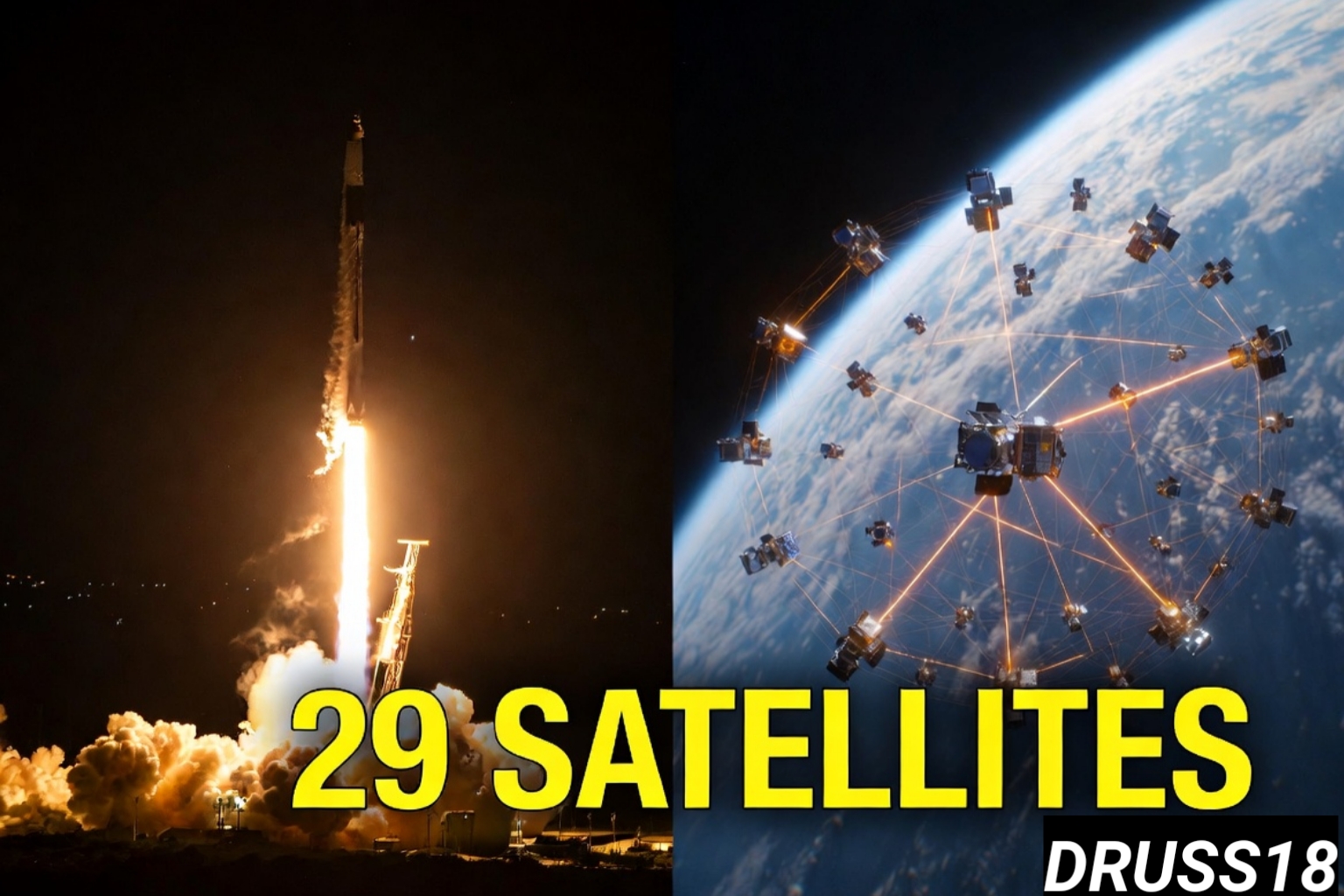
- SpaceX has launched 29 Starlink satellites aboard a Falcon 9 rocket from Florida, expanding its global internet network.
- The mission highlights intensifying competition in satellite-based connectivity and growing strategic control over space infrastructure.
- The expansion could impact global communications, defense systems, and the future of internet access worldwide.
Elon Musk’s SpaceX Fires 29 Satellites in Rapid Orbit Push
🌍A powerful overnight launch by SpaceX has once again intensified the global race for dominance in low-Earth orbit, as the company successfully deployed 29 new satellites for its Starlink network from Florida.
The Falcon 9 rocket lifted off in recent hours from Cape Canaveral, carrying the latest batch of satellites designed to strengthen SpaceX’s rapidly expanding broadband infrastructure. The mission marks another step in the company’s aggressive push to build a near-global internet system, particularly targeting underserved and remote regions.
This SpaceX Starlink launch comes at a time when satellite-based internet is becoming a critical strategic asset. Governments and private firms are increasingly viewing space infrastructure as essential not just for connectivity, but also for national security and economic resilience. Analysts say such launches are no longer just commercial—they carry geopolitical weight.
According to mission updates, the Falcon 9 booster completed a successful landing shortly after liftoff, continuing SpaceX’s focus on reusable rocket technology to reduce costs. The newly deployed satellites will gradually move into their designated orbits over the coming days, joining thousands already in service.
Industry experts note that SpaceX’s rapid deployment rate has outpaced competitors, raising concerns among regulators and rival companies about orbital congestion and space traffic management. “The scale and speed of these launches are unprecedented,” one space policy analyst told Reuters, highlighting the growing need for international coordination.
The expansion of Starlink also intersects with global political dynamics. The network has already been used in conflict zones and disaster-hit regions, providing emergency communication where traditional systems failed. However, its increasing influence has sparked debates over control, access, and the role of private companies in global communications infrastructure.
From an economic perspective, the continued rollout of Starlink satellites could disrupt traditional telecom markets. By offering high-speed internet directly from space, SpaceX is challenging established providers, particularly in regions where infrastructure is limited or unreliable.
Meanwhile, competition is intensifying. Companies backed by major global powers, including China and the European Union, are accelerating their own satellite programs. This signals a broader shift toward space-based competition, where control over orbit could shape future technological and economic leadership.
While the latest launch appears technically successful, questions remain about long-term sustainability. Experts warn that the growing number of satellites increases the risk of collisions and space debris, which could threaten future missions.
For now, SpaceX shows no signs of slowing down. With each launch, the company is not only expanding its network but also redefining the role of space in everyday life.
🧠 Conclusion
What happens next could shape not just the future of internet access, but who ultimately controls critical global infrastructure in space.