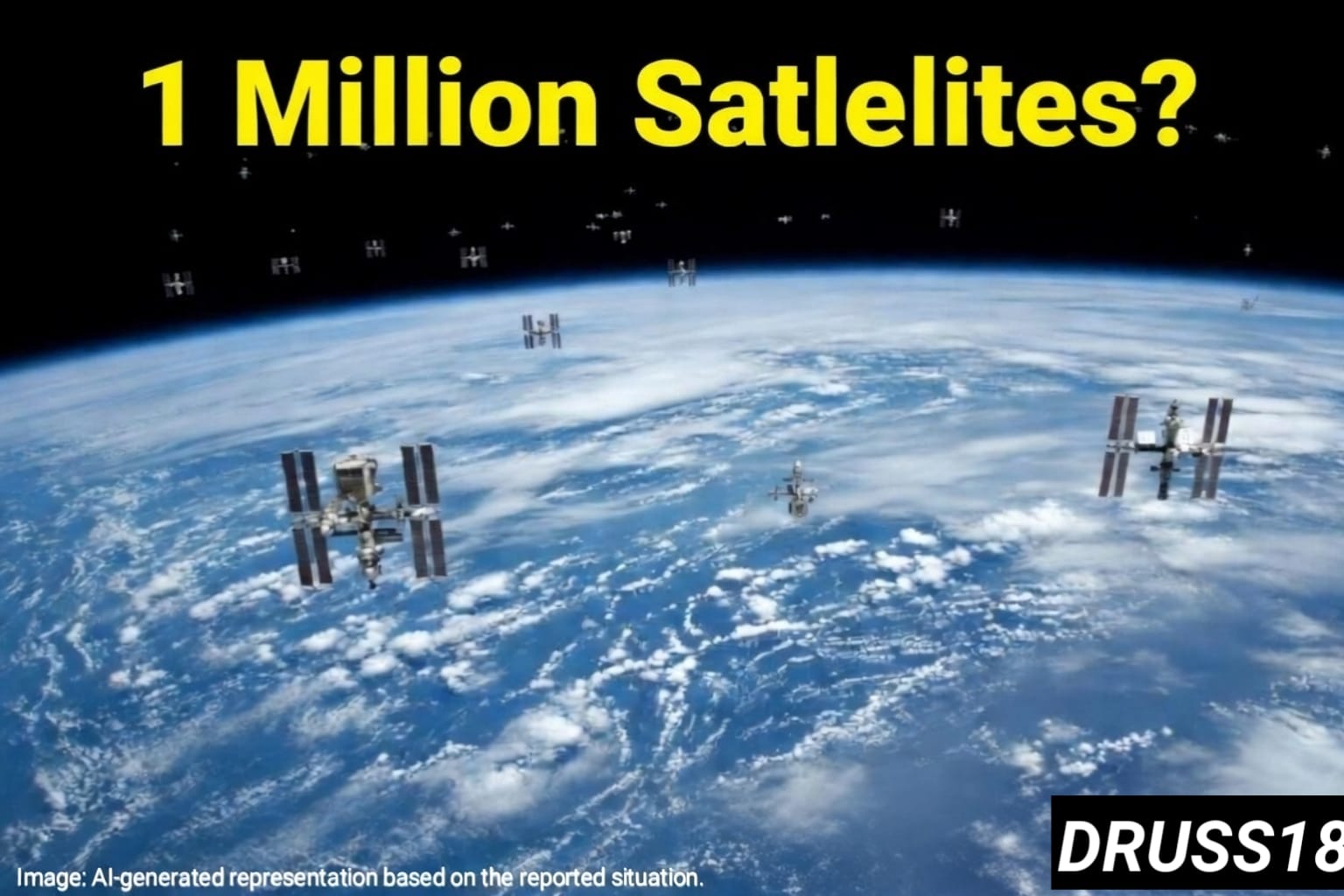
Summary:SpaceX’s 1 Million Satellite Plan Could Turn Space Into a Giant AI Data Center
- SpaceX has filed with the U.S. Federal Communications Commission (FCC) to authorize up to 1 million solar‑powered satellites that would operate as orbiting data centers for artificial intelligence computing. This unprecedented proposal could reshape how computing capacity is provisioned but faces significant technical, regulatory, and environmental questions.
- Why it matters: If even partially realized, space‑based compute infrastructure could influence the future of cloud computing, AI workloads, and the economics of data center power and cooling.
- Hook: SpaceX’s filing points to a vision “towards becoming a **Kardashev II‑level civilization,” an ambitious claim not previously seen in corporate satellite plans.
A Vision of Clouds in Orbit
SpaceX’s 1 Million Satellite Plan Could Turn Space Into a Giant AI Data Center In late January 2026, SpaceX submitted an application to the Federal Communications Commission seeking authority to deploy and operate a non‑geostationary satellite system of up to 1 million spacecraft designed primarily to function as orbital data centers — essentially computing infrastructure in space powered continuously by the Sun.
According to the filing, these satellites would orbit at altitudes between roughly 500 km and 2,000 km, arranged in narrow orbital shells optimized for solar exposure, and interconnected using high‑bandwidth optical links.
The plan’s proponents argue that near‑constant solar energy availability and reduced cooling challenges in vacuum could make space an attractive environment for future large‑scale computing — especially as artificial intelligence workloads expand rapidly worldwide.
Thumbnail/Caption Line: SpaceX’s million‑satellite orbital data center vision could redefine space infrastructure.
What’s in the FCC Filing
SpaceX’s FCC application does not commit to immediate deployment of 1 million satellites. Instead, that figure represents a maximum envelope — a regulatory ceiling the company is asking the commission to authorize should it choose to scale over decades. Such high satellite counts are not uncommon in regulatory filings, as past SpaceX requests for tens of thousands of Starlink satellites sometimes exceeded near‑term plans.
But there are striking elements in the description. The filing includes language about serving as “a first step towards becoming a Kardashev II‑level civilization” — a reference to a theoretical energy‑harnessing milestone that far exceeds current human capability.
It also frames the orbital data center constellation as a response to growing global demand for AI compute — harnessing solar power with high efficiency and potentially lower environmental cost than terrestrial facilities.
Surprising Reality: Permission, Not Deployment
At this stage, the FCC has accepted the filing for public comment, not granted deployment approval. The commission will now collect input from industry stakeholders, scientific organizations, and the public before moving forward.
That process includes scrutiny over technical details, spectrum use, space safety, and regulatory waivers SpaceX has also requested. Some experts note that simply getting authority for a high number does not mean all those satellites will ever be built or launched.
Skepticism and Technical Hurdles
While the idea captures imaginations, scientists and space infrastructure analysts raise practical concerns:
Orbital congestion and debris risk: A constellation of this magnitude could significantly increase the number of objects circling Earth, complicating space traffic management.
Astronomy and sky‑watching impacts: Groups like the American Astronomical Society have already petitioned regulators, citing potential interference with observations and scientific research.
Cooling and power challenges: Even with vacuum advantages, heat dissipation and reliable power systems for heavy computing in orbit remain engineering hurdles.
Scale and launch logistics: SpaceX would need sustained heavy launch cadence and satellite production to even approach the high‑end numbers. Researchers and industry watchers often view filings as aspirational rather than immediate plans.
Why This Matters to You
Computing and AI Infrastructure: Today’s data centers consume massive electricity on Earth — often more than entire cities. Solar‑powered satellites could offer new models for off‑planet compute, potentially reducing terrestrial grid stress over the long term.
Global Technology Evolution: If orbital compute becomes commercially viable, cloud providers and AI firms might one day rent capacity that doesn’t depend on Earth’s power grids or cooling systems, a shift with ripple effects across industries.
Space Management & Regulation: This unfolds against a backdrop of international debate on space traffic, spectrum allocation, and safeguarding scientific access to the night sky.
What’s Next?
The FCC will now take public and expert comments before deciding whether to authorize any part of the proposal.
SpaceX may revise its filing over time as technologies and regulatory feedback evolve.
Debate continues in space policy circles about the feasibility and desirability of orbiting data centers.
Soft engagement line: Whether SpaceX’s orbital data centers become reality or remain a visionary blueprint, they are igniting global conversation about the next frontier of computing.
SpaceX’s 1 Million Satellite Plan Could Turn Space Into a Giant AI Data Center
This article is based on publicly available data, official updates, and verified reports from SpaceX, the U.S. Federal Communications Commission, Reuters, The Verge, and other trusted scientific sources.