- Category: Science / Space
- Author: Druss18 Team
- Date: March 30, 2026
Summary:
SpaceX is preparing its latest Transporter rideshare mission, targeting the launch of 119 payloads into orbit from California. The mission reflects the rapid expansion of the small satellite economy and highlights how shared launches are reshaping access to space.
A Single Rocket, 119 Satellites
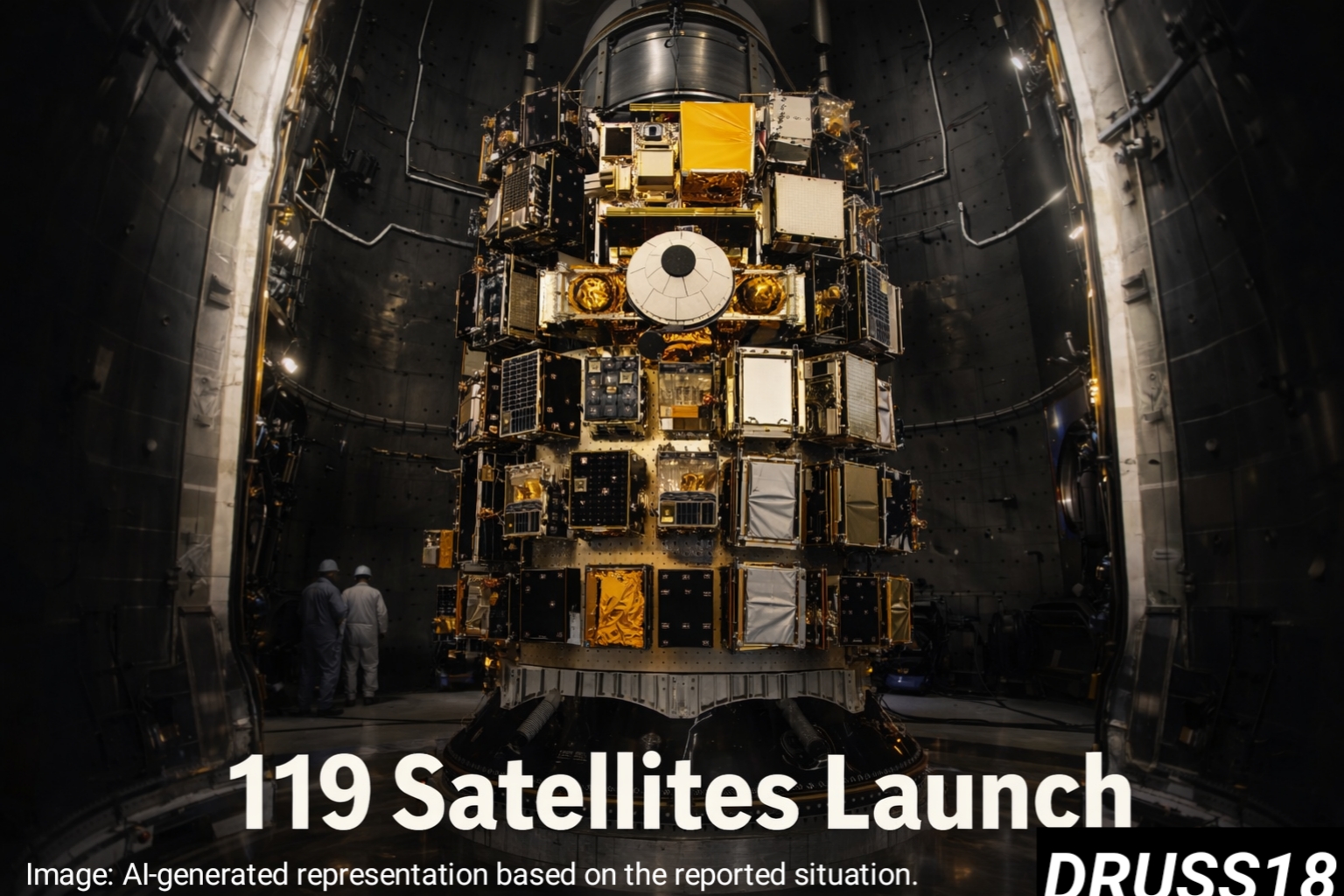
SpaceX Transporter mission Spaceflight is entering a phase where scale matters—and few missions illustrate this better than the upcoming SpaceX Transporter mission, which aims to carry 119 satellites in a single launch.
Scheduled from California, the mission is part of SpaceX’s rideshare program, designed to offer cost-effective access to orbit for small satellite operators. Instead of booking an entire rocket, multiple customers share space on a single launch vehicle.
According to mission updates released by SpaceX, the Transporter series has steadily increased its payload capacity over time, reflecting growing demand from commercial, academic, and government sectors.
But what does launching over a hundred satellites at once actually mean for the future of space?
How the Rideshare Model Works
Traditional satellite launches were often exclusive—one rocket, one primary payload. That model is now shifting.
The rideshare approach allows dozens of smaller satellites, often called CubeSats or microsatellites, to be deployed simultaneously. These satellites serve a wide range of purposes, from Earth observation to communications and scientific research.
As outlined by NASA, small satellites have become increasingly important for rapid innovation, offering shorter development cycles and lower mission costs. This shift has opened space access to startups, universities, and smaller nations.
SpaceX’s Transporter missions are central to this transformation. By standardizing launch opportunities, they reduce logistical complexity and lower financial barriers.
A Growing Demand for Orbital Access
The scale of this mission reflects a broader trend: space is becoming more crowded—and more accessible.
Data from the Federal Aviation Administration shows a steady increase in licensed commercial launches over recent years, driven largely by private companies deploying satellite constellations.
Meanwhile, organizations like European Space Agency have emphasized the importance of coordinated space traffic management as the number of orbiting objects grows.
This raises important questions. How will orbital congestion be managed? And what happens when hundreds of satellites are launched at once?
The Technology Behind the Mission
At the center of the Transporter mission is the Falcon 9 rocket, known for its reusability and reliability. The vehicle’s ability to land and be reused has significantly reduced launch costs, making high-frequency missions like this economically viable.
Each satellite onboard is carefully integrated using deployer systems that release payloads into precise orbital paths after launch. Timing and positioning are critical—especially when dealing with such a large number of payloads.
According to technical briefings published by SpaceX, these deployments are sequenced to minimize collision risk and ensure each satellite reaches its intended orbit.
Why This Mission Matters Now
The timing of this mission aligns with a rapid expansion in global satellite infrastructure.
From climate monitoring to broadband internet, satellites are becoming essential tools for both governments and private companies. The rise of mega-constellations—networks of hundreds or thousands of satellites—has accelerated this trend.
As noted in recent NASA reports, small satellites are playing a growing role in Earth science, helping track environmental changes with increasing precision.
At the same time, the commercialization of space is reshaping how missions are planned and executed. Companies like SpaceX are no longer just launch providers—they are infrastructure enablers.
Looking Ahead: Opportunities and Challenges
The success of missions like this could further normalize high-density satellite launches. That brings clear benefits: lower costs, faster deployment, and broader access.
However, it also introduces new challenges.
Orbital debris, collision risks, and regulatory oversight are becoming central concerns. Agencies worldwide are working to establish guidelines that ensure sustainable use of space.
The Transporter mission, in many ways, represents both progress and pressure—a sign of how quickly the space industry is evolving.
As launch cadence increases and payload counts grow, one question remains: can space infrastructure keep pace with the demand it is helping to create?
Sources & Credits:
SpaceX Official Mission Updates
NASA Small Satellite Technology Reports
Federal Aviation Administration (FAA) Commercial Space Data
European Space Agency (ESA) Space Environment Reports