- Category: Science / Space
- Author: Druss18 Team
- Date: April 1, 2026
Summary:
NASA signals that conditions are aligning for the upcoming Artemis II launch, with weather forecasts currently supporting liftoff preparations. The mission represents a critical step toward returning humans to the Moon after decades.
A Key Moment for Artemis II Mission Readiness
As anticipation builds around the Artemis II mission, NASA has indicated that weather conditions are currently favorable for launch preparations. The update, shared through official mission channels, suggests that teams are moving steadily toward liftoff readiness.
The Artemis II mission marks NASA’s first crewed lunar mission in over 50 years, placing it at the center of global attention. Unlike its predecessor, Artemis I—which tested systems without astronauts—this mission will carry humans aboard the Orion spacecraft on a journey around the Moon.
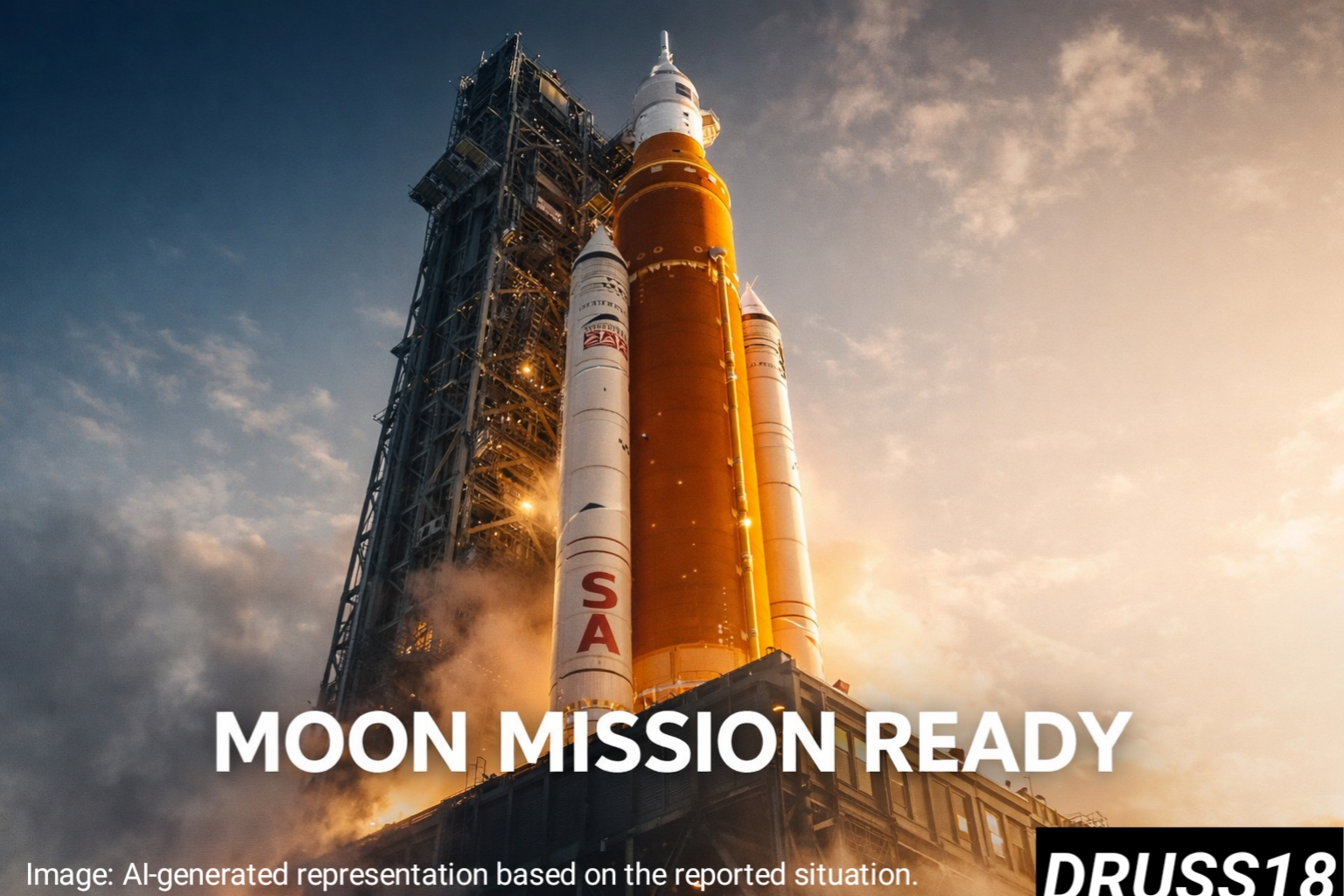
According to NASA’s latest mission updates, weather plays a decisive role in launch timing. Even minor atmospheric instability can delay operations, especially for a system as complex as the Space Launch System (SLS), the most powerful rocket NASA has ever built.
Why Weather Matters for Launch
Rocket launches depend heavily on atmospheric conditions, including wind speed, cloud cover, and lightning risk. NASA’s launch criteria are designed to minimize risk to both crew and hardware.
As outlined in NASA’s launch weather guidelines, upper-level winds and electrical activity are among the most critical factors. A favorable forecast, therefore, represents more than just good news—it indicates that multiple technical thresholds are aligning simultaneously.
Data from the National Oceanic and Atmospheric Administration also supports the importance of precise weather monitoring in aerospace operations, particularly for missions involving human crews.
Artemis II: A Step Toward Lunar Return
The Artemis program is part of NASA’s broader effort to establish a sustained human presence on the Moon. Artemis II serves as a bridge between initial testing and future lunar landings.
According to NASA’s Artemis program overview, the mission will send astronauts on a trajectory around the Moon before returning to Earth. This flight will test life-support systems, navigation, and deep-space communication under real conditions.
The Orion spacecraft, developed in partnership with Lockheed Martin, is designed to carry humans farther into space than any previous spacecraft built for long-duration missions.
Global Context and Strategic Importance
The Artemis II mission also carries geopolitical and scientific significance. As multiple nations increase their lunar ambitions, including China’s planned crewed missions, Artemis represents a major step in maintaining leadership in human space exploration.
The program is supported by international partnerships, including contributions from the European Space Agency, which is providing key service modules for the Orion spacecraft.
This collaboration reflects a broader shift toward multinational space exploration, where shared infrastructure and expertise are becoming increasingly important.
Looking Ahead
While favorable weather conditions are an encouraging sign, launch timelines remain subject to change. Technical checks, safety reviews, and real-time environmental monitoring will continue to guide final decisions.
If successful, Artemis II will pave the way for Artemis III, the mission intended to land astronauts on the lunar surface for the first time since the Apollo era.
The coming days will be closely watched—not just for a launch window, but for what it represents: a renewed human presence beyond Earth orbit and a foundation for deeper exploration into the solar system.
Sources & Credits:
NASA – Artemis Program Updates and Mission Briefings
National Oceanic and Atmospheric Administration (NOAA) – Atmospheric Data & Launch Weather Insights
Lockheed Martin – Orion Spacecraft Technical Overview
European Space Agency (ESA) – Artemis Collaboration Details