- Mission Since Apollo
- Category: Science / Space
- Author: Druss18 Team
- Date: April 2, 2026
Summary:
NASA has launched its first crewed lunar mission in decades, marking a critical step toward long-term human exploration of the Moon and Mars. The Artemis II mission carries four astronauts on a journey around the Moon, testing systems that will shape future landings.
A New Era Begins with the NASA Artemis II Launch
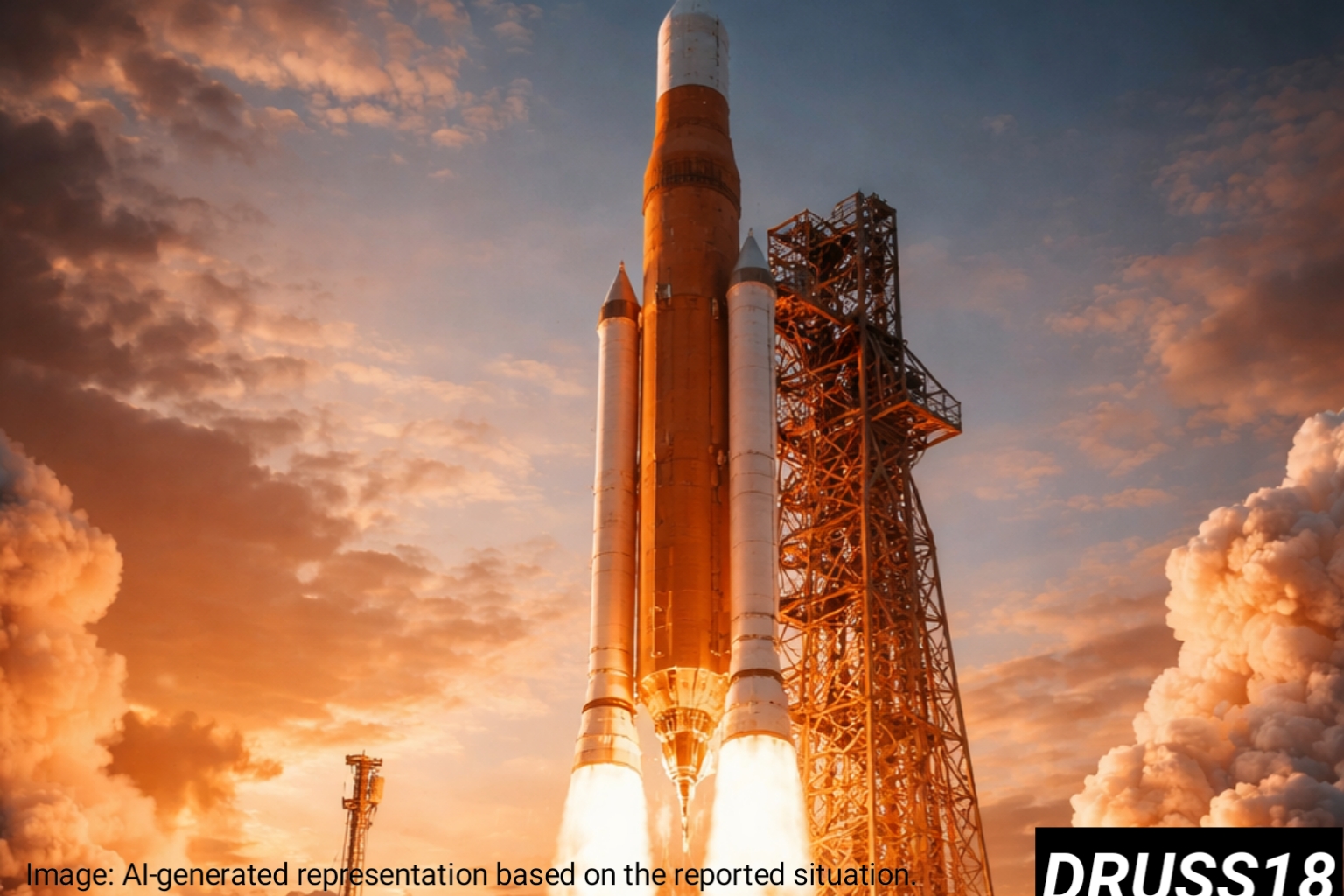
The NASA Artemis II launch has officially begun a new chapter in human spaceflight. Lifting off from Kennedy Space Center, the mission sent four astronauts on a trajectory around the Moon — the first crewed lunar mission since the Apollo era more than 50 years ago.
According to NASA’s official mission updates, the spacecraft launched at 6:35 p.m. Eastern Time, powered by the Space Launch System (SLS), the most powerful rocket the agency has ever built. The mission is designed not to land on the Moon, but to test life-support systems, navigation, and deep-space operations with humans onboard.
Why does this matter now? Because Artemis II is not just a symbolic return — it is a systems validation mission that will determine whether humans can safely travel beyond low Earth orbit again.
What Makes Artemis II Different from Apollo Missions
While comparisons to the Apollo program are inevitable, Artemis II reflects a fundamentally different approach to space exploration.
The crew is flying aboard the Orion spacecraft, developed in partnership with Lockheed Martin. Unlike Apollo capsules, Orion is built for longer missions, with advanced avionics, improved radiation protection, and the ability to support extended human presence in deep space.
As outlined in Lockheed Martin’s technical briefings, Orion is capable of traveling farther into space than any spacecraft designed for humans. Artemis II will push it to those limits, reaching thousands of kilometers beyond the Moon before returning to Earth.
NASA has emphasized that the mission’s primary goal is operational readiness. “This is a proving ground,” the agency noted in its pre-launch statements, highlighting that every phase — from launch to re-entry — will be closely analyzed.
The Bigger Strategy Behind the Artemis Program
The NASA Artemis II launch is part of a broader long-term strategy. Artemis III, expected in the coming years, aims to land astronauts on the Moon — including the first woman and the first person of color.
Beyond that, NASA is working with international and commercial partners to establish a sustained human presence on and around the Moon. The European Space Agency (ESA), for example, has contributed key service modules for the Orion spacecraft, underscoring the mission’s global nature.
According to ESA mission documentation, these modules provide propulsion, power, and thermal control — critical systems that will be tested in real conditions during Artemis II.
But the Moon is not the final destination.
NASA’s long-term roadmap clearly points toward Mars. Data gathered from Artemis II — including human health metrics and spacecraft performance — will inform future missions that could eventually carry astronauts to the Red Planet.
Risks, Unknowns, and What Comes Next
Deep-space missions carry inherent risks. Unlike missions to the International Space Station, Artemis II operates far beyond immediate rescue capability.
Radiation exposure, system reliability, and navigation precision all become more critical in this environment. The U.S. Federal Aviation Administration (FAA), which oversees launch licensing, has noted the increasing complexity of deep-space missions in its regulatory frameworks.
Still, the mission represents a calculated step forward.
If Artemis II performs as expected, it will clear the path for lunar landings and long-duration missions. If issues arise, they will provide equally valuable insights — data that cannot be simulated on Earth.
Looking Ahead
The significance of the NASA Artemis II launch lies not just in what it achieves today, but in what it enables tomorrow.
For decades, human spaceflight has been largely confined to low Earth orbit. Artemis II challenges that boundary, testing whether humanity is ready to move outward again — not briefly, but sustainably.
The next few years will reveal whether this mission marks the beginning of a lasting presence beyond Earth, or simply another ambitious step in a long journey.
Either way, the trajectory is clear: the Moon is no longer the finish line — it is the starting point.
Sources & Credits:
NASA (Artemis II Mission Updates & Press Releases)
Lockheed Martin (Orion Spacecraft Technical Briefings)
European Space Agency (ESA Orion Service Module Documentation)
Federal Aviation Administration (FAA Launch Licensing & Spaceflight Reports)