- Author: Druss18 Teams
- Category: Global
- Written By: Druss18 Teams
- Research By: Ajijul Hoque
- Date: May 26, 2026
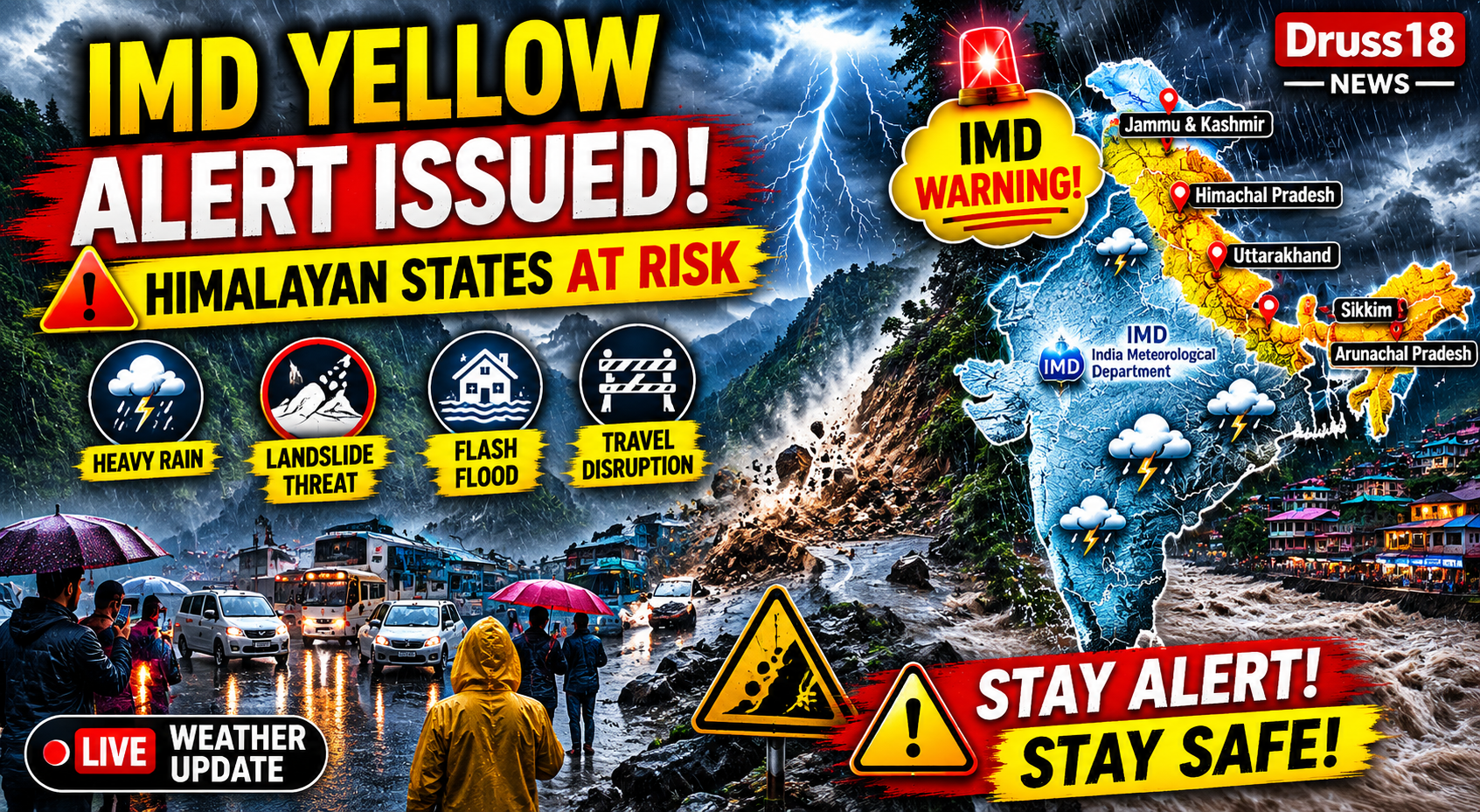
IMD Yellow Alert Himalayan States India’s weather system is once again drawing national attention after the India Meteorological Department (IMD) issued a yellow alert for several Himalayan states and parts of Kerala amid forecasts of intensified rainfall activity.
The developing weather pattern has raised concerns over possible landslides, flash flooding, travel disruption, and local infrastructure damage in vulnerable mountainous regions. Authorities are closely monitoring conditions as cloud movement and moisture activity continue to increase across northern and southern parts of the country.
The alert comes during a period when many Himalayan areas remain highly sensitive to heavy rainfall due to steep terrain, unstable slopes, and ongoing seasonal weather changes.
What the IMD Yellow Alert Means
A yellow alert issued by the IMD generally signals the need for caution. While it does not indicate the highest level of emergency, it warns residents and local authorities to remain prepared for potentially disruptive weather conditions.
In the Himalayan belt, even moderate-to-heavy rainfall can quickly increase risks such as:
Landslides
Rockfalls
Road blockages
Flash floods
River swelling
Power outages
Kerala has also been included in weather advisories as moisture-rich systems continue to affect coastal and southern regions.
Himalayan States Under Close Monitoring
Weather attention is particularly focused on northern mountainous regions including areas of:
Himachal Pradesh
Uttarakhand
Jammu & Kashmir
Sikkim
Arunachal Pradesh
Publicly available forecasts indicate that cloud buildup and rainfall activity may intensify over the coming hours.
Mountain roads and tourism routes often become vulnerable during such periods, especially in areas already weakened by previous rainfall. Local administrations in sensitive zones are expected to remain on alert for emergency response measures if conditions worsen.
At the time of writing, there were no confirmed reports of major large-scale disaster events linked directly to the latest warning, though the situation remains under observation.
Why Heavy Rainfall in Himalayan Regions Is Closely Watched
Extreme rainfall in Himalayan terrain can trigger rapid environmental and infrastructure challenges because of the region’s geography.
Unlike flat urban areas, steep slopes allow water to move rapidly downhill, increasing erosion pressure and destabilizing soil layers. In densely populated valleys or tourist corridors, this can lead to sudden disruptions with limited warning time.
Experts and disaster-management agencies have repeatedly highlighted that climate variability and changing monsoon patterns may be increasing the frequency of intense rainfall episodes across parts of South Asia.
While long-term climate attribution for any individual event remains scientifically complex, weather volatility in mountainous regions has become a growing area of concern globally.
Kerala Also Faces Rainfall Pressure
Alongside the Himalayan states, Kerala remains under weather focus due to continued rainfall activity linked to broader monsoon circulation patterns.
Heavy rainfall in Kerala frequently creates localized flooding risks, especially in low-lying areas and districts with river overflow vulnerabilities.
Transportation delays, waterlogging, and disruptions to daily life are common during periods of intensified monsoon activity.
Authorities often advise residents to:
Avoid unnecessary travel in severe weather
Monitor official weather updates
Stay alert in landslide-prone areas
Follow local disaster-management advisories
Travel and Infrastructure Concerns Rising
Weather alerts in Himalayan regions can also affect tourism and transportation networks.
Road closures, slippery mountain routes, and reduced visibility can create safety concerns for travelers. Pilgrimage routes and seasonal tourism areas may experience disruptions if rainfall intensifies further.
Experts typically recommend caution for:
Mountain travelers
Trekking groups
Pilgrims
Long-distance drivers
Air and rail schedules can also face temporary adjustments during periods of extreme weather activity.
A Developing Situation
The latest IMD alert remains part of a developing weather situation. Forecast models and satellite observations continue to evolve, and local conditions may change rapidly depending on rainfall intensity.
Residents in affected areas are expected to follow official updates and avoid relying on unverified social media claims or exaggerated reports.
As of now, the yellow alert primarily serves as a precautionary warning rather than confirmation of a large-scale emergency.
Summary
The IMD has issued a yellow alert for several Himalayan states and Kerala due to increasing heavy rainfall activity. Authorities are monitoring risks linked to landslides, flooding, and travel disruption as weather conditions continue evolving across vulnerable regions
FAQ Section
What does an IMD yellow alert mean?
A yellow alert means residents should stay aware and prepared for potentially disruptive weather conditions.
Which Himalayan states are affected?
Forecast attention is focused on regions including Himachal Pradesh, Uttarakhand, Jammu & Kashmir, Sikkim, and Arunachal Pradesh.
Is the situation considered an emergency?
At present, the alert is precautionary. Authorities are monitoring conditions, and residents are advised to follow official updates.
Source Credits
Public weather advisories
India Meteorological Department updates
Publicly available forecast reporting
Satellite weather observations
- Site Owners: Ajijul & Munia