- Category: Science / Space
- Author: Druss18 Team
- Date: April 3, 2026
Summary
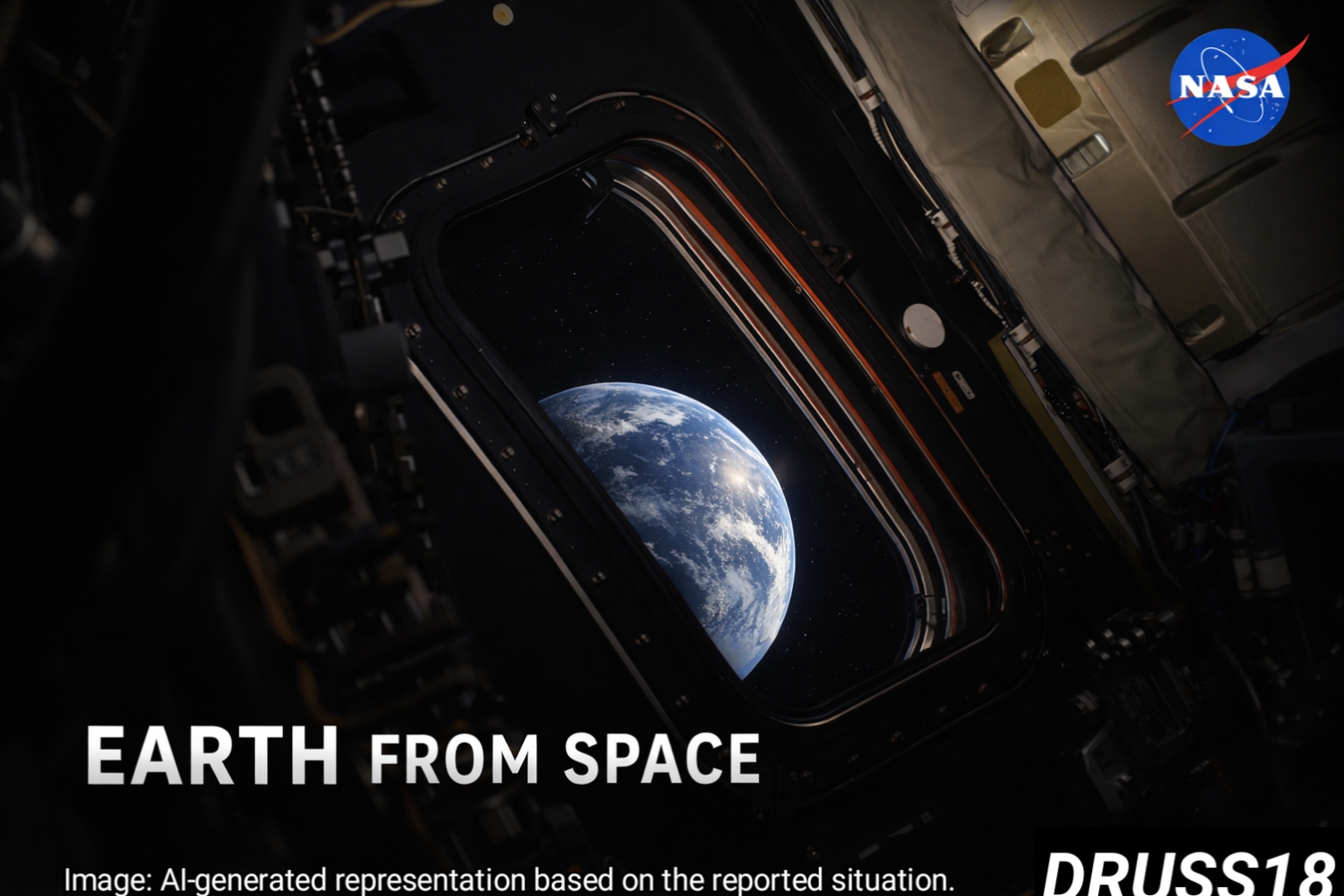
New high-resolution images released by NASA show Earth from the window of the Orion capsule during the Artemis II mission.
The visuals offer a rare human perspective of our planet from deep space, highlighting both technological progress and humanity’s return to lunar exploration.
A View of Earth from Deep Space
As part of the ongoing Artemis II Earth view coverage, NASA has released a new set of high-resolution images captured from inside the Orion capsule. The photographs show Earth framed through a spacecraft window—small, distant, yet unmistakably vivid against the darkness of space.
This perspective is not just visually compelling; it marks a significant step in NASA’s Artemis program, which aims to return humans to the Moon for the first time since the Apollo era. According to NASA’s official mission updates, Artemis II is the first crewed mission in this program, designed to test deep-space systems before future lunar landings.
Why does this matter now? Because it signals a transition—from testing technology to preparing for sustained human presence beyond Earth.
Inside the Orion Capsule
The Orion spacecraft, developed with major contributions from Lockheed Martin, is built to carry astronauts farther than any previous human-rated spacecraft. Its design includes advanced life-support systems, radiation protection, and high-definition imaging capabilities.
The recently released images appear to have been taken through Orion’s window panels, offering a direct astronaut-like perspective. Unlike satellite images, which are often processed and enhanced, these visuals provide a more human-scale experience of space travel.
As outlined in Lockheed Martin’s technical briefings, Orion is capable of traveling over 400,000 kilometers from Earth—far beyond low Earth orbit. This capability is critical for missions targeting the Moon and eventually Mars.
The Artemis II Mission Context
Artemis II is not just another test flight. It represents the first time in decades that astronauts are traveling beyond Earth’s immediate orbit. According to NASA, the mission is designed to validate navigation, communication, and life-support systems in real deep-space conditions.
The European Space Agency (European Space Agency) has also contributed key components, including the service module that powers Orion. This international collaboration highlights how modern space exploration is increasingly global.
Meanwhile, agencies like ISRO are closely observing Artemis developments, as they align with broader global ambitions for lunar exploration and potential resource utilization.
Why This Earth View Matters
Images of Earth from space are not new. However, each generation of missions brings a slightly different perspective. During the Apollo missions, astronauts described Earth as a fragile “blue marble.” Today, with improved imaging technology, the clarity and detail have reached unprecedented levels.
According to NASA’s imaging data, the new Artemis II Earth view images are captured using advanced onboard cameras designed for both operational monitoring and public outreach. These visuals serve multiple purposes:
Supporting mission analysis
Engaging the public
Documenting human spaceflight history
But beyond the technical value, there is a deeper implication. Seeing Earth from such a distance often changes how people think about borders, resources, and the environment.
Looking Ahead: Toward the Moon and Beyond
The Artemis II mission is a precursor to Artemis III, which aims to land astronauts on the Moon. NASA has indicated that lessons learned from this mission—including spacecraft performance and crew experience—will directly shape future lunar operations.
There are still uncertainties. Deep-space missions involve risks related to radiation exposure, system reliability, and long-duration human health. However, each successful milestone reduces these uncertainties.
Looking forward, the Artemis program is expected to lay the foundation for a long-term human presence on the Moon. This includes potential lunar bases, scientific research stations, and even stepping stones for Mars exploration.
The newly released Earth view images are more than just photographs. They are a reminder that humanity is once again extending its reach into deep space—carefully, collaboratively, and with a clear vision for the future.
Sources & Credits:
NASA – Artemis II Mission Updates and Image Releases
Lockheed Martin – Orion Spacecraft Technical Overview
European Space Agency (ESA) – Orion Service Module Contributions
NASA Image and Data Archive
- Artemis II Earth View: NASA Reveals New Images from Orion Capsule