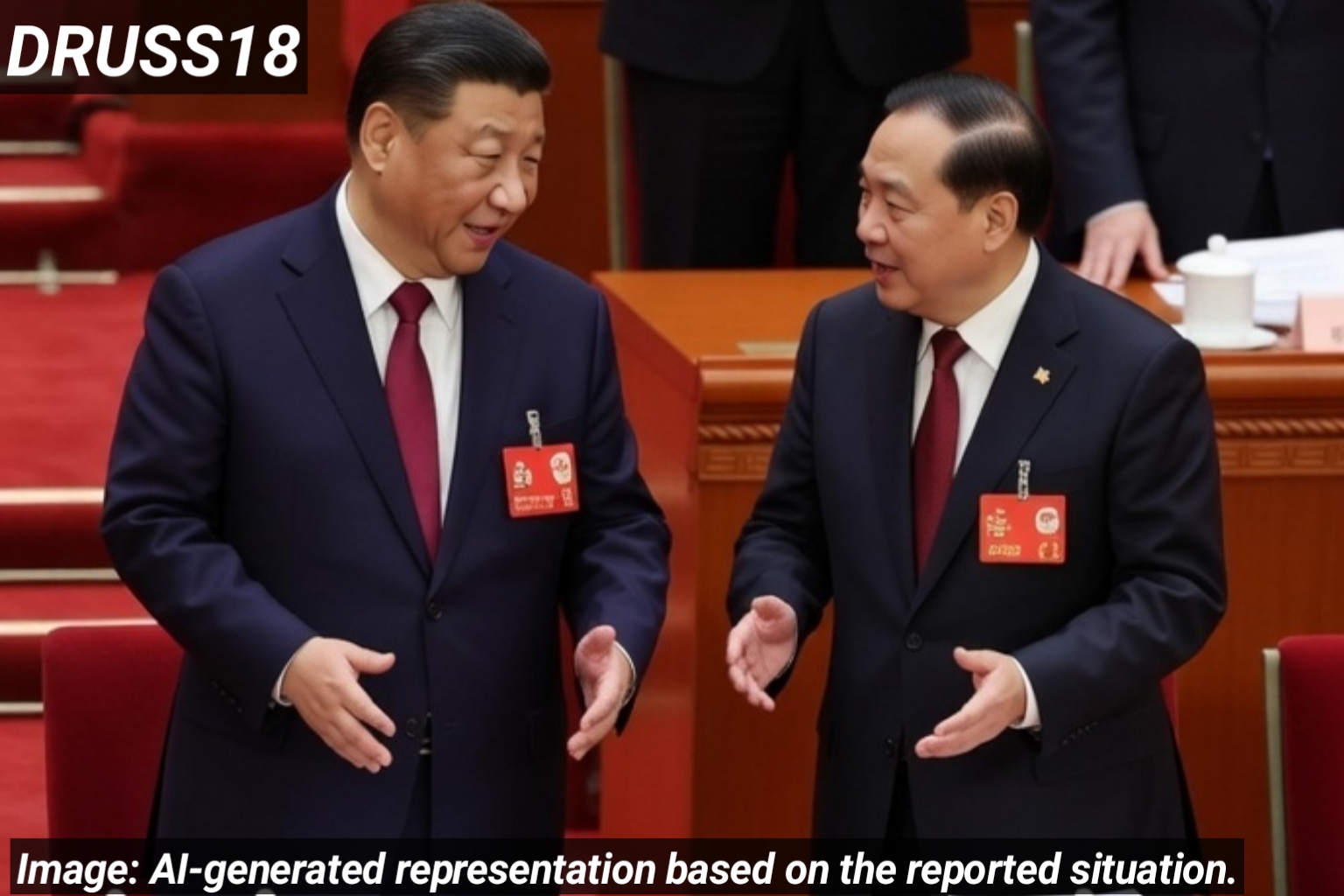
China high-tech investment is accelerating as the government places technology and scientific innovation at the center of its economic strategy
China’s government has placed technology and scientific innovation at the center of its economic strategy, signaling a major push to strengthen domestic industries while tensions with the United States continue to shape global trade and security dynamics.
At the opening of China’s annual parliamentary session in Beijing on Thursday, officials outlined plans to expand investment in advanced technology, research, and defense. Leaders say the move is designed to boost economic resilience, protect national security, and reduce dependence on foreign technology.
The announcement comes as China faces a more challenging global environment, including trade disputes, geopolitical competition, and slowing domestic growth.
Beijing Sets Modest Growth Target for 2026
Chinese authorities set an economic growth target of between 4.5% and 5% for 2026, slightly lower than last year’s roughly 5% expansion. The adjustment suggests policymakers are preparing for a slower but potentially more sustainable pace of growth.
Officials say the revised target gives them more flexibility to address structural challenges within the economy. These include industrial overcapacity, weak domestic demand, and a real estate sector that has struggled in recent years.
By setting a slightly lower goal, policymakers may have more room to introduce reforms aimed at improving the quality of economic growth rather than focusing only on speed. Economists note that this approach could allow Beijing to experiment with policies designed to rebalance the economy.
China’s leadership has increasingly emphasized stability and long-term transformation over rapid expansion, especially as external pressures on trade and technology intensify.
Technology and Innovation at the Core of Economic Strategy
A key focus of the government’s plan is accelerating investment in emerging technologies such as artificial intelligence, advanced manufacturing, and semiconductors.
Officials say China intends to significantly increase funding for research and development over the next five years. The goal is to strengthen what leaders describe as “new productive forces,” referring to industries driven by innovation and digital technology.
Under the plan, China hopes to expand the share of its digital economy. Authorities aim for core digital industries to contribute about 12.5% of the country’s gross domestic product during the upcoming planning period.
The government also intends to create a national data market and introduce systems to manage risks associated with artificial intelligence. Policymakers view these initiatives as essential for building technological independence, particularly as export restrictions from the United States limit Chinese access to some advanced components and equipment.
At the same time, officials reaffirmed support for technological breakthroughs in several industries, including agriculture, biotechnology, semiconductor production, and industrial machinery.
Defense and Research Spending Increase
Alongside the push for innovation, China announced increases in both defense and research budgets.
The national defense budget will rise by about 7%, continuing a pattern of steady military spending growth in recent years. Research and development funding is also set to increase at a similar pace, reflecting the government’s emphasis on science and technology as pillars of national security.
Chinese leaders argue that strengthening domestic capabilities in critical technologies will help protect the country from external economic pressure and supply chain disruptions.
These measures come as global competition in advanced technologies—particularly artificial intelligence and semiconductor manufacturing—has intensified.
Balancing Industrial Growth With Consumer Demand
Despite the focus on industry and technology, officials say the government also wants to boost consumer spending, which has remained relatively weak compared with investment and exports.
Authorities pledged a “notable” increase in the share of household consumption within the broader economy, although specific targets were not provided.
The government also announced several social policy measures intended to support households. These include modest increases in pension payments and higher subsidies for public medical insurance for rural residents and people without formal employment.
Plans were also outlined to expand education funding, support childcare programs, and continue reforms within the public hospital system. These steps are partly aimed at addressing China’s demographic challenges, including an aging population and declining birth rate.
However, many analysts say China’s economic model still prioritizes industrial growth and manufacturing capacity over consumer-driven expansion.
Managing Economic Transition
China’s leadership is attempting to manage a complicated transition as the economy moves away from its long-standing reliance on real estate and infrastructure investment.
For decades, property development played a major role in driving economic growth. But financial problems among major developers and a broader slowdown in the housing market have forced policymakers to look for new engines of growth.
Technology and advanced manufacturing are now seen as the main alternatives. Officials hope these sectors will generate new jobs, boost productivity, and help China compete globally.
At the same time, authorities appear willing to allow weaker industries to shrink if necessary. Some lower-value manufacturing sectors may face consolidation or closures as the government focuses on higher-tech production.
External Pressures and Global Uncertainty
China’s economic planning also reflects growing geopolitical uncertainty. Trade disputes, export restrictions, and security tensions with the United States have complicated the global environment for Chinese companies.
Recent conflicts have also highlighted how modern warfare is evolving with cheaper drone technology challenging expensive missile defense systems.
In addition, international conflicts and instability in energy markets could influence China’s growth outlook. As one of the world’s largest importers of energy and food, China is particularly sensitive to fluctuations in global commodity prices.
Analysts say these factors make economic planning more complex and reinforce Beijing’s determination to strengthen domestic industries.
What Could Come Next
The policy directions outlined during the parliamentary session provide a roadmap for China’s economic strategy over the coming years. The emphasis on technology development, industrial upgrading, and cautious economic management suggests the government is preparing for a longer period of strategic competition with other major powers.
For businesses, both inside and outside China, the shift could reshape global supply chains and technology markets. Companies working in artificial intelligence, semiconductors, and advanced manufacturing may see growing opportunities within China’s expanding innovation ecosystem.
At the same time, the country’s leadership will need to balance industrial ambitions with the challenge of improving living standards and boosting consumer confidence at home.
How effectively China manages that balance may determine the direction of its economy—and its role in the global technology race—in the years ahead.
- This report is based on information widely covered across international media platforms. The editorial team at Druss18 has reviewed publicly available reports and presented an independent analysis to provide readers with a clear and contextual understanding of the development.