Summary
SpaceX Prepares Falcon 9 for GPS III-8 Mission A new launch is quietly taking shape behind the scenes.
SpaceX is preparing its Falcon 9 rocket to deploy a critical GPS satellite for the United States Space Force.
What looks like a routine mission could have deeper implications for global navigation and future space infrastructure.
A Satellite Hidden Inside a Rocket Fairing
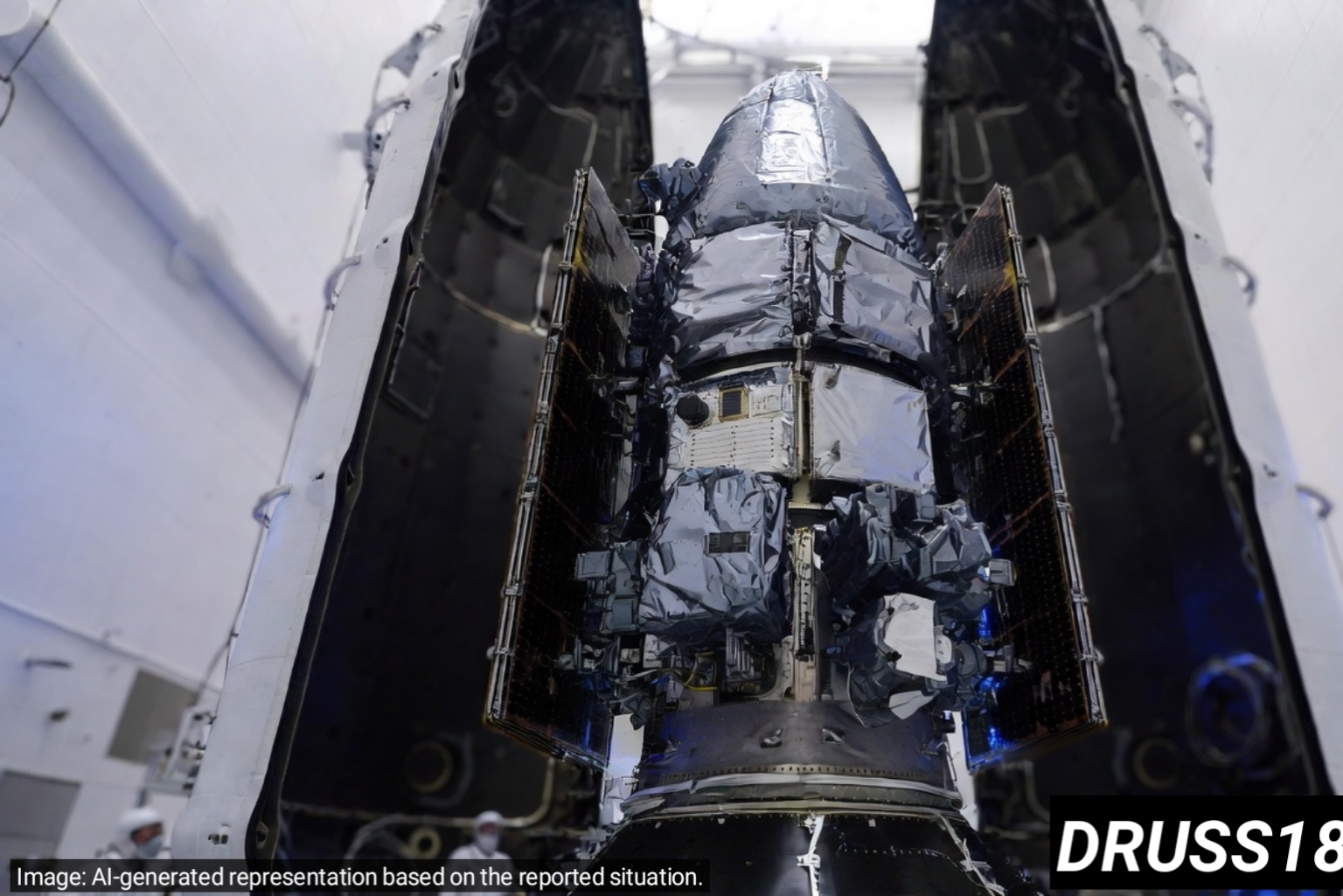
At first glance, the image shows a satellite secured inside a payload fairing — calm, controlled, and precise.
But here’s the interesting part: missions like this are designed to move fast. This is the fourth accelerated launch in the GPS III program, meaning timelines are tighter than usual.
According to SpaceX, accelerated missions are meant to respond quickly to strategic needs — something that wasn’t always possible in traditional space programs.
That shift hints at a new reality: space is no longer slow.
⚡ Why This Mission Is Different
The GPS III-8 satellite isn’t just another navigation unit. It represents the next generation of global positioning technology.
Data from NASA suggests that modern GPS satellites are becoming more accurate, more secure, and more resistant to interference.
But here’s where expectations meet reality:
Even with advanced tech, deploying satellites in tight timelines increases pressure on launch systems, coordination, and readiness.
Nothing has gone wrong — but everything has to go right.
That’s what makes accelerated missions so closely watched.
🌍 Why It Matters Beyond Space
This mission isn’t just about orbiting hardware. It directly affects life on Earth.
GPS systems power:
Navigation apps
Aviation and shipping routes
Financial systems and timing networks
A stronger GPS network means more reliable positioning worldwide, especially in regions where accuracy can vary.
As reported by Reuters in similar missions, next-gen GPS satellites also improve military resilience and civilian reliability at the same time — a rare overlap between defense and everyday life.
👉 This quiet mission could be powering billions of devices on Earth.
🔧 Inside the Falcon 9 Advantage
The Falcon 9 plays a major role here.
Reusable, fast to prepare, and increasingly reliable, Falcon 9 allows missions like this to happen on shorter notice.
This is where a subtle shift is happening:
👉 Space launches are becoming more like scheduled operations than rare events.
That change is critical for the future space economy — especially as demand grows for satellites supporting AI, communications, and global infrastructure.
🔮 What Comes Next for GPS and Space Tech
The GPS III program is still ongoing, with more satellites expected in the coming years.
But questions remain:
How fast can launch cycles realistically become?
Will accelerated missions become the norm?
And how will this affect global space competition?
One thing is clear — the line between experimental and operational space missions is fading.
📌 Final Take
We know that SpaceX is preparing another critical GPS launch.
We know the technology is more advanced than ever.
But what’s still unfolding is how fast space operations can truly scale.
And that may matter more than the satellite itself.
👉 This is not just a launch — it’s a glimpse into the future of real-time space infrastructure.
In the coming days, all eyes will be on the launch pad as SpaceX prepares for liftoff.
If successful, the Falcon 9 GPS III-8 mission will not just strengthen navigation systems — it will mark another step toward faster, more responsive space operations.
The real story may not be the satellite itself, but how quickly space is becoming part of everyday life.
Source Line:
This article is based on publicly available data, official updates, and verified reports from SpaceX, NASA, and other trusted scientific sources.