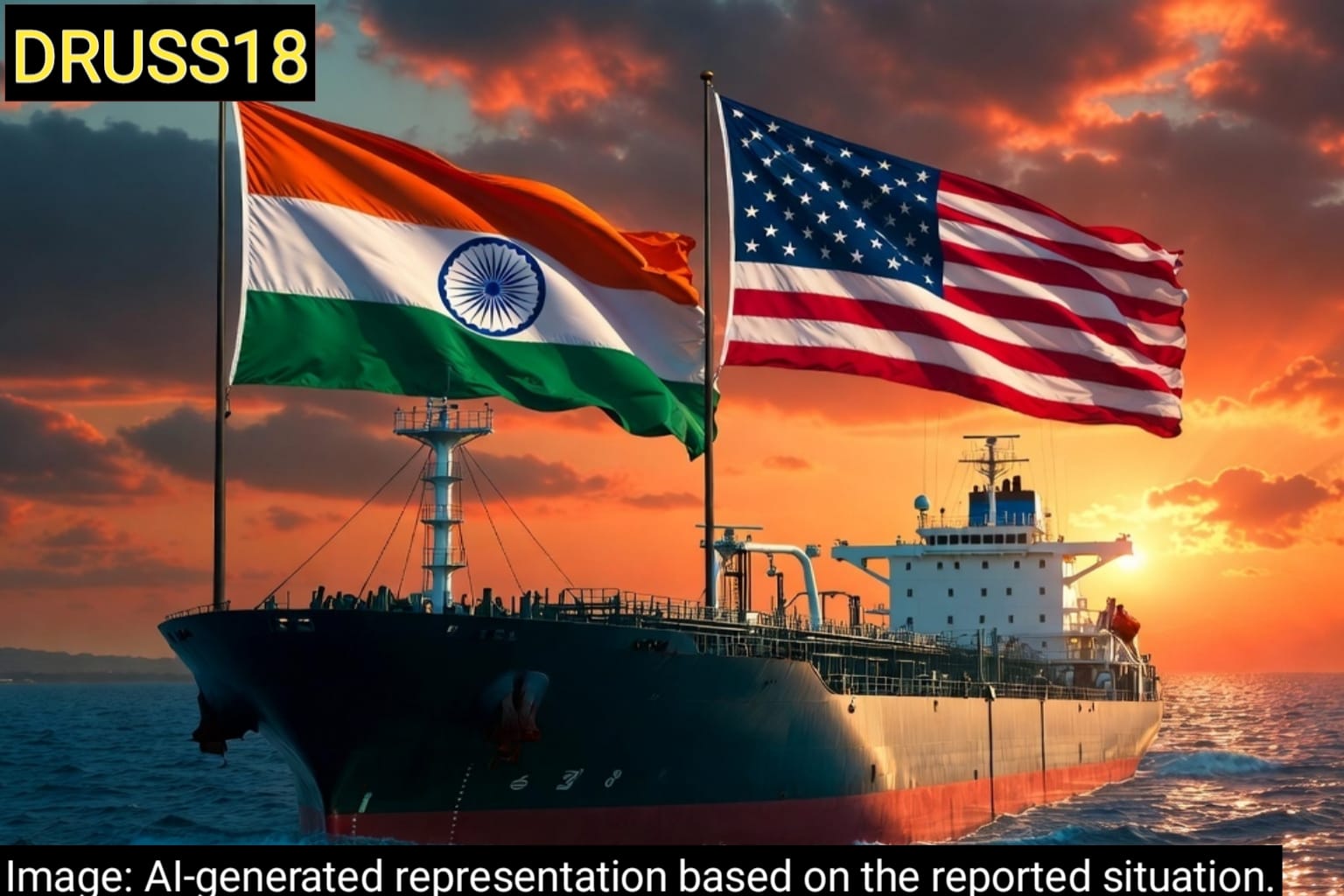
US Allows India to Buy Russian Oil Already at Sea With 30-Day Waiver as Washington moves to stabilize global energy markets during rising tensions in West Asia.
The United States has temporarily allowed India to purchase Russian oil that is already loaded on ships and floating at sea, according to senior officials in Washington. The decision comes as global energy markets face pressure due to rising tensions in West Asia and disruptions in key shipping routes.
US officials say the move is designed as a short-term measure to keep oil flowing into the global market and prevent sudden price increases that could affect economies worldwide.
Temporary Waiver Issued Amid Global Energy Concerns
US Treasury Secretary Scott Bessent confirmed that Washington has granted India permission to purchase Russian crude that was already loaded onto vessels before new sanctions deadlines took effect.
Speaking in a television interview Friday, Bessent said the waiver applies only to oil that is currently stranded on ships at sea. The decision allows Indian refiners to unload and process that oil rather than leaving it unused while global markets experience supply pressure.
According to US officials, the authorization is temporary and will remain in effect for 30 days. The waiver permits transactions involving Russian oil that was loaded onto ships before March 5, 2026, provided it is delivered to ports in India before April 4, 2026.
The Treasury Department said the measure applies only to oil already in transit and does not represent a broader easing of sanctions on Russia.
Why the US Made the Decision
The policy shift comes as the global oil market faces short-term uncertainty linked to ongoing geopolitical tensions in the Middle East.
Energy officials say concerns about shipping disruptions near the Strait of Hormuz, one of the world’s most important oil transit routes, have created temporary supply constraints. When supplies tighten even slightly, oil prices can rise quickly because global demand remains high.
US Energy Secretary Chris Wright explained that allowing India to process the oil already floating in storage near Asian waters is a practical way to release supply into the market quickly.
According to Wright, large volumes of Russian crude had been sitting idle on tankers after buyers pulled back due to sanctions and market uncertainty. Allowing Indian refiners to purchase that oil could help move those barrels into circulation faster.
Officials say the move is meant to prevent sudden spikes in global energy prices, which can affect transportation costs, manufacturing, and household expenses worldwide.
India’s Role in the Global Oil Market
India is one of the world’s largest oil importers and plays a major role in refining crude oil for both domestic consumption and export.
Over the past several years, India has significantly increased purchases of discounted Russian crude following Western sanctions imposed after Russia’s invasion of Ukraine. The lower prices allowed Indian refineries to maintain stable fuel supplies while managing rising global energy costs.
However, the United States previously urged India to reduce purchases of sanctioned Russian oil. According to Bessent, New Delhi cooperated with Washington’s request and began scaling back imports while exploring alternative supplies, including oil from the United States.
Because of that cooperation, US officials described India as a reliable partner in managing global energy stability.
The current waiver is intended to help India bridge a short-term supply gap while maintaining overall coordination with US energy policies.
Previous Trade and Energy Tensions
The decision also follows a period of tension between Washington and New Delhi over energy trade.
Earlier, former US President Donald Trump had imposed 25 percent punitive tariffs on India in response to its continued purchases of Russian oil. The administration argued that those purchases indirectly supported Russia’s military operations in Ukraine.
Last month, however, the two countries reached a framework for an interim trade agreement aimed at improving economic cooperation. As part of that understanding, India committed to gradually reducing direct or indirect imports of Russian energy while expanding purchases of American oil and gas.
Following the agreement, the United States removed the tariffs, signaling a reset in trade relations between the two countries.
Officials say the new oil waiver should not be interpreted as a change in long-term policy toward Russia.
Limited Scope of the Authorization
The authorization issued by the US Treasury Department includes several restrictions.
It allows transactions related only to the sale, delivery, or offloading of Russian crude that was already loaded onto vessels before the sanctions deadline. The oil must be delivered to ports in India, and the buyer must be an entity organized under Indian law.
The waiver does not permit any new Russian oil purchases or broader financial dealings with sanctioned Russian entities beyond what is necessary to complete those specific shipments.
Additionally, the authorization does not override other sanctions rules, including restrictions related to Iran or other sanctioned governments.
Officials emphasized that the measure is designed solely to manage a temporary supply imbalance rather than provide economic benefits to Russia.
Possible Impact on Global Oil Prices
Energy analysts say even small policy adjustments can influence global oil prices because the market reacts quickly to supply expectations.
If the stranded oil is successfully processed and released into the market, it could slightly increase available supply in the short term. That may help prevent sudden price increases that affect fuel costs, shipping expenses, and consumer goods prices worldwide.
For countries like India that rely heavily on imported crude, stable oil supplies are important for controlling inflation and maintaining economic growth.
For the United States and other Western economies, keeping global oil prices stable can also reduce pressure on transportation, energy, and manufacturing sectors.
What Could Happen Next
US officials indicated that the waiver is part of a broader set of short-term actions designed to stabilize energy markets during ongoing geopolitical tensions.
Washington may consider additional temporary measures if supply disruptions continue, though officials say any such steps would remain limited in scope and duration.
At the same time, the United States expects India to continue increasing imports of American oil as part of the broader trade framework agreed upon by the two countries.
With the waiver scheduled to expire in early April, policymakers and energy markets will be watching closely to see whether global oil supply conditions improve or whether further intervention becomes necessary.
- This report is based on information widely covered across international media platforms. The editorial team at Druss18 has reviewed publicly available reports and presented an independent analysis to provide readers with a clear and contextual understanding of the development.