Summary
- Donald Trump stepped in after Iran retaliated against an Israeli-linked gas field, sharply escalating tensions in a critical energy zone. His push to halt further Israeli strikes signals urgent efforts to prevent a wider regional conflict. The standoff threatens global energy markets and raises the risk of broader instability.
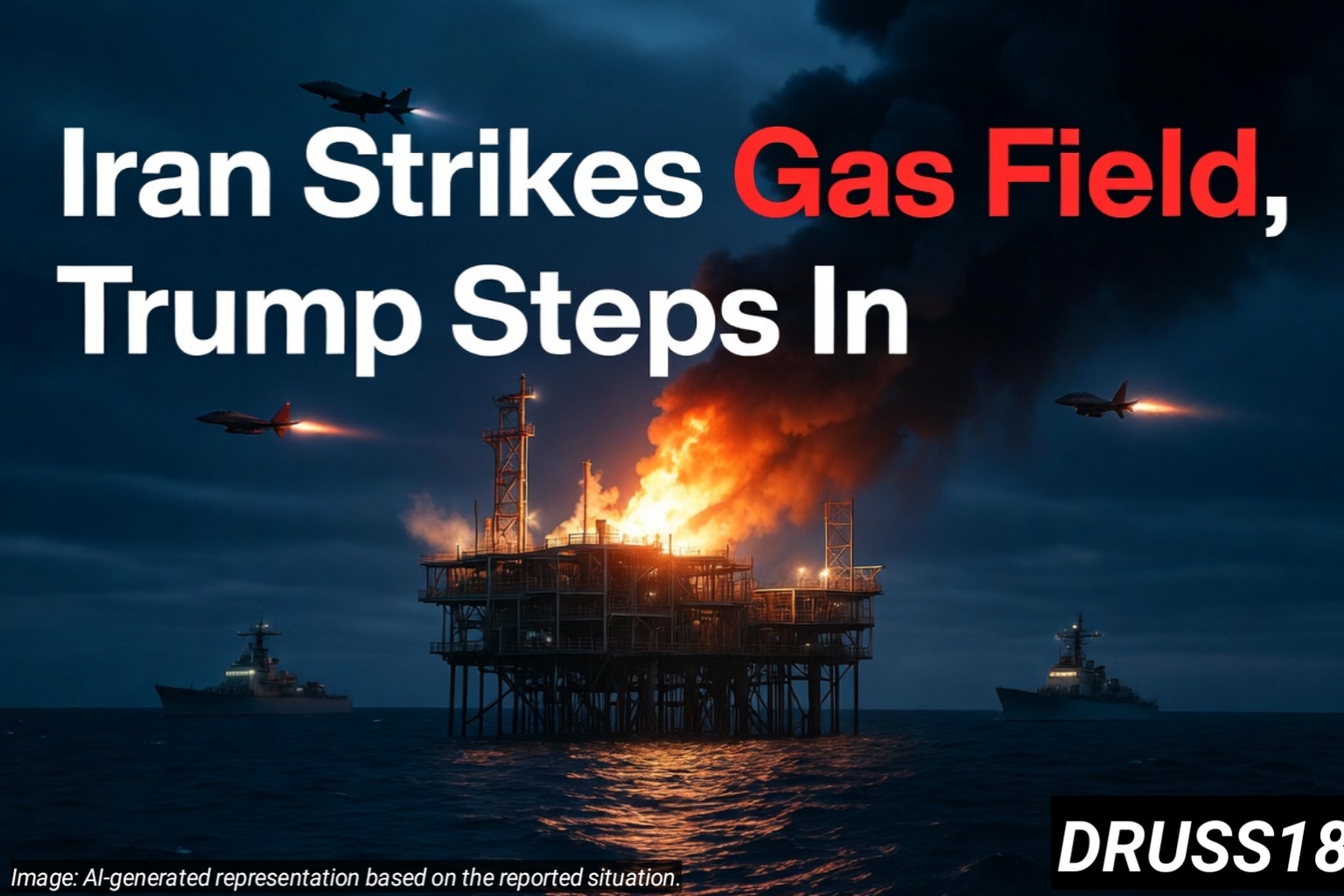
Trump Steps In After Iran Hits Israel Gas Field Crisis Grows Donald Trump intervened urgently late Tuesday after Iran struck a gas field linked to Israel, triggering one of the sharpest escalations in a strategically vital energy corridor in recent months.
Within hours of the reported strike, Trump signaled there would be no further Israeli attacks tied to the incident, according to officials familiar with internal discussions. The move reflects mounting concern that the confrontation—already centered on critical energy infrastructure—could spiral into a wider regional crisis with global economic consequences.
Early reports suggest Iran targeted offshore gas infrastructure connected to Israeli operations, describing the strike as a direct retaliation for earlier Israeli actions. However, key details—including the extent of damage and whether production was disrupted—remain unverified, with conflicting accounts emerging from regional media and officials.
A senior U.S. official said efforts were underway to prevent what they described as a “dangerous escalation cycle.” Backchannel communications between multiple parties are reportedly active, aimed at containing further retaliation. Still, the situation remains fragile, with both sides maintaining hardened positions.
The stakes are unusually high because of the location. Gas fields in the Eastern Mediterranean have become central to energy supply routes for Europe and regional partners. Any sustained disruption could tighten global supply and push prices higher at a time when markets remain highly sensitive to geopolitical shocks.
Oil markets reacted quickly. Traders signaled rising risk premiums amid fears that energy infrastructure could become a recurring target. Analysts warned that even limited strikes on gas facilities could trigger broader volatility if tensions persist or expand beyond isolated incidents.
The underlying drivers of the escalation point to a deeper strategic contest. Israel has intensified operations aimed at curbing Iranian influence across the region, increasingly targeting assets tied to Tehran’s network. Iran, meanwhile, appears more willing to respond directly, shifting the dynamic from indirect proxy engagements toward more overt confrontation.
Yet uncertainty clouds the full picture. Independent verification remains limited, and analysts caution that both sides may be shaping narratives to reinforce their strategic positions. “There is still a significant gap between confirmed facts and public claims,” one regional security analyst noted, highlighting the risk of miscalculation.
Trump’s push for restraint introduces another layer of complexity. While his call to halt further Israeli strikes signals urgency, it remains unclear how much direct influence he holds over Israeli military decisions. That uncertainty raises questions about whether de-escalation efforts can hold if further provocations occur.
The geopolitical implications extend beyond the immediate actors. A broader conflict could draw in regional powers, disrupt shipping lanes, and place additional strain on global energy markets. European economies, in particular, remain vulnerable to supply instability from the region.
Looking ahead, the trajectory remains uncertain. A controlled de-escalation could stabilize both diplomatic channels and markets in the short term. However, any renewed strikes—whether direct or through allied groups—could quickly reignite tensions and deepen the crisis.
For now, a single strike on energy infrastructure has exposed how fragile the balance remains in one of the world’s most strategically important regions. Whether diplomatic pressure can prevent further escalation—or whether this marks the start of a wider confrontation—will shape not only regional security, but the stability of global energy systems.
- This report is based on information widely covered across international media platforms. The editorial team at Druss18 has reviewed publicly available reports and presented an independent analysis to provide readers with a clear and contextual understanding of the development.