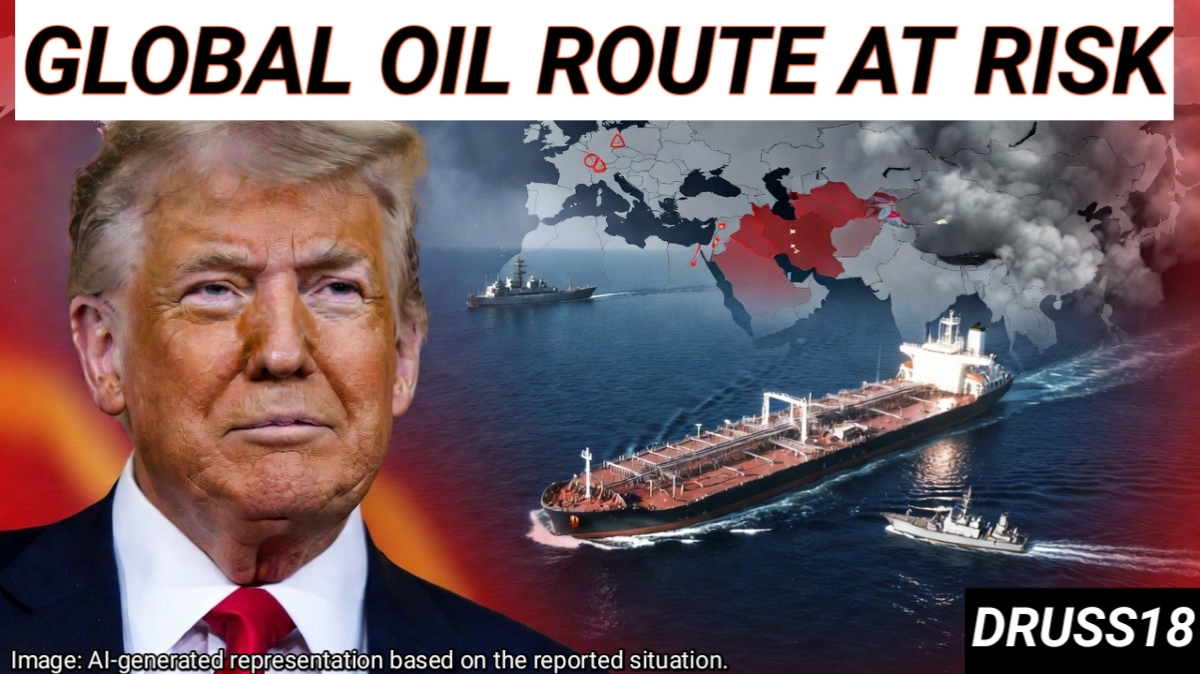
Key Oil Route Global energy markets are watching the Middle East closely as tensions around the Strait of Hormuz continue to rise. U.S. President Donald Trump is urging several countries to help secure the critical oil shipping lane, warning that nations benefiting from Gulf energy should help protect it. But early responses from key allies suggest the effort to build an international coalition may face challenges.
U.S. President Donald Trump has urged several countries to help protect the waterway and ensure commercial ships can pass safely. But two key allies, Japan and Australia, said Monday they have no current plans to send naval forces to the region.
Strait of Hormuz Disruption Raises Global Energy Concerns
The Strait of Hormuz connects the Persian Gulf with the Gulf of Oman and the Arabian Sea. About 20% of the world’s oil shipments move through this passage each day, making it one of the most strategically important energy routes.
Since the start of large-scale U.S. and Israeli military strikes on Iran on February 28, tanker traffic through the strait has been severely disrupted. Although a small number of ships have managed to cross the area, most commercial vessels have avoided the route due to security risks.
The uncertainty has already affected financial markets. Oil prices climbed above $104 per barrel in early Asian trading on Monday, while several regional stock markets weakened as investors reacted cautiously to the ongoing conflict.
Higher energy prices can quickly impact everyday life. Rising oil costs often lead to more expensive fuel, higher transportation costs, and increased prices for goods and services around the world.
Trump Calls on Energy-Dependent Nations to Act
President Trump said the United States has reached out to multiple countries about helping secure the shipping route. Speaking to reporters during a flight from Florida to Washington, he argued that nations relying heavily on oil from the Gulf should play a role in protecting the corridor.
According to Trump, U.S. officials have contacted seven governments regarding a possible international effort to safeguard the strait. While he did not list all of them, he previously mentioned countries such as China, France, Japan, South Korea, and the United Kingdom as potential participants.
Trump suggested these nations benefit directly from the oil shipments passing through the region and therefore share responsibility for maintaining the security of the route.
Japan and Australia Signal Reluctance
Despite the request, Japan indicated it has no immediate plan to deploy naval ships to escort tankers in the Middle East.
Prime Minister Sanae Takaichi told lawmakers that Japan is still reviewing what actions might be possible. The country’s constitution, adopted after World War II, limits military operations abroad and requires the government to carefully consider any overseas deployment.
Australia delivered a similar message. Catherine King, a member of Prime Minister Anthony Albanese’s cabinet, said Canberra had not been asked to send ships and is not planning to contribute naval forces at this stage.
Both countries maintain close security ties with the United States but typically assess military involvement abroad on a case-by-case basis.
Pressure on China and Other Allies
Trump has also urged other major economies to take part in securing the route. In recent comments, he said China should assist because a large share of its imported oil travels through the Strait of Hormuz.
The president indicated that a planned visit to Beijing later this month could be postponed if China does not support efforts to reopen the shipping lane. Chinese officials have not yet publicly responded to the remarks.
European governments are also discussing the situation. Foreign ministers from European Union countries are meeting to review whether an existing naval monitoring mission in the Middle East should be expanded, although officials say no immediate decision is expected regarding direct involvement in the strait.
Leaders in the United Kingdom and Canada have also discussed the issue with Washington as governments consider how to respond to the ongoing crisis.
Drone Incidents Highlight Regional Instability
Security concerns in the Gulf region continued Monday with reports of drone attacks affecting infrastructure.
Authorities in Dubai said a drone strike caused a fire at a fuel storage tank near the city’s international airport, briefly interrupting flight operations before the situation was brought under control. No injuries were reported.
In Saudi Arabia, state media said air defenses intercepted 34 drones over the eastern part of the country within about an hour. The incident did not cause casualties but added to concerns about the spread of attacks across the region.
Such incidents have increased fears that infrastructure tied to global energy supplies could become targets as the conflict continues.
Conflict Outlook Remains Uncertain
U.S. officials have suggested the military campaign against Iran could conclude within weeks, which they believe would ease pressure on energy markets. A reduction in hostilities could allow shipping activity in the Strait of Hormuz to return to normal and potentially bring oil prices down.
Iran, however, has indicated it is prepared for a prolonged confrontation. Foreign Minister Abbas Araqchi said the country has not sought negotiations or a ceasefire and will continue defending itself if the conflict continues.
For now, governments and markets around the world are closely watching developments in the Gulf. The ability to reopen and secure the Strait of Hormuz may play a key role in determining how quickly global energy trade and economic stability return to normal.