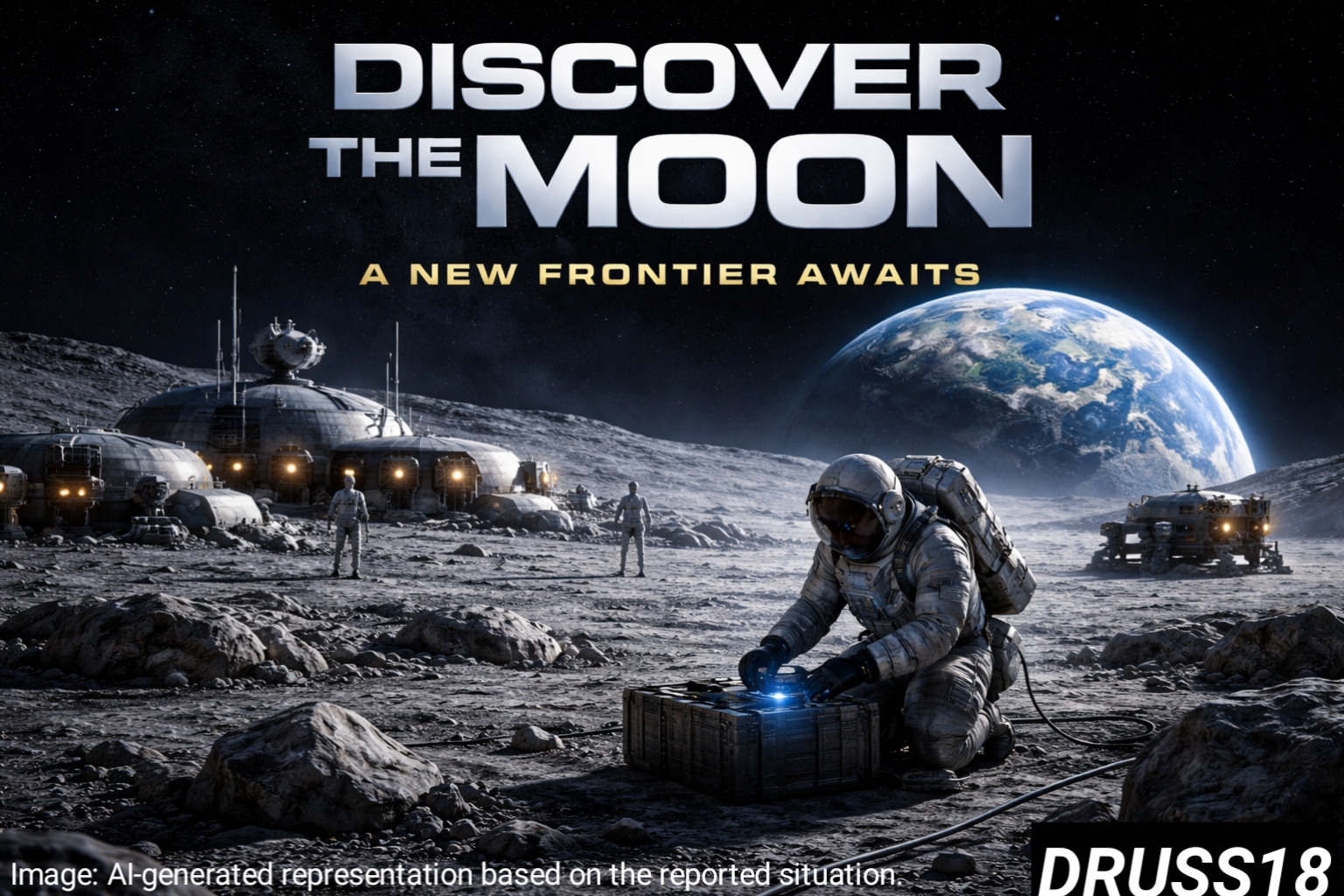
- NASA’s Moon Base Push Gains Momentum With New X Debut A quiet announcement from NASA signals something much bigger: a renewed push toward a permanent human presence on the Moon.
- But behind the excitement, the timeline and challenges remain uncertain.
- What comes next could reshape humanity’s future beyond Earth.
A Small Post… With Big Implications
When NASA introduced its dedicated Moon-focused presence online, it seemed like a simple digital move. But the message carried deeper intent: building a sustained human presence on the Moon is no longer just a concept — it’s an active mission.
At first glance, this looks like a continuation of existing plans. But something didn’t go exactly as expected. Early timelines for lunar missions under the Artemis program have already faced delays, forcing NASA and its partners to rethink strategy and pacing.
That contrast — between ambition and reality — is what makes this moment important.
The Real Goal: Living, Not Just Landing
For decades, Moon missions were about short visits. Now, the focus has shifted.
NASA’s long-term vision involves:
Permanent or semi-permanent lunar habitats
Continuous astronaut rotation
Using the Moon as a launchpad for deeper space missions
According to NASA, the Artemis program is designed not just to return humans to the Moon, but to “stay.” This includes building infrastructure such as the Lunar Gateway space station and surface habitats.
Data from NASA suggests that water ice near the Moon’s poles could be a game-changer — providing fuel and life support for future missions.
Why the Moon Matters More Than Ever
This isn’t just about space exploration anymore. It’s about strategy.
As reported by Reuters, multiple global players — including the U.S., China, and private companies — are racing to establish a presence on the Moon. This raises questions about resource control, space law, and technological dominance.
The Moon could become:
A hub for space mining
A testing ground for Mars missions
A new frontier for the space economy
What This Means for People on Earth
It might feel distant, but the impact is closer than it seems.
Technologies developed for lunar survival often find their way into everyday life — from advanced materials to energy systems. The push for a Moon base could accelerate:
Renewable energy innovation
Robotics and AI advancements
Global communication systems
More importantly, it represents a shift in how humanity sees its future — not limited to Earth.
The Challenges Still Ahead
Despite the optimism, major hurdles remain:
High mission costs
Radiation exposure risks
Long-term human health in low gravity
According to NASA, solving these problems requires international collaboration and sustained funding — both of which are never guaranteed.
There’s also uncertainty around timelines. While Artemis aims to return astronauts to the Moon soon, a fully functional base could take decades.
What Happens Next?
What we know:
NASA is actively building momentum toward a lunar future
Key technologies are in development
Global competition is increasing
What remains uncertain:
Exact timelines for a permanent base
The role of private companies
How space governance will evolve
What’s next will depend on both innovation and cooperation.
And one thing is clear — the Moon is no longer just a symbol of exploration.
It’s becoming part of humanity’s long-term plan.