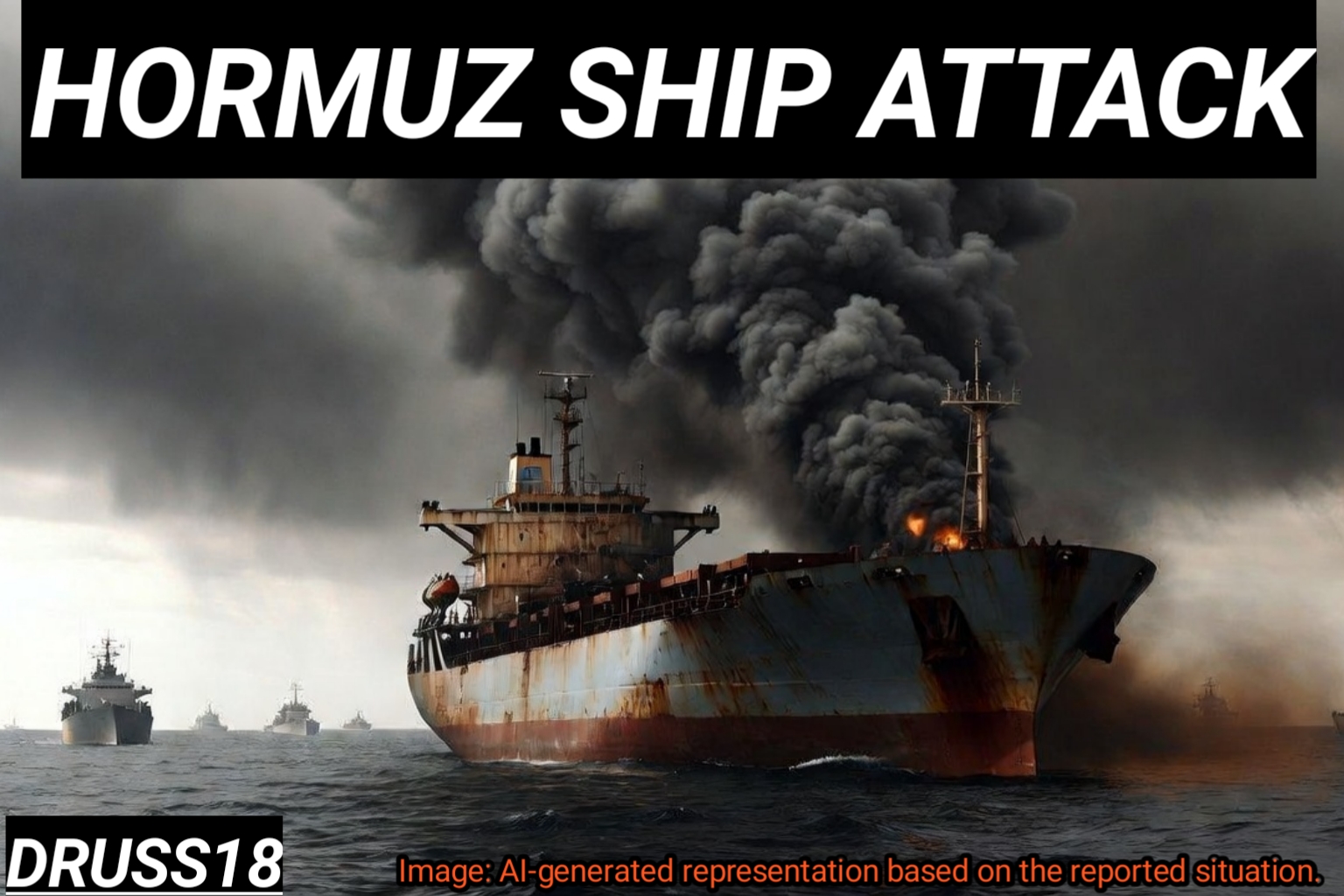
New Attacks Hit Ships in Strait of Hormuz on Three commercial vessels were struck by projectiles on Wednesday in the Strait of Hormuz, according to maritime security companies and shipping operators. The incidents highlight growing dangers for merchant ships in one of the world’s most critical shipping routes as tensions surrounding Iran continue to escalate.
At least 14 ships have now been reported damaged or targeted in the region since the conflict involving Iran intensified late last month. The attacks have raised concerns across global shipping and energy markets because the narrow waterway carries a significant portion of the world’s oil supply.
Thai Cargo Ship Hit, Three Crew Members Missing
One of the most serious incidents involved a Thailand-flagged bulk carrier, Mayuree Naree, which was struck by two projectiles while sailing through the Strait of Hormuz.
The impact caused a fire onboard and severely damaged the vessel’s engine room. According to the ship’s operator, most of the crew were able to evacuate safely after the strike.
However, three crew members remain unaccounted for and are believed to be trapped inside the engine room. Rescue efforts are underway in coordination with regional authorities.
The remaining 20 crew members were evacuated and transported safely to Oman. Images released by Thai authorities showed smoke rising from the rear of the ship following the attack.
Iran’s Revolutionary Guards later said the vessel had been fired upon by Iranian fighters, indicating a possible direct engagement by Iranian forces. In previous incidents, attacks in the region have often involved missiles or drones.
Two Other Merchant Ships Also Damaged
Two additional ships sustained damage in separate incidents earlier the same day.
A Japan-flagged container ship, ONE Majesty, was struck by a projectile while anchored in the Gulf about 25 nautical miles northwest of Ras Al Khaimah in the United Arab Emirates.
The ship’s owner and charter operator confirmed that the vessel suffered minor structural damage above the waterline. Fortunately, all crew members were safe and the ship remained operational after inspection.
In another case, a bulk carrier named Star Gwyneth, registered in the Marshall Islands, was hit by a projectile about 50 miles northwest of Dubai.
The strike damaged part of the ship’s hull in the cargo hold area. Shipping officials said the crew were unharmed and the vessel did not experience dangerous flooding or listing.
Investigations into the exact cause of the incidents are ongoing.
Shipping Traffic Through the Strait Slows Dramatically
The Strait of Hormuz is one of the most strategically important maritime passages in the world. It connects the Persian Gulf with global markets and serves as a key route for oil shipments from major energy producers.
Since late February, shipping traffic through the narrow channel has slowed significantly due to security concerns.
Roughly 20% of the global oil supply normally passes through this waterway, making disruptions there a major concern for energy markets. With ships facing increasing threats, many shipping companies have begun delaying or rerouting voyages.
The reduced traffic has already contributed to rising oil prices worldwide, adding pressure to global economies that rely heavily on imported energy.
Higher oil prices can eventually affect everyday consumers through increased fuel costs, transportation expenses, and higher prices for goods and services.
Warnings and Military Tensions Around the Waterway
Iran’s Revolutionary Guards have previously warned that vessels passing through the Strait could be targeted during the current conflict.
At the same time, the United States has warned that Trump strikes on Iran it may intensify military action against Iran if shipping lanes are blocked or global trade is disrupted.New Attacks Hit Ships in Strait of Hormuz have raised serious concerns among global shipping companies.
The situation has created significant uncertainty for the international shipping industry. Many companies are now closely monitoring the security situation before sending vessels through the region.
Shipping organizations have repeatedly requested military escorts for merchant ships traveling through the strait. However, U.S. naval officials have reportedly declined those requests for now, citing the high level of risk involved.
American officials have said the United States is capable of providing naval protection if needed, but no large-scale escort operation has begun so far.
Global Trade and Energy Markets Watching Closely
The recent incidents are part of a broader pattern of attacks targeting commercial vessels in the region over the past several weeks.
If the situation continues to deteriorate, it could create serious disruptions in global shipping routes and energy supply chains.
For businesses and consumers around the world, prolonged instability in the Strait of Hormuz could translate into higher fuel prices, rising transportation costs, and pressure on international trade. Iran new leadership
Governments and shipping companies are now closely monitoring developments in the Gulf as they assess how to maintain safe passage through one of the world’s most critical maritime corridors.
Further incidents could increase calls for international naval protection or diplomatic efforts to reduce tensions in the region.