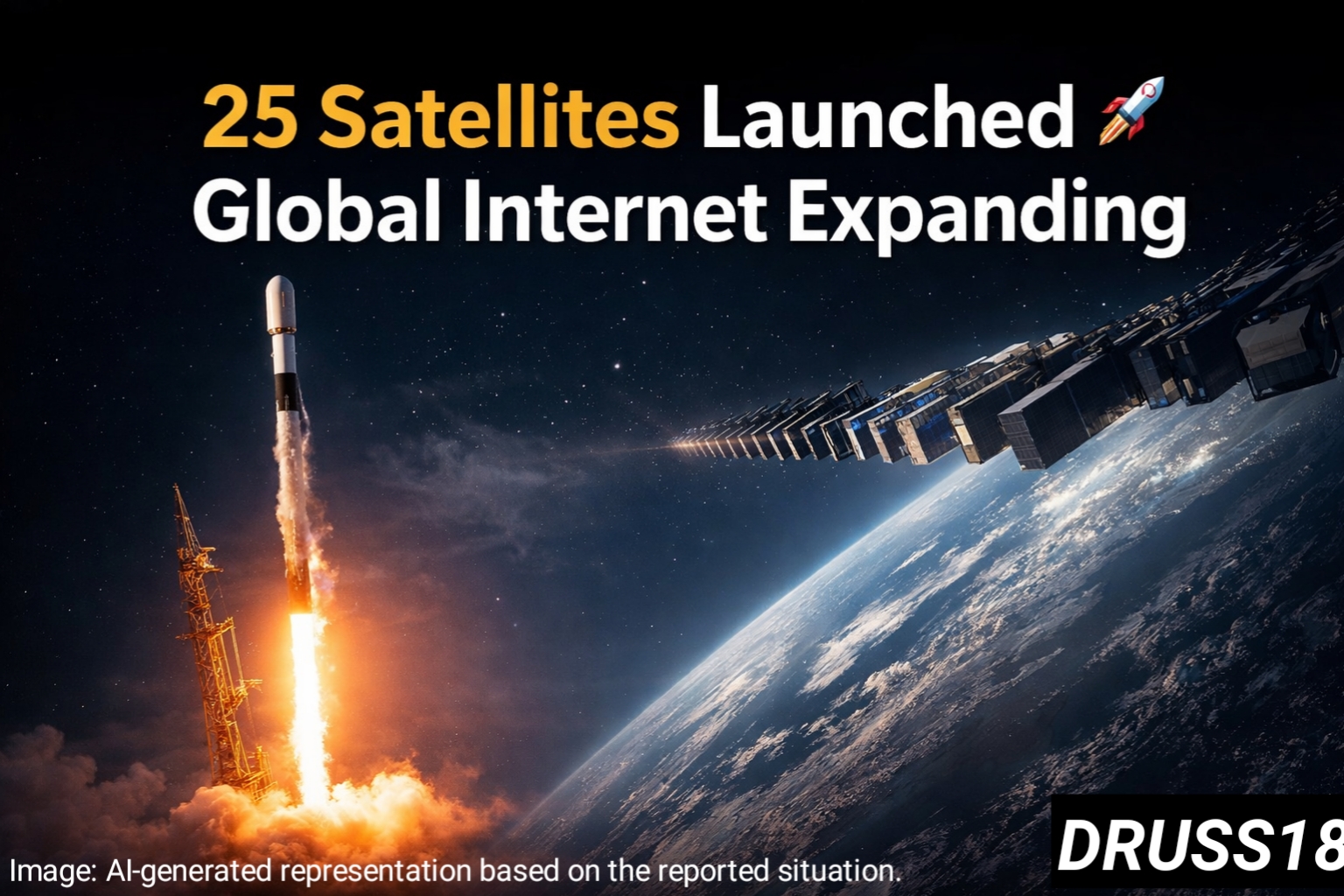
A new SpaceX Starlink launch has added 25 satellites to orbit.
The mission looks routine—but it plays a crucial role in global internet expansion.
What happens next could quietly reshape connectivity worldwide.
A Routine Launch—With Bigger Implications
The latest SpaceX Starlink launch might look like just another rocket liftoff—but there’s more beneath the surface.
A Falcon 9 rocket lifted off from California, successfully deploying 25 Starlink satellites into low Earth orbit. While the launch went smoothly, what stands out is how quietly these missions are becoming part of a much larger global system.
Something unexpected about Starlink isn’t the launch itself—it’s how frequently these missions are happening now. What once felt groundbreaking is rapidly becoming routine, signaling a major shift in how space infrastructure is built.
According to SpaceX, the goal is simple but ambitious: create a global, high-speed internet network accessible even in remote regions.
How the Falcon 9 Delivered the Payload
The Falcon 9 rocket performed as expected. After liftoff, the first stage booster separated and later returned safely—another example of SpaceX’s reusable rocket system in action.
The satellites were deployed in batches into low Earth orbit, where they will gradually spread out and integrate into the existing Starlink constellation.
Data from NASA suggests that low Earth orbit satellite networks like Starlink can significantly reduce internet latency compared to traditional satellite systems. This makes them especially useful for real-time applications such as video calls, gaming, and remote operations.
Why This Launch Matters More Than It Seems
At first glance, adding 25 satellites may not sound significant. But in reality, every launch strengthens a growing network that is already reshaping global connectivity.
As reported by Reuters, Starlink has expanded rapidly over the past few years, with thousands of satellites already in orbit. Each new batch improves coverage, speed, and reliability.
For people in remote or underserved areas, this could mean access to stable internet for the first time. That has direct implications for education, healthcare, and economic opportunities.
This is where the mission becomes more than just a technical success—it becomes a step toward reducing the global digital divide.
The Hidden Scale of the Starlink Network
One surprising fact: the Starlink constellation is already one of the largest satellite networks ever created.
And it’s still growing
Each launch adds capacity, but also raises questions about space traffic, orbital debris, and long-term sustainability. Scientists and space agencies are closely monitoring how these mega-constellations evolve.
Despite these concerns, the pace of launches shows no sign of slowing down.
What Comes Next for SpaceX and Starlink
The future of Starlink goes beyond internet access. It’s increasingly tied to the broader space economy, including AI-driven communication systems, autonomous technologies, and even future space missions.
SpaceX continues to refine its launch cadence, making space access faster and more cost-effective.
Conclusion
What we know: the launch was successful, and 25 more satellites are now part of an expanding global network.
What’s uncertain: how sustainable and scalable such massive constellations will be in the long run.
What’s next: continued launches, wider coverage, and deeper integration into everyday life.
As space infrastructure becomes part of daily reality, missions like this may feel routine—but their impact is anything but ordinary.
- This article is based on publicly available data, official updates, and verified reports from SpaceX, NASA, and other trusted scientific sources.