Strategic Waterway at the Center of Rising Tensions
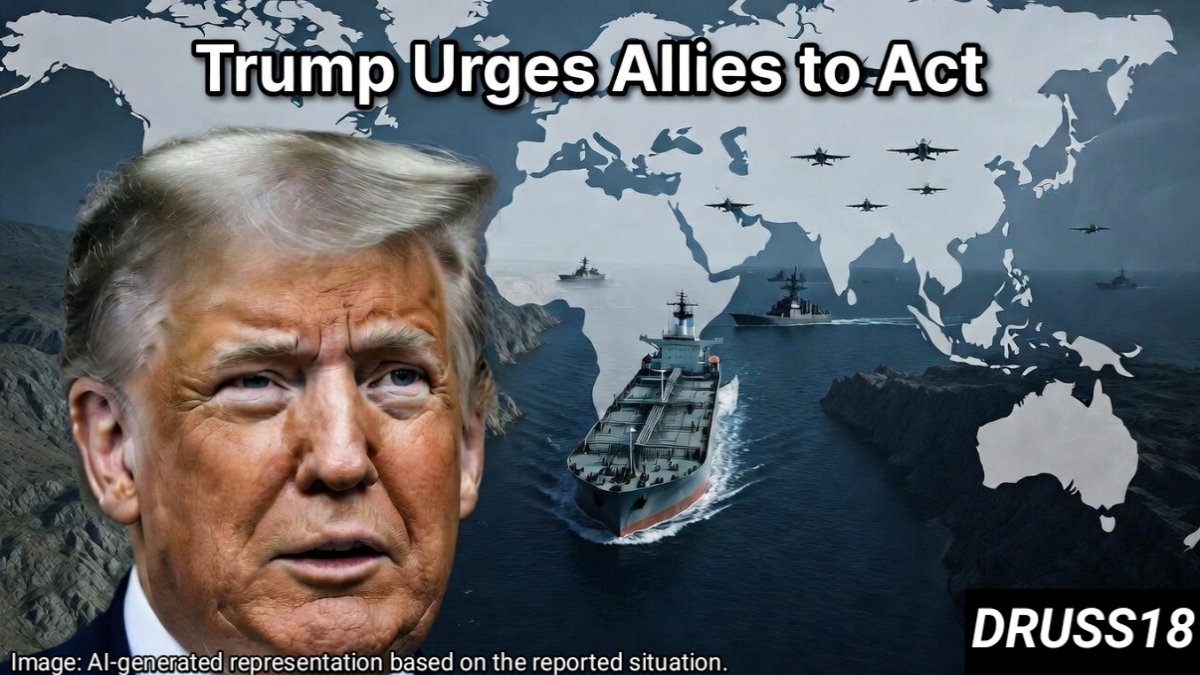
Trump Presses Allies to Guard Strait of Hormuz as Tensions Rise in Key Oil Route The Strait of Hormuz, one of the world’s most critical energy shipping routes, has once again become a focal point of international security concerns. Former U.S. President Donald Trump has urged allied nations to take a stronger role in protecting the narrow passage, but several key partners have responded cautiously, offering limited or no clear commitments to military involvement.
The strait connects the Persian Gulf with the Gulf of Oman and the Arabian Sea, serving as a gateway for a large portion of the world’s oil and liquefied natural gas exports. Roughly a fifth of global oil consumption moves through this corridor every day, making any disruption a potential shock to energy markets and global trade.
Allies Hesitate Over Military Role
Despite the call for collective action, some U.S. allies have signaled hesitation about joining a naval security effort in the region. Countries including Japan and Australia have indicated that they are carefully assessing the situation and have not committed to direct military participation.
Officials in both countries emphasized the importance of protecting international shipping lanes but also highlighted concerns about becoming directly involved in escalating regional tensions. Governments in Asia and Europe are particularly cautious about balancing their security relationships with the United States while maintaining diplomatic and economic ties across the Middle East.
Analysts note that while many allies support the principle of safe navigation, domestic political considerations and strategic calculations often shape how far countries are willing to go in military cooperation.
Why the Strait of Hormuz Matters Globally
The Strait of Hormuz is only about 33 kilometers wide at its narrowest point, yet it handles an enormous flow of energy shipments from major producers such as Saudi Arabia, Iraq, Kuwait, and United Arab Emirates.
Because so much oil travels through the channel, any threat to shipping quickly affects global markets. Even the possibility of disruption can cause oil prices to surge, increasing transportation and manufacturing costs worldwide.
For ordinary consumers, this often translates into higher fuel prices, increased shipping costs, and potential price increases for everyday goods that rely on global supply chains.
Long History of Maritime Tensions
Tensions around the strait are not new. The region has experienced multiple security incidents over the years, including tanker seizures, drone attacks, and naval confrontations linked to disputes between Iran and Western powers.
The waterway became particularly sensitive during periods of confrontation involving Iran’s nuclear program and economic sanctions. At several points, Iranian officials have warned they could block or restrict passage through the strait if tensions escalate, a move that would have immediate global consequences.
Because of these risks, international naval patrols have periodically increased in the region to escort commercial vessels and deter potential attacks.
Balancing Security and Diplomacy
For U.S. allies, the challenge lies in balancing the need to maintain safe shipping routes with the desire to avoid actions that might escalate conflict in the Middle East.
Some governments prefer diplomatic engagement and regional dialogue as a way to reduce tensions rather than expanding military deployments. Others support intelligence sharing, surveillance operations, or logistical assistance instead of sending warships directly into potentially dangerous waters.
Security experts say this cautious approach reflects broader concerns about stability in the Middle East, where multiple geopolitical rivalries intersect and small incidents can quickly escalate into larger crises.
What Could Happen Next
The debate over securing the Strait of Hormuz is likely to continue as governments assess both security risks and political costs. If tensions in the region rise further or shipping incidents increase, allies may face growing pressure to contribute to multinational patrols or maritime protection missions.
For now, the responses from key partners suggest that while there is widespread recognition of the strait’s importance to global energy supplies, many countries remain reluctant to commit to a larger military role without a clear international framework.
As global energy demand continues to depend heavily on Gulf exports, the stability of this narrow waterway will remain a critical issue for governments, businesses, and consumers around the world.