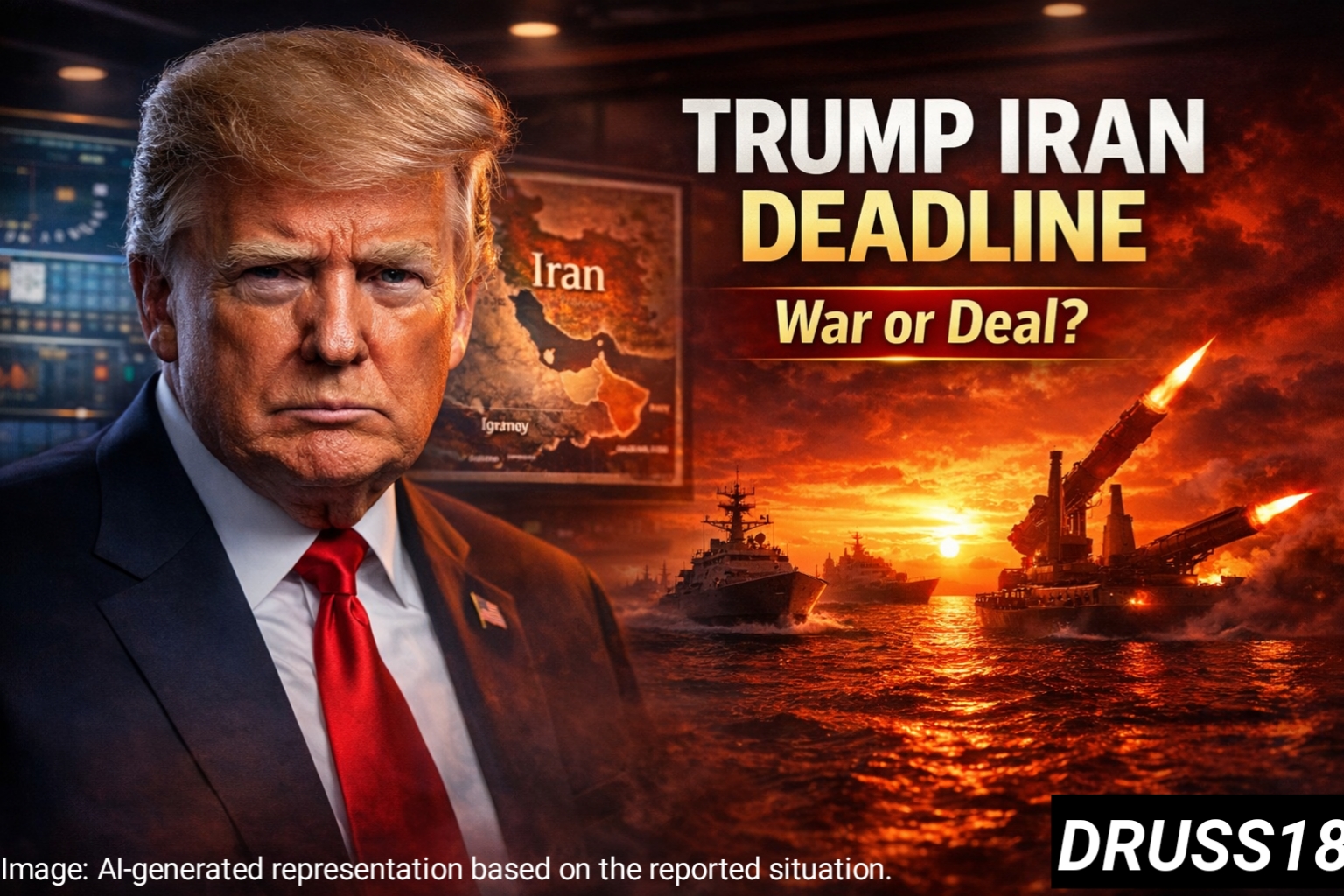
- Trump’s Iran Ultimatum Nears Deadline—Then Sudden Offramp Emerges / As Donald Trump’s ultimatum to Iran approached its final hours, rising fears of military escalation suddenly eased with signs of a possible diplomatic off-ramp.
- The shift highlights how close the region came to confrontation—and how fragile the balance remains.
- Global markets and oil routes remain on edge as uncertainty over the next move continues.
With the clock ticking on Donald Trump’s ultimatum to Iran, tensions surged late Monday as the possibility of direct confrontation loomed over the Middle East and global energy markets. But in a sudden shift, officials signaled a potential diplomatic off-ramp—pulling the crisis back from the brink, at least for now.
The ultimatum, issued in recent days, had demanded clear concessions from Tehran over its regional activities and strategic posture. U.S. officials warned of “serious consequences” if Iran failed to respond before the informal deadline. The rhetoric, unusually direct, raised concerns among allies and triggered heightened military readiness across the region.
Yet as the deadline approached, signals from Washington suggested a recalibration. According to multiple reports, backchannel communications and third-party mediation opened space for de-escalation. A senior U.S. official, speaking on condition of anonymity, said, “There is still a path forward that avoids immediate escalation, but it requires rapid engagement.”
The apparent off-ramp reflects a familiar pattern in U.S.-Iran tensions—sharp escalation followed by last-minute diplomacy. Analysts say the move may be strategic rather than conciliatory. By applying maximum pressure before offering flexibility, Washington may be seeking concessions without committing to military action.
Tehran’s response, however, remains cautious. Iranian officials have neither fully accepted nor rejected the U.S. position. State media has framed the ultimatum as political pressure, while signaling openness to indirect talks. This ambiguity underscores internal divisions within Iran’s leadership and the difficulty of reaching a unified stance under pressure.
The stakes extend far beyond bilateral relations. The Strait of Hormuz, a critical artery for global oil shipments, remains a focal point of concern. Even the perception of conflict risk has already influenced oil prices in recent trading sessions, with volatility increasing as investors weigh the likelihood of escalation.
European and regional powers have also stepped in, urging restraint on both sides. Diplomats from several countries have reportedly intensified efforts to revive dialogue frameworks that had stalled in recent years. However, the absence of a formal agreement or clear timeline continues to fuel uncertainty.
“There is a narrow window to prevent further escalation,” said a Middle East analyst at a London-based think tank. “But both sides are operating under political constraints that make compromise difficult.”
What remains unclear is whether the off-ramp represents a genuine shift toward diplomacy or simply a temporary pause in a longer cycle of confrontation. The lack of transparency around the negotiations, combined with conflicting signals from both capitals, has left observers cautious.
Conclusion
For now, the immediate threat of escalation appears to have eased—but not disappeared.
The situation remains fluid, with both sides testing limits while avoiding direct conflict.
What happens next will depend on whether diplomatic channels can translate this pause into progress—or whether the crisis resurfaces with even greater intensity in the days ahead.