- Category: Science / Space
- Author: Druss18 Team
- Date: April 5, 2026
Summary:
The Artemis II mission is entering a critical preparation phase as NASA astronauts rehearse operations inside the Orion spacecraft. The mission will mark humanity’s first crewed journey around the Moon in over five decades.
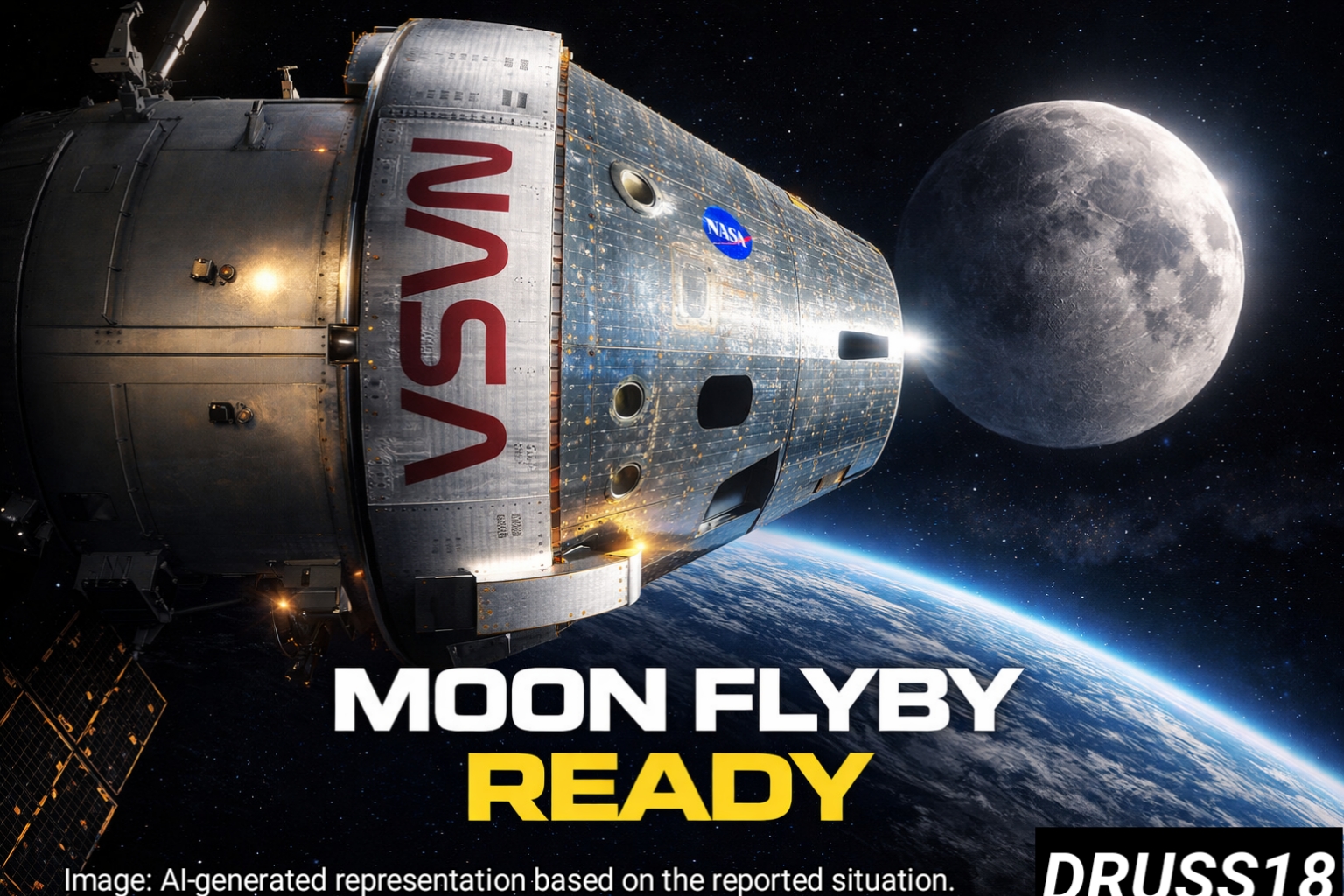
The Artemis II mission is steadily moving toward launch readiness, with NASA confirming that its crew has begun intensive onboard preparations inside the Orion spacecraft. This phase, highlighted in a recent April 2026 update, reflects a shift from theoretical planning to hands-on mission execution—an essential step in returning humans to deep space.
Unlike uncrewed test flights, Artemis II will carry astronauts on a lunar flyby trajectory. It will be the first time since the Apollo 17 mission in 1972 that humans travel beyond low Earth orbit toward the Moon. That alone makes the mission a significant milestone, but its purpose extends far beyond symbolism.
Inside the Artemis II Mission Training Phase
Within the Orion spacecraft, astronauts are conducting detailed simulations that mirror real mission conditions. These include manual piloting demonstrations—critical in scenarios where automated systems may require human override.
According to NASA’s official Artemis program briefings, these simulations are designed to test both crew readiness and spacecraft resilience under deep-space conditions. Tasks also include reviewing lunar observation targets and preparing biological sampling protocols to study how the human body responds to extended exposure beyond Earth’s protective magnetosphere.
The spacecraft itself plays a central role in this mission phase. Built by Lockheed Martin, Orion is engineered to support human life in deep space for extended durations. Its advanced life support systems, radiation protection, and navigation capabilities are being evaluated in conditions that replicate the actual lunar journey.
Why the Artemis II Mission Matters
The Artemis II mission is not designed to land on the Moon. Instead, it serves as a proving ground for technologies and procedures that will enable future landings under the Artemis program.
As confirmed by the European Space Agency, which provides Orion’s service module, the spacecraft’s propulsion and energy systems are performing within expected parameters during testing. This module is essential for maneuvering the spacecraft during its journey around the Moon and back to Earth.
One of the most technically demanding aspects of the mission will be Earth reentry. Traveling at speeds exceeding 39,000 kilometers per hour, Orion must withstand extreme temperatures during atmospheric reentry. Data from this phase will directly influence safety protocols for future missions, including the planned Artemis III mission, which aims to land astronauts on the lunar surface.
A Modern Continuation of Lunar Exploration
While comparisons to the Apollo era are inevitable, the Artemis II mission reflects a different approach to space exploration. The Apollo program was driven by geopolitical competition, whereas Artemis is structured as a long-term, collaborative effort involving multiple international partners.
NASA’s Artemis roadmap outlines plans for sustained lunar exploration, including the development of a lunar Gateway station and potential surface habitats. These initiatives are intended to establish a continuous human presence on the Moon, rather than short-term visits.
At the same time, Artemis II introduces modern challenges. Deep-space radiation exposure, long-duration life support, and system reliability all remain areas of active research. The mission will provide valuable data to address these uncertainties, particularly as space agencies begin planning for missions to Mars.
Looking Ahead
As of April 2026, the Artemis II mission stands at a crucial intersection between preparation and execution. Each simulation inside Orion is not merely a rehearsal—it is a validation of systems that will define the next era of human spaceflight.
The mission’s success will determine how quickly humanity can move from lunar flybys to sustained exploration. More importantly, it will shape the strategies used for deeper missions across the solar system.
In that sense, Artemis II is not just about returning to the Moon. It is about understanding how to go further—and stay longer.
Sources & Credits:
NASA – Artemis II mission updates and program briefings
Lockheed Martin – Orion spacecraft development and technical data
European Space Agency – Orion service module contributions
Apollo 17 mission – NASA historical mission archives