- Category: Science / Space
- Author: Druss18 Team
- Date: April 9, 2026
Summary:
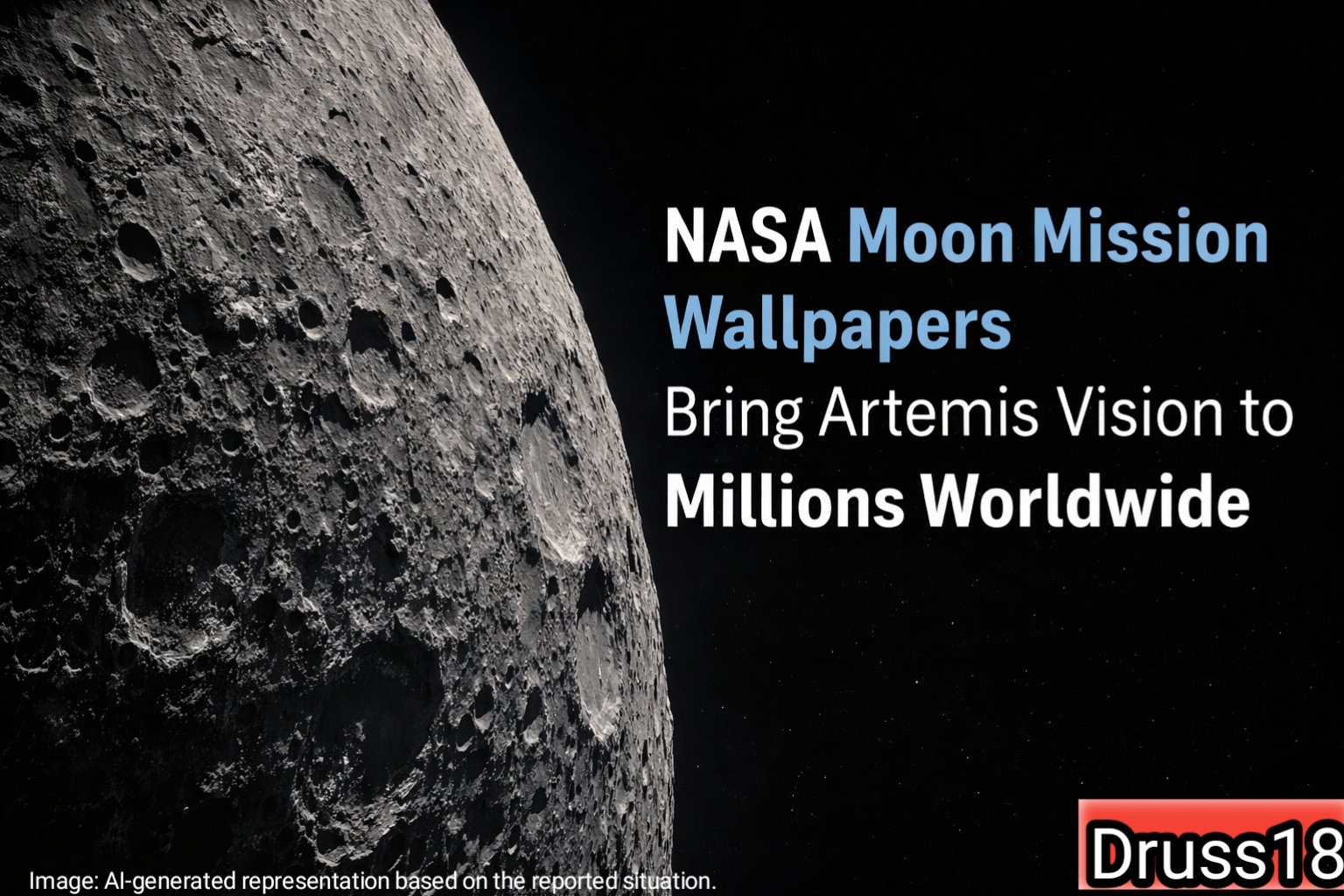
NASA has released a new collection of Moon mission wallpapers inspired by its Artemis program. The initiative blends public outreach with space exploration, offering a glimpse of the Moon’s surface while reinforcing long-term lunar ambitions.
A Digital Window into the NASA Moon Mission
The NASA Moon mission wallpapers are more than just visuals—they are a subtle extension of how NASA communicates its Artemis-era ambitions to a global audience. Shared عبر social platforms, the images capture high-resolution views of the Moon’s cratered surface, inviting millions to experience space exploration through their everyday devices.
At a glance, it may seem like a simple public engagement effort. But behind these images lies a broader strategy: keeping the Moon mission visible, relatable, and relevant as the Artemis program advances toward returning humans to the lunar surface.
According to NASA’s official outreach updates, public engagement campaigns—especially digital ones—play a growing role in maintaining support for long-duration missions. The Artemis program, outlined by NASA as a multi-phase initiative, aims to establish a sustained human presence on the Moon, with future missions eventually paving the way for Mars.
Why NASA Is Turning to Visual Engagement
The release of NASA Moon mission wallpapers reflects a shift in how space agencies connect with the public. Unlike earlier eras dominated by televised launches, today’s engagement happens across mobile screens.
NASA has consistently emphasized accessibility in its communications. As stated in its public engagement strategy, the agency seeks to “inspire the next generation of explorers” by making mission content widely available. High-resolution lunar imagery—captured through missions such as the Lunar Reconnaissance Orbiter—provides an authentic, scientific view of the Moon while remaining visually compelling.
The European Space Agency has adopted similar approaches, distributing planetary imagery and mission visuals to broaden interest in space science. This suggests a wider trend among global space organizations: visibility matters as much as technical progress.
The Science Behind the Images
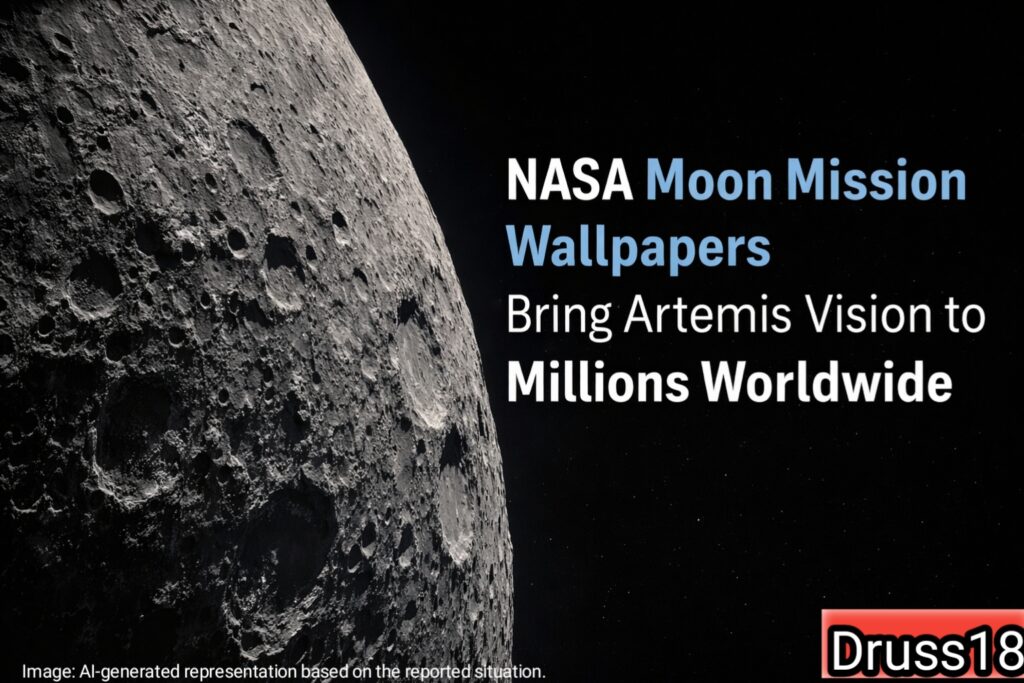
The Moon images featured in these wallpapers are not artistic interpretations. They are based on real data collected by spacecraft orbiting the Moon.
For example, NASA’s Lunar Reconnaissance Orbiter (LRO) has spent years mapping the lunar surface in extraordinary detail. According to NASA’s LRO mission data, the spacecraft captures images with resolutions fine enough to identify landing sites, geological formations, and even changes caused by micrometeorite impacts.
These visuals serve dual purposes. Scientifically, they help researchers understand lunar terrain. Publicly, they translate complex data into something instantly recognizable—an image on a phone screen that quietly tells a larger story about exploration.
Meanwhile, agencies like ISRO have contributed their own lunar imaging through missions such as Chandrayaan, reinforcing the collaborative and global nature of Moon exploration.
Artemis Program: The Bigger Picture
The wallpapers are ultimately tied to the Artemis program—the backbone of NASA’s current Moon strategy. Artemis aims to return astronauts to the Moon for the first time since the Apollo era, with a focus on long-term sustainability.
According to NASA’s Artemis mission framework, upcoming missions will test deep-space systems, including the Space Launch System (SLS) rocket and Orion spacecraft. These technologies are designed not just for short visits, but for repeated missions and infrastructure development on the lunar surface.
The visual storytelling seen in the NASA Moon mission wallpapers helps keep this long timeline visible to the public. Space exploration is slow by design; maintaining interest over years requires consistent engagement.
Why It Matters Now
In an era where attention spans are fragmented, even small digital initiatives can shape public perception. A wallpaper might seem trivial, but it places the Moon—literally—into daily life.
As funding, international partnerships, and technological milestones continue to evolve, public awareness remains a key factor. Agencies rely on sustained interest to justify long-term investments.
The question is not just whether humans will return to the Moon, but how that journey is shared with the world along the way.
Looking Ahead
As Artemis missions progress, expect more integration between science, media, and public engagement. The boundary between raw mission data and everyday digital content is already fading.
If a single image can carry the weight of a decades-long mission, what happens when future updates include real-time lunar activity or human presence?
The Moon may still be distant—but increasingly, it is never out of sight.
Sources & Credits:
NASA – Artemis Program Overview and Public Engagement Updates
NASA Lunar Reconnaissance Orbiter (LRO) Mission Data
European Space Agency (ESA) – Public Outreach and Planetary Imaging Programs
Indian Space Research Organisation (ISRO) – Chandrayaan Mission Data