- Category: Science / Space
- Author: Druss18 Team
- Date: June 6, 2026
Summary:
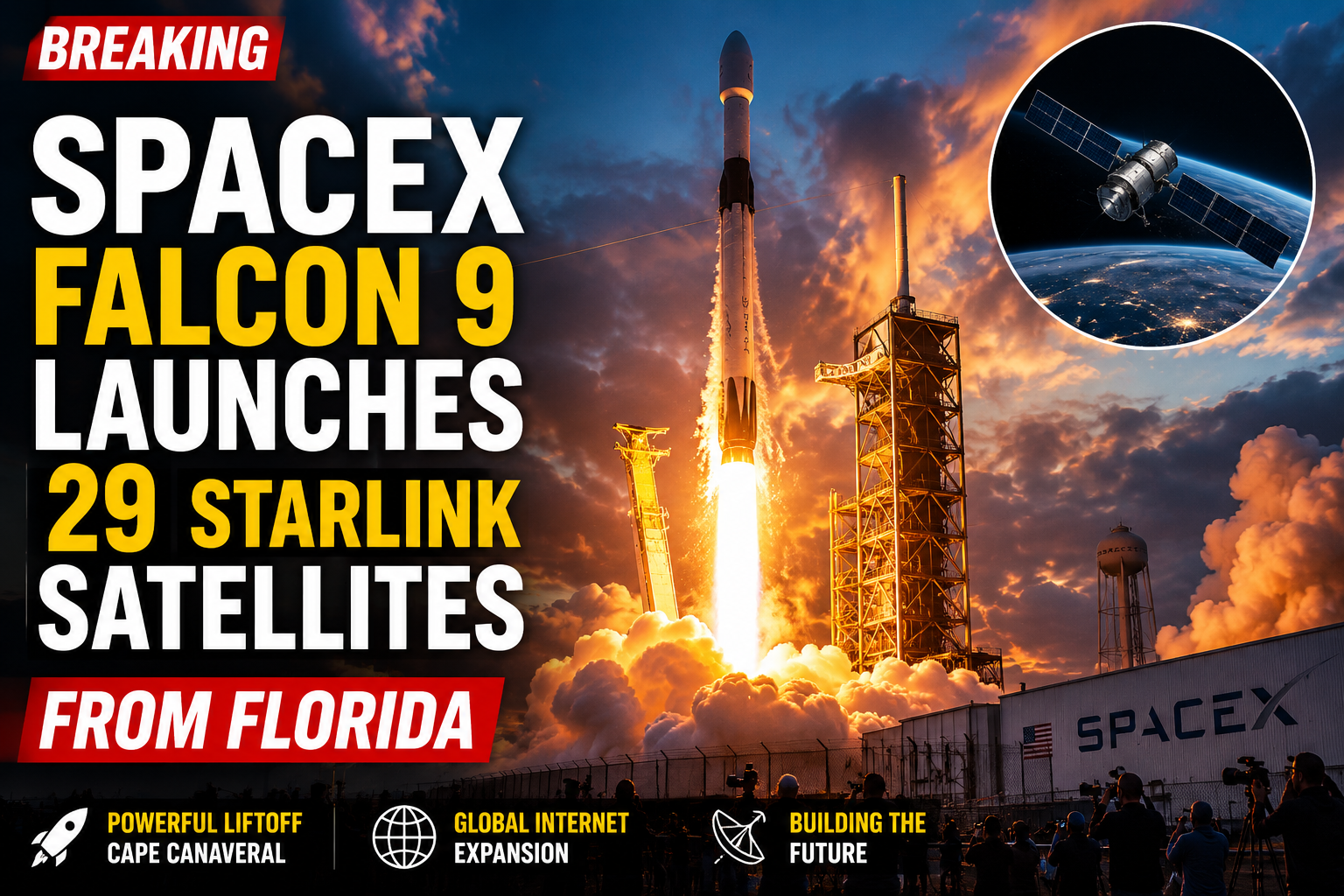
SpaceX Falcon 9 Launches 29 Starlink Satellites has successfully launched another batch of 29 Starlink satellites aboard a Falcon 9 rocket from Florida, continuing one of the most active launch campaigns in modern spaceflight. The mission highlights the company’s growing satellite internet network and the increasing pace of orbital operations.
The latest SpaceX Falcon 9 mission has added 29 new Starlink satellites to low Earth orbit, further expanding the company’s global broadband constellation.
The launch took place from Cape Canaveral Space Force Station in Florida and marked another milestone in SpaceX’s high-frequency launch schedule. As Falcon 9 missions become increasingly routine, each launch continues to play an important role in building one of the largest satellite networks ever deployed.
According to SpaceX mission information, the Falcon 9 rocket successfully delivered the satellites to their planned orbit before the first-stage booster completed another controlled landing on a drone ship positioned in the Atlantic Ocean.
Falcon 9 Continues a Record Launch Cadence
Over the past several years, Falcon 9 has evolved into the world’s most frequently launched orbital rocket.
The latest mission demonstrates how SpaceX has transformed reusable launch technology from an experimental concept into a regular operational system. The company’s reusable first-stage boosters routinely fly multiple missions, significantly reducing launch costs and turnaround times.
Data published by SpaceX shows that Falcon 9 launches now occur at a pace that would have been difficult to imagine a decade ago. Recent launch schedules indicate multiple Starlink missions occurring within days of one another as the company works to expand network capacity.
According to SpaceX’s launch manifest, additional Starlink missions are already scheduled for the coming weeks, reflecting the company’s sustained focus on constellation deployment.
Why the Starlink Network Keeps Growing
The Starlink constellation is designed to provide broadband internet connectivity across large parts of the world, particularly in remote and underserved regions.
Unlike traditional communications satellites positioned far above Earth in geostationary orbit, Starlink satellites operate in low Earth orbit. This approach helps reduce signal latency and improve responsiveness for internet users.
According to SpaceX, Starlink services are now available across dozens of countries and continue to expand through regulatory approvals and additional satellite deployments.
Industry observers note that the network has increasingly been used for emergency communications, disaster response, aviation connectivity, maritime operations, and rural broadband access.
As outlined in SpaceX’s public service information, future generations of Starlink satellites are expected to offer greater capacity and support advanced direct-to-cell capabilities.
The Scale of Modern Satellite Operations
The deployment of 29 additional satellites may sound routine today, but it reflects a major shift in how humanity uses low Earth orbit.
According to data compiled by spaceflight tracking organizations, thousands of Starlink satellites are already operating in orbit. Reports from Space.com indicate that more than 10,000 Starlink satellites have been launched since the program began, making it one of the largest satellite constellations ever created.
The rapid growth has also sparked discussions among astronomers, regulators, and space policy experts.
Researchers continue to study the impact of large satellite constellations on astronomical observations, while international agencies are examining long-term orbital traffic management and collision avoidance strategies.
SpaceX has introduced measures such as brightness-reduction technologies and satellite design modifications aimed at reducing visibility impacts on scientific observations.
What Comes Next for SpaceX?
The latest Falcon 9 mission illustrates how satellite deployment has become a central component of SpaceX’s broader strategy.
While Starlink remains a major focus, the company is also advancing work on Starship, its next-generation launch system intended for larger payloads, lunar missions, and future deep-space exploration efforts.
For now, however, Falcon 9 continues to serve as the workhorse behind Starlink’s expansion. With additional launches already on the schedule, the pace of deployment shows little sign of slowing.
As low Earth orbit becomes increasingly crowded and commercially important, missions like this one offer a glimpse into how global communications infrastructure is gradually moving beyond Earth’s surface and into space.
Sources & Credits:
- SpaceX Launch Manifest
- SpaceX Mission Updates
- Space.com Spaceflight Coverage
- Cape Canaveral Space Force Station Launch Information
- Starlink Official Service Information