- Author: Druss18 Teams
- Category: Global
- Date: April 28, 2026
UAE’s Exit From OPEC Could Reshape Global Oil Power Dynamics
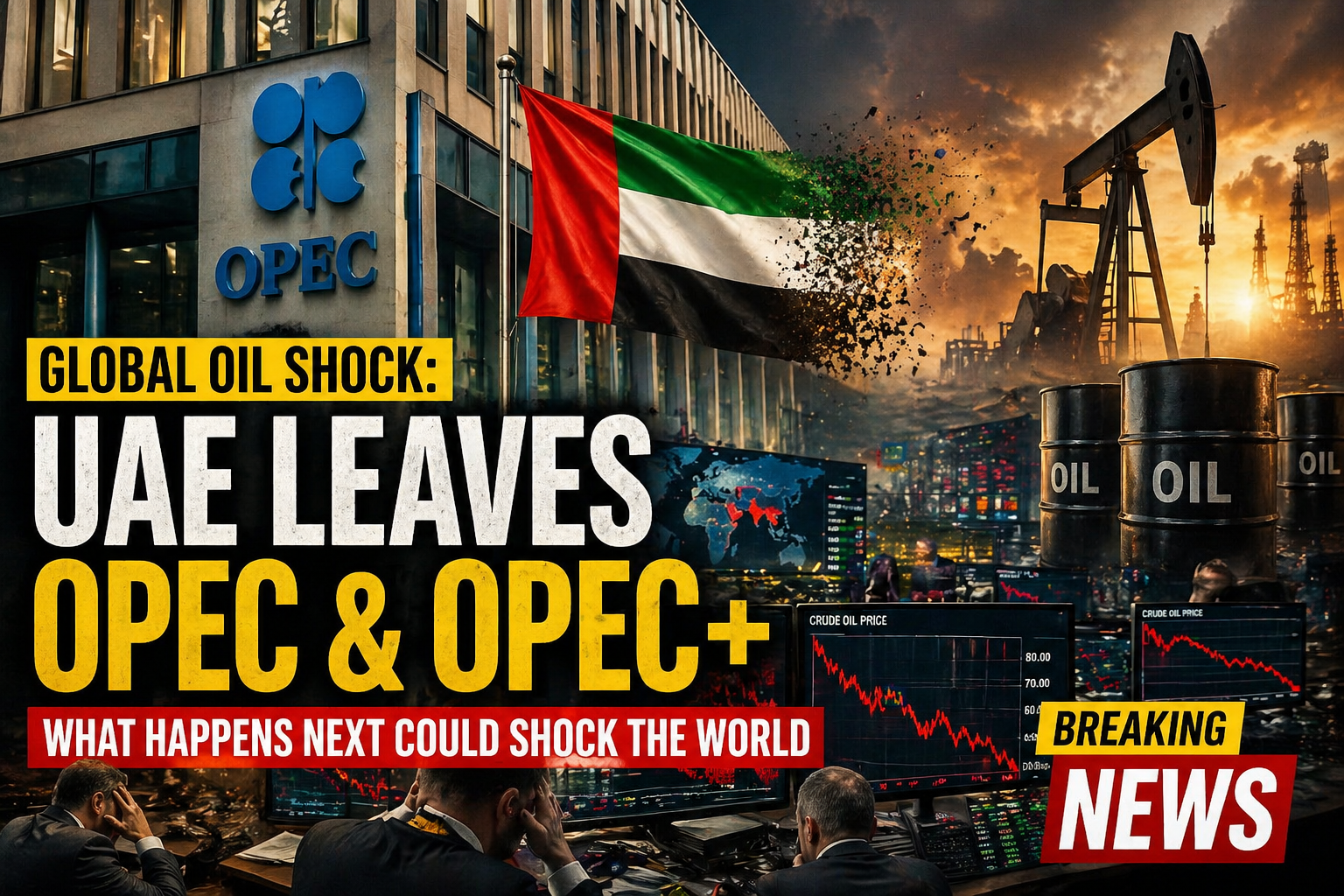
UAE leaves OPEC A decision that few expected has now shaken the global energy system. The United Arab Emirates’ move to leave Organization of the Petroleum Exporting Countries (OPEC) and the wider OPEC+ alliance is not just a policy shift—it could redraw power lines in the oil market at one of the most fragile geopolitical moments in years.
According to multiple international reports, the UAE confirmed Tuesday that it would formally leave both oil alliances effective May 1, ending decades of coordinated production policy with some of the world’s largest exporters. The decision comes as global energy markets remain under pressure from regional instability and supply disruptions through the Strait of Hormuz.
The UAE has long been one of OPEC’s most influential Gulf producers. Its departure strikes at the unity of a group historically designed to manage oil supply and stabilize prices. OPEC, led in practice by Saudi Arabia, has relied on member discipline to influence market direction.
The timing is critical.
Oil markets are already strained by disruptions linked to regional conflict involving Iran, with major shipping routes under pressure. Around one-fifth of the world’s oil trade normally passes through the Strait of Hormuz, making any supply interruption globally significant. Analysts say the UAE’s decision adds another layer of uncertainty to an already tense market.
Official Emirati statements suggest the move is driven by “national interest” and a broader strategic review of production policy. That language matters.
For years, tensions inside OPEC+ have grown over production quotas. The UAE has invested heavily in expanding its oil capacity and has increasingly pushed for greater flexibility. Remaining under OPEC limits may have become economically restrictive for Abu Dhabi.
Energy analysts say leaving OPEC gives the UAE freedom to raise output faster and capture greater market share while prices remain elevated.
But the implications stretch far beyond production.
For Saudi Arabia, this is a strategic setback. Riyadh has long served as the bloc’s stabilizing force, balancing supply cuts and market management. Losing a major Gulf ally weakens that leverage and could encourage other members to rethink their positions.
There is also the broader question of OPEC’s future relevance.
The group has survived internal disagreements before. Qatar exited in 2019, citing different energy priorities. But the UAE is a far larger oil producer, and its departure carries much greater weight.
Global markets will now watch one key question: Will the UAE immediately increase production?
If it does, oil prices could face downward pressure despite regional supply risks. If tensions in the Gulf escalate further, prices could move sharply higher regardless of new supply.
That creates three possible scenarios.
Best case: UAE output stabilizes markets and offsets regional disruptions.
Worst case: OPEC fragmentation accelerates and volatility spikes.
Most likely: Short-term uncertainty followed by strategic realignment across Gulf producers.
For consumers, governments, and investors, the consequences are immediate.
Higher volatility means unpredictable fuel prices, inflation pressure, and fresh geopolitical bargaining between major producers and importing nations like China, India, and the United States.
The UAE’s exit may ultimately be remembered as more than an oil story.
It could mark the beginning of a new phase in global energy politics—one where national strategy increasingly outweighs cartel discipline.
Summary
The UAE has announced its exit from OPEC and OPEC+, ending decades of coordinated oil policy.
The move weakens OPEC unity and raises major questions about future oil supply strategy.
Global markets now face increased volatility, geopolitical uncertainty, and possible price swings.
Source Credits
Reuters reporting on UAE’s exit and official statements
UAE state-linked reporting on implementation timeline
Market reaction and oil pricing developments