- Author: Druss18 Teams
- Category: Global
- Date: May 13, 2026
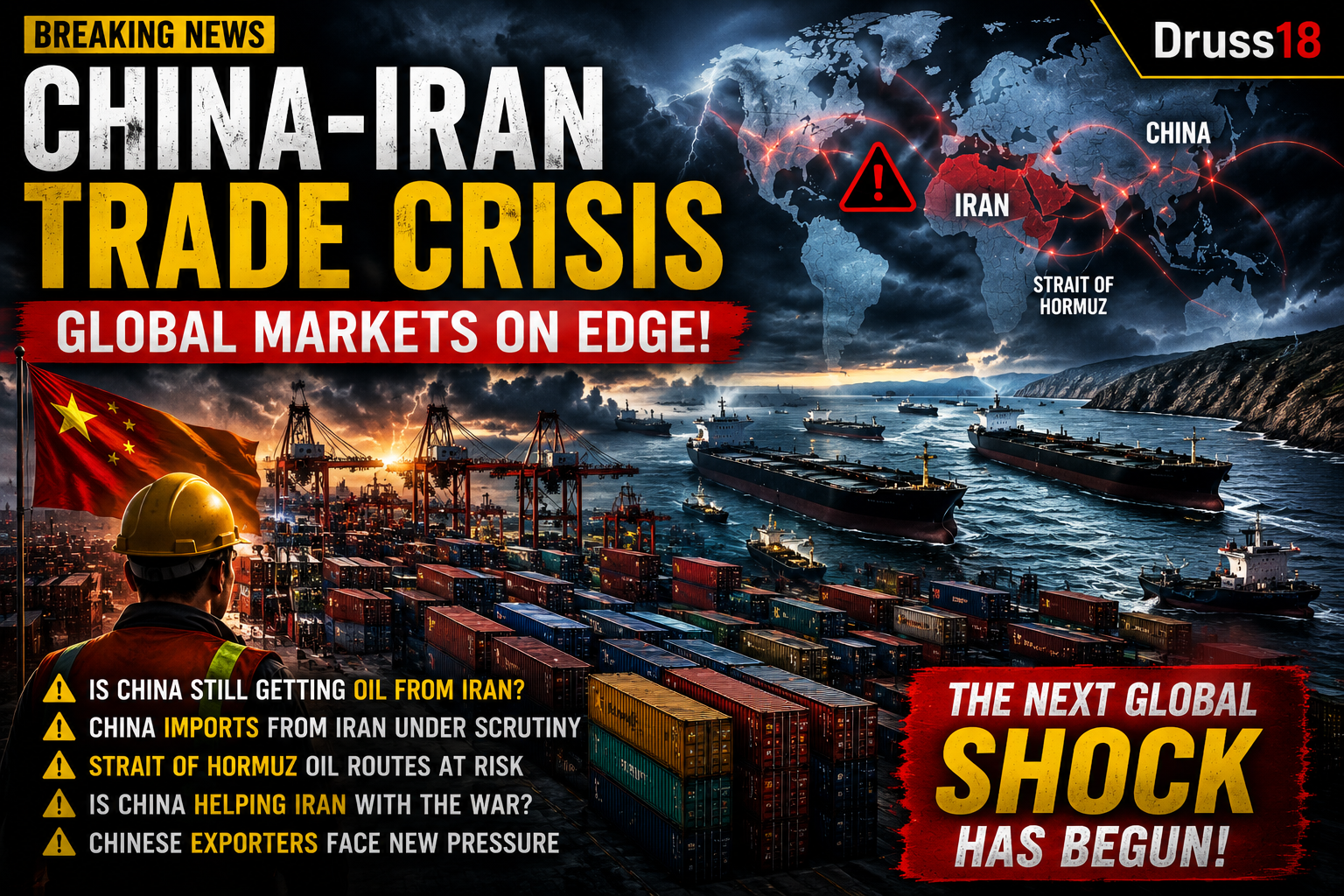
The China Iran trade disruption is rapidly becoming a far bigger concern for global markets than the tariff wars that dominated headlines over the past year. As Middle East trade tensions intensify and key Iran shipping routes face uncertainty, Chinese exporters are confronting a dangerous new reality that could disrupt supply chains, raise oil prices, and weaken international demand.
According to multiple international reports, several Chinese export-focused companies have already started reassessing logistics networks connected to the Gulf region. Businesses fear rising shipping insurance costs, delayed cargo movement, and possible energy shocks that could spread across global markets within weeks.
Chinese Exporters Crisis Deepens Amid Supply Chain Pressure
For much of the past year, Chinese exporters concentrated on adapting to changing U.S. tariff policies. Manufacturers moved portions of their operations overseas, explored alternative markets, and attempted to reduce direct exposure to Washington’s trade restrictions.
However, the growing instability surrounding Iran and critical Middle Eastern shipping lanes has dramatically changed priorities. Many companies now believe the current China supply chain pressure could become more damaging than tariffs themselves.
According to verified public reporting, many Chinese firms expanded trade relationships across the Middle East after weakening U.S. demand affected exports. That strategy now appears increasingly vulnerable as geopolitical tensions continue rising.
Shipping analysts have warned that disruptions affecting Iran shipping routes could sharply increase freight costs. Oil markets have also reacted nervously, with energy traders closely monitoring the Strait of Hormuz oil route and other strategic maritime corridors.
Is China Still Getting Oil From Iran Now?
China’s relationship with Tehran has renewed global attention on one major question dominating online searches: Is China getting oil from Iran now? According to widely reported energy market estimates, China continues purchasing significant volumes of Iranian crude oil through various trade arrangements, although exact numbers remain difficult to independently verify.
China imports from Iran remain strategically important because the country depends heavily on stable energy supplies to support manufacturing and industrial production. Any major disruption linked to sanctions, military escalation, or blocked shipping lanes could rapidly affect transportation costs and factory operations.
The Strait of Hormuz remains especially critical because a substantial share of global oil shipments passes through the region daily. While no large-scale closure has been officially confirmed, analysts continue monitoring risks tied to possible military escalation and regional instability.
At the same time, Chinese manufacturers face weakening external demand in several export markets. Rising logistics expenses could reduce competitiveness further, especially for industries already operating under thin profit margins.
Trump Xi Meeting Raises Economic Expectations
Amid rising uncertainty, global investors are also closely watching preparations surrounding a possible Trump Xi meeting. Businesses that endured years of tariff uncertainty now view geopolitical stability as equally important as trade negotiations themselves.
Although expectations remain cautious, some exporters hope diplomatic engagement between Washington and Beijing could stabilize broader economic relations. However, analysts warn that even improved U.S.-China ties may not fully protect exporters from geopolitical shocks linked to the Middle East.
Global companies are increasingly diversifying supply chains to reduce dependence on politically sensitive trade corridors. Many firms fear another prolonged international supply chain crisis if tensions worsen unexpectedly.
Why Global Markets Fear Another Economic Shock
The wider concern extends beyond China alone. European importers, Asian manufacturers, and international shipping companies are all exposed to disruptions affecting global cargo flows and energy markets.
Energy prices remain one of the biggest risks. A significant oil spike could increase transportation costs worldwide and place additional inflation pressure on already fragile economies.
Another growing online debate involves whether China is helping Iran with the war, although no broad international consensus confirms direct military involvement. Most verified reporting continues focusing primarily on economic ties, diplomatic positioning, and energy cooperation between the two countries.
Financial markets have also shown signs of nervousness whenever Middle East trade tensions intensify. Investors continue searching for signals about whether the situation will stabilize diplomatically or expand into a broader regional crisis.
What Happens Next
The most likely short-term scenario involves continued volatility rather than immediate large-scale trade collapse. Shipping companies may reroute cargo, insurance premiums could rise gradually, and exporters may continue restructuring supply chains.
The worst-case outcome would involve direct disruption to major oil corridors or a severe energy market shock affecting the global economy. Such a scenario could impact not only China but international trade networks worldwide.
The best-case outcome remains diplomatic de-escalation combined with improving dialogue between Washington and Beijing. However, uncertainty continues dominating business planning across export industries.
For now, Chinese exporters appear trapped between two major pressures: geopolitical instability in the Middle East and unresolved long-term economic competition with the United States. Even after adapting to tariffs, many companies now face a far more unpredictable global environment.
Summary
Chinese exporters are increasingly worried about Middle East instability, Iran shipping routes, and possible disruptions to oil supplies. Businesses fear that supply chain breakdowns could create greater economic damage than recent tariff wars.
The situation matters globally because China remains central to international manufacturing and energy demand. Rising oil prices and trade instability could affect economies worldwide.
FAQ Section
Is China still getting oil from Iran now?
According to multiple international energy reports, China continues importing Iranian oil through various trade arrangements despite sanctions pressure.
Why is the Strait of Hormuz important for China?
The Strait of Hormuz oil route is critical because large amounts of China’s imported oil pass through the region.
Is China helping Iran with the war?
Verified public reporting mainly focuses on China’s economic and diplomatic relationship with Iran rather than direct military involvement.
Source Credits
According to multiple international reports on Chinese export markets and Middle East shipping concerns.
Based on verified public reporting regarding global trade routes, oil markets, and energy risks.
Analysis incorporates widely reported developments involving China, Iran, shipping disruptions, and global supply chain pressures.