- Category: Science / Space
- Author: Druss18 Team
- Date: May 21, 2026
Summary:
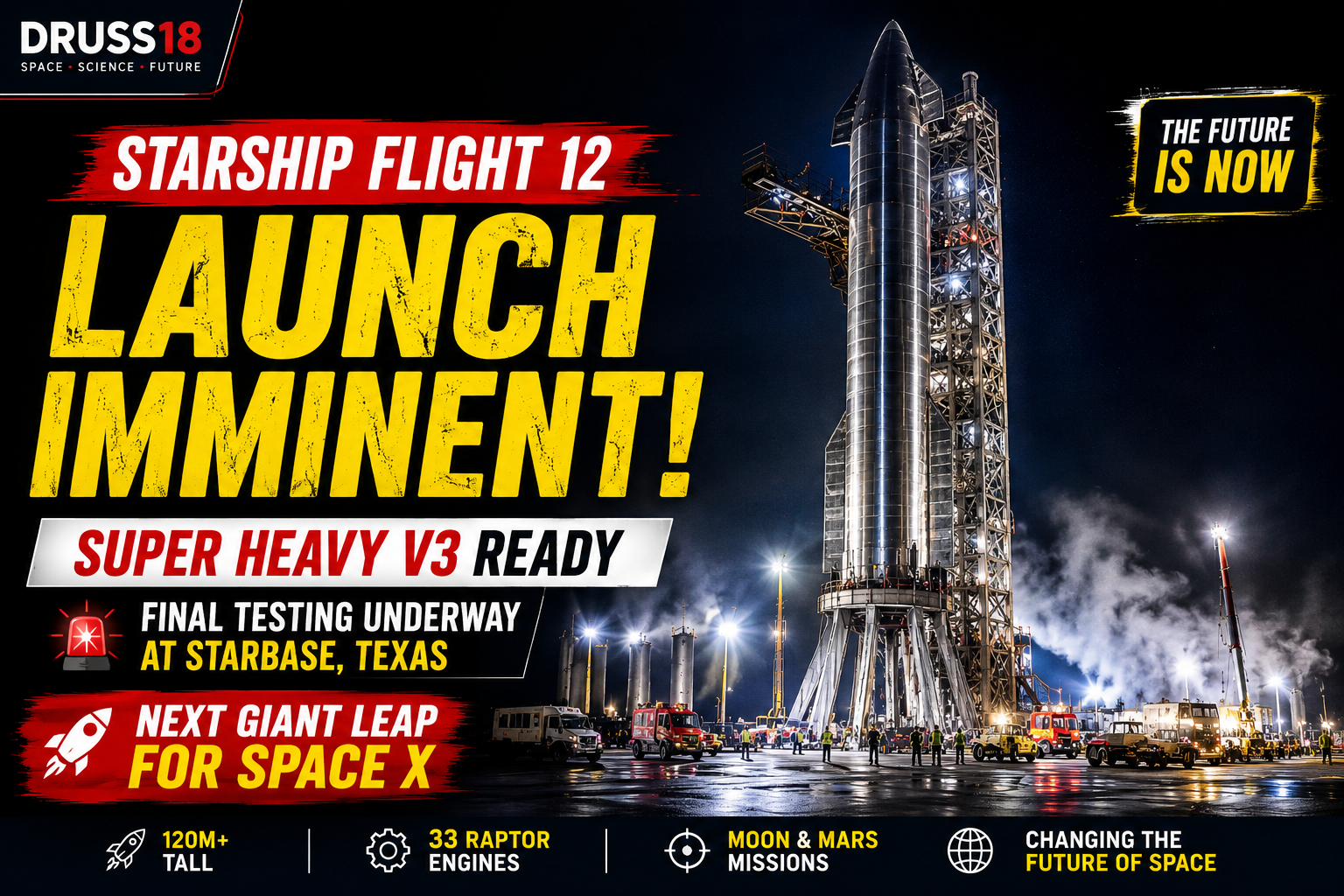
SpaceX Starship Flight 12 SpaceX has moved its Starship spacecraft and Super Heavy V3 booster to the launch pad at Starbase, Texas, ahead of the company’s upcoming Flight 12 mission. The update, shared directly by SpaceX on X, quickly gained widespread attention online as anticipation builds for the next phase of the Starship testing program.
The next major step in SpaceX’s Starship program is approaching rapidly.
In a recent update posted on X, SpaceX confirmed that its Starship Flight 12 vehicle and the upgraded Super Heavy V3 booster have been transported to the launch pad at Starbase, Texas, for final testing and launch preparations. The post generated more than one million views within hours, reflecting growing public interest in the company’s long-term ambitions for deep-space transportation.
The announcement comes as SpaceX continues refining the Starship system following a series of high-profile integrated flight tests over the past two years. According to the company, the current preparations involve final inspections, fueling checks, and readiness procedures before the launch window opens.
Starship Flight 12 Marks Another Key Test Phase
The Starship system is currently the largest and most powerful rocket ever developed. Standing roughly 120 meters tall when fully stacked, the vehicle is designed to carry both crew and cargo to destinations including the Moon and Mars.
The upcoming mission is expected to focus heavily on validating hardware upgrades introduced in the Super Heavy V3 booster. SpaceX has not publicly released every technical detail, but the company has previously indicated that newer booster iterations are aimed at improving engine reliability, structural efficiency, and recovery operations.
According to official SpaceX mission updates, the Starship program remains central to NASA’s Artemis lunar exploration plans. NASA selected a modified version of Starship as the Human Landing System for future Artemis Moon missions, including Artemis III.
That connection means each Starship test flight carries implications far beyond commercial launches. Results from these missions could directly influence future timelines for lunar exploration and long-duration human spaceflight.
Why the Super Heavy V3 Booster Matters
While Starship itself often receives most public attention, the Super Heavy booster plays an equally important role.
Powered by dozens of Raptor engines, the booster is responsible for lifting the fully loaded Starship vehicle off the launch pad before separating during ascent. Earlier flight tests demonstrated both progress and technical challenges, particularly during booster recovery attempts and engine performance under extreme conditions.
The V3 version appears to include refinements based on data collected from previous launches. According to FAA environmental and licensing documents tied to Starbase operations, SpaceX has continued expanding its testing infrastructure to support increasingly rapid launch schedules.
Industry analysts are also closely watching how quickly SpaceX can achieve consistent launch reliability. Frequent testing has become one of the company’s defining engineering strategies, allowing hardware updates to be implemented at unusually fast speeds compared to traditional aerospace programs.
Public Attention Around Starship Continues to Grow
The viral response on X highlights how Starship launches have evolved into major internet events.
Footage of stacked Starship vehicles, engine tests, and launch preparations regularly circulates across social media platforms, often attracting millions of views. The combination of large-scale engineering, visual spectacle, and long-term Mars ambitions has helped turn Starship into one of the most closely followed aerospace projects in the world.
At the same time, the program continues facing technical and regulatory scrutiny. Environmental reviews, launch licensing, and safety evaluations remain ongoing parts of the process. The Federal Aviation Administration has repeatedly emphasized that launch approvals depend on meeting safety and environmental requirements before each mission proceeds.
A Critical Period for SpaceX’s Long-Term Goals
SpaceX founder Elon Musk has repeatedly described Starship as the transportation system intended to support future Mars missions and large-scale human settlement efforts. However, significant technical milestones still remain before those ambitions become operational reality.
Upcoming test flights will likely focus on several major objectives, including orbital performance, heat shield durability, spacecraft reentry, and booster recovery consistency. Success in those areas could help accelerate not only NASA partnerships but also future commercial satellite deployment strategies.
For now, attention remains fixed on Starbase as final preparations continue ahead of Flight 12. Whether the mission proceeds smoothly or encounters new engineering challenges, the outcome will provide another important data point in the ongoing development of next-generation space transportation.
And as launch systems become more reusable and frequent, the broader impact may extend well beyond SpaceX itself — potentially reshaping how governments, private companies, and international agencies approach access to space in the coming decade.
Sources & Credits:
SpaceX Official Website
NASA Artemis Program
Federal Aviation Administration (FAA) Commercial Space Division
Starbase Updates from SpaceX on X