- Category: Science / Space
- Author: Druss18 Team
- Date: April 10, 2026
Summary:
SpaceX has completed encapsulation of the Cygnus XL spacecraft for its upcoming resupply mission to the International Space Station. The mission, operated in partnership with Northrop Grumman, highlights the growing role of commercial providers in sustaining orbital infrastructure.
A Key Milestone for the SpaceX Cygnus XL Mission
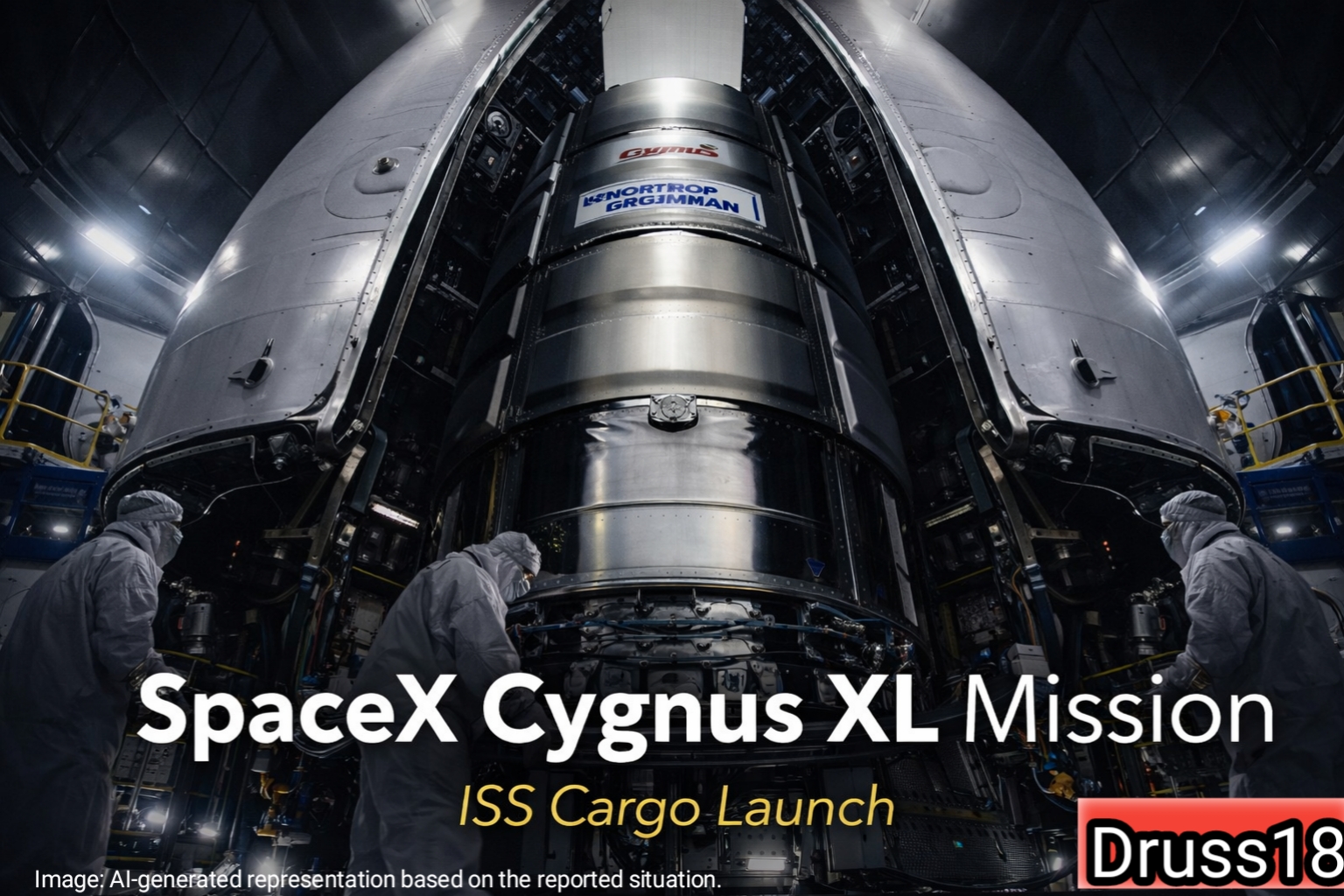
The SpaceX Cygnus XL Mission has reached a crucial pre-launch milestone, with teams successfully encapsulating the cargo spacecraft inside the Falcon 9 payload fairing. The operation, confirmed through official updates from SpaceX, marks one of the final steps before liftoff.
Encapsulation may sound routine, but it is a delicate process. The spacecraft must be sealed within the rocket’s protective nose cone under tightly controlled conditions to ensure it can withstand the intense vibrations and aerodynamic forces of launch. Any contamination or misalignment at this stage could compromise the mission.
This particular flight represents the fourth launch of Cygnus aboard Falcon 9, reflecting an evolving partnership between Northrop Grumman and SpaceX.
What Is the Cygnus XL Spacecraft Carrying?
Cygnus XL is not designed to return to Earth. Instead, it functions as a one-way logistics vehicle, delivering critical supplies to astronauts aboard the International Space Station.
According to mission overviews released by NASA, these cargo missions typically include:
Scientific experiments
Crew provisions such as food and clothing
Hardware for station maintenance
Technology demonstrations for future missions
Once docked, the spacecraft remains attached for several months. After completing its role, it is filled with waste and safely burns up in Earth’s atmosphere during re-entry.
Why Falcon 9 Matters in This Mission
The choice of Falcon 9 for this mission is significant. Historically, Cygnus has launched aboard different rockets, including Northrop Grumman’s Antares system. However, Falcon 9 has increasingly become a reliable alternative.
Data from Federal Aviation Administration highlights Falcon 9’s high launch success rate, which has made it a preferred option for both government and commercial missions. Its reusable first stage also reduces cost, allowing agencies like NASA to allocate resources toward research and exploration.
The shift toward multiple launch providers reflects a broader trend in spaceflight: redundancy and flexibility are now essential. If one launch system faces delays, another can step in—ensuring critical missions stay on schedule.
Commercial Partnerships Reshaping Space Logistics
The SpaceX Cygnus XL Mission is part of NASA’s Commercial Resupply Services (CRS) program. This initiative was designed to outsource routine cargo deliveries to private companies, freeing NASA to focus on deep-space exploration.
According to NASA’s CRS program documentation, partnerships with companies like SpaceX and Northrop Grumman have significantly reduced costs while increasing launch frequency.
This model has quietly transformed space operations. What was once the exclusive domain of government agencies is now a shared effort involving private industry, engineering firms, and international collaborators.
And yet, these missions remain essential. Without regular resupply flights, the ISS—one of humanity’s most ambitious scientific platforms—would not be sustainable.
Looking Ahead: What Comes Next?
As the launch window approaches, attention now shifts to weather conditions, final system checks, and range safety approvals. Even minor technical concerns can delay a mission, underscoring the complexity of orbital launches.
Looking further ahead, missions like this are laying the groundwork for future space infrastructure. The systems, partnerships, and operational experience gained today will inform upcoming projects—from lunar gateways to potential missions to Mars.
The question is no longer whether commercial spaceflight can support human activity in orbit. Instead, it is how far this model can extend.
With each successful mission, the answer becomes a little clearer.
Sources & Credits:
NASA – Commercial Resupply Services program and ISS cargo mission data
SpaceX – Official mission updates and Falcon 9 launch information
Northrop Grumman – Cygnus spacecraft technical overview
Federal Aviation Administration – Launch licensing and safety data