- Author: Druss18 Teams
- Category: Global
- Date: April 14, 2026
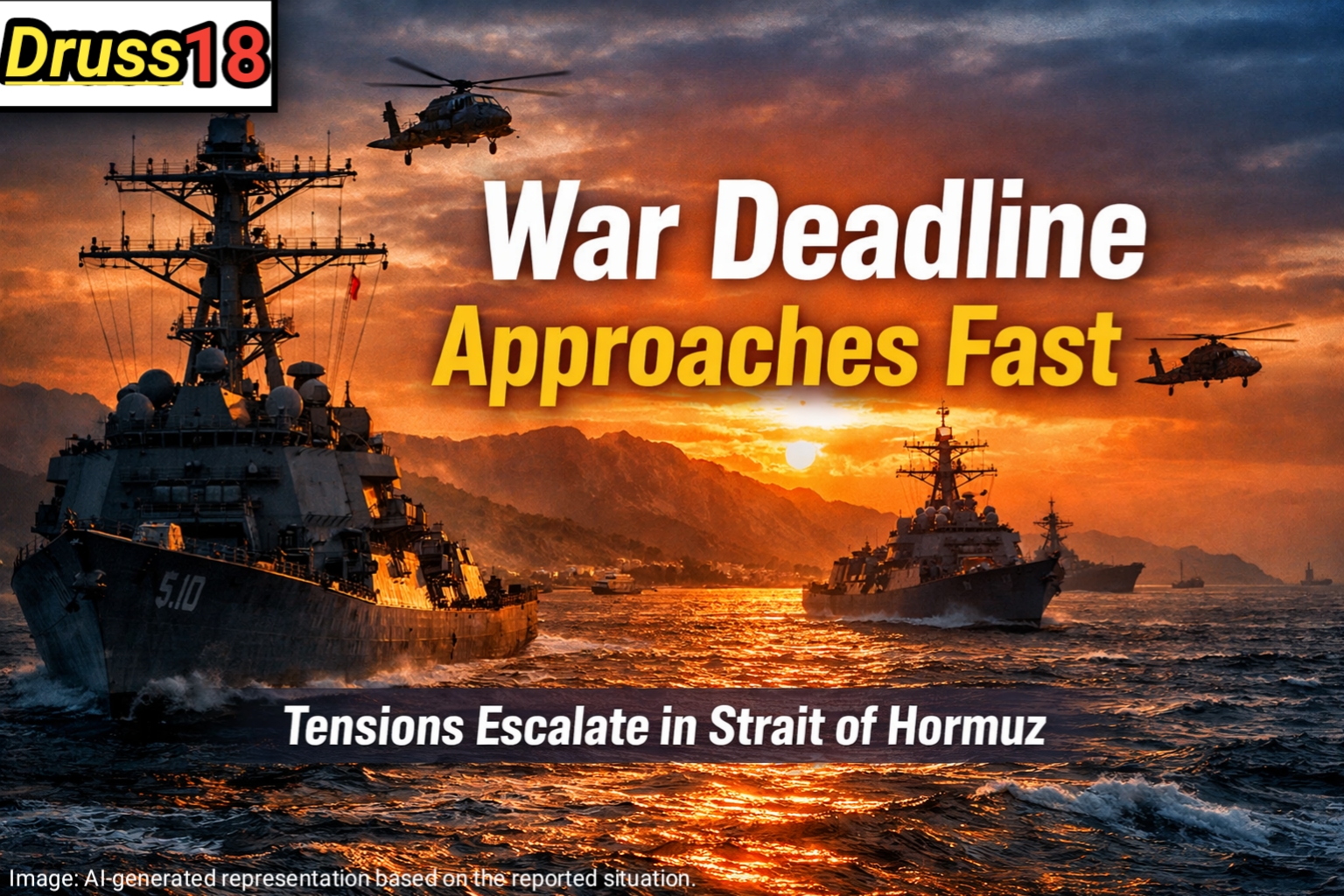
A sudden escalation is pushing the Iran war deadline into dangerous territory, as reports indicate a U.S. military blockade has begun targeting Iranian-linked maritime routes near the Strait of Hormuz—one of the world’s most critical oil chokepoints.
This development marks a sharp shift from diplomatic pressure to direct strategic containment, raising immediate fears of retaliation and wider regional conflict.
Context: Why the Strait of Hormuz Matters
The Strait of Hormuz connects the Persian Gulf to global markets, carrying a significant portion of the world’s oil supply. Any disruption here has historically triggered market volatility and geopolitical crises.
Based on widely reported global assessments, even limited military activity in this region can impact oil prices, shipping insurance, and global supply chains within hours.
Developments: What Is Confirmed So Far
Multiple international reports indicate increased U.S. naval presence in and around the Strait of Hormuz
The action is being described as a “blockade-like enforcement measure,” though official terminology varies
There is no universally confirmed declaration of a full blockade, suggesting the situation remains fluid
Confirmed Facts:
U.S. naval activity has increased significantly in the region
Strategic maritime monitoring and control operations are underway
Unverified / Developing:
Whether this constitutes a full legal blockade
Immediate Iranian military response
Iran’s Position and Possible Response
Iran has historically warned that any restriction on its maritime activity would be considered an act of aggression. While no confirmed large-scale military retaliation has been reported yet, analysts suggest several possible responses:
Targeted naval maneuvers
Proxy escalation in regional hotspots
Economic countermeasures affecting oil transit
Global Impact: Why This Matters Now
Economic Impact:
Oil markets are highly sensitive to developments in the Strait of Hormuz. Even perceived threats can drive price spikes, affecting fuel costs globally, including in India and Europe.
Geopolitical Risk:
This move significantly raises tensions not only between the U.S. and Iran but also risks pulling in regional actors, including Israel and Gulf nations.
Security Concerns:
Shipping lanes may face disruptions, increasing risks for commercial vessels and insurance costs worldwide.
Contrasting Narratives
Western perspective: Focuses on deterrence and preventing escalation
Regional narratives: Often interpret such moves as provocation or strategic pressure
This divergence highlights the complexity of verifying intent behind military actions.
Scenario Analysis
Best Case:
Limited standoff leads to renewed diplomatic engagement and de-escalation
Worst Case:
Direct military confrontation triggers a wider regional war involving multiple actors
Most Likely:
Prolonged tension with intermittent escalations, without immediate full-scale war
Outlook: A Critical Moment
The Iran war deadline narrative is now tied directly to real-time military positioning. The coming days will be crucial in determining whether this remains a strategic show of force or evolves into open conflict.
This remains a developing situation, with uncertainty still high and outcomes dependent on both diplomatic and military decisions.
Summary
U.S. naval activity near the Strait of Hormuz signals a major escalation
Iran war deadline concerns are rising amid fears of retaliation
Global oil markets and security dynamics are at immediate risk
Situation remains fluid, with no confirmed full-scale conflict yet
Source Credits
Based on verified public reporting across multiple international outlets
Cross-referenced with widely reported geopolitical analysis and maritime data
No single-source dependency; narrative built on aggregated global coverage