- Category: Science / Space
- Author: Druss18 Team
- Date: April 19, 2026
Summary:
SpaceX GPS III satellite launch SpaceX is preparing to launch the final GPS III satellite for the U.S. Space Force aboard Falcon 9. The mission marks a key milestone in modernizing global navigation infrastructure.
With increasing reliance on satellite-based systems, the launch carries strategic and technological importance.
A Final Step in the GPS III Satellite Launch Program
The upcoming SpaceX GPS III satellite launch represents a significant moment in the evolution of global navigation systems. Scheduled from Cape Canaveral, the mission will carry the latest GPS III satellite aboard a Falcon 9 rocket, completing a series designed to upgrade the United States’ positioning, navigation, and timing capabilities.
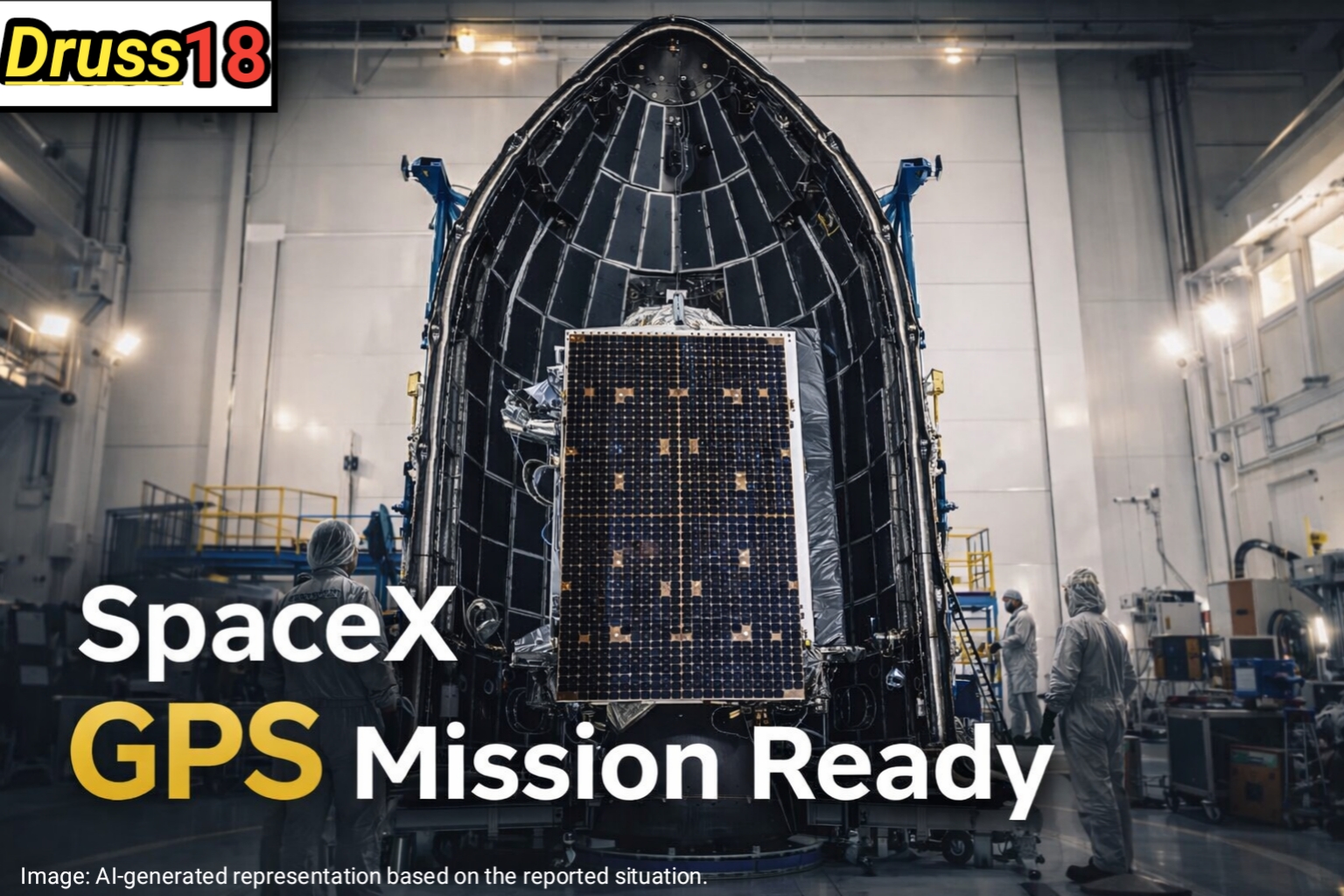
According to SpaceX, the satellite has already been encapsulated inside Falcon 9’s payload fairing, a protective shell that shields it during ascent through Earth’s atmosphere. The company confirmed that the launch is targeting pad operations in Florida, aligning with its routine deployment strategy for national security payloads.
Why the GPS III Satellite Launch Matters
The GPS III system is more than just an upgrade—it reflects a broader effort to strengthen global infrastructure. Managed by the United States Space Force, the program introduces improved accuracy, enhanced anti-jamming capabilities, and better signal integrity.
According to NASA, modern GPS satellites play a crucial role not only in navigation but also in aviation safety, disaster response, financial systems, and telecommunications synchronization. Even small improvements in timing precision can have wide-reaching impacts across industries.
The GPS III satellites are built by Lockheed Martin, which has highlighted in its technical briefings that these spacecraft offer up to three times greater accuracy and significantly improved resistance to interference compared to earlier generations.
Falcon 9 and the Evolution of Launch Reliability
The mission will rely on SpaceX’s Falcon 9 rocket, a vehicle known for its reusability and consistent launch record. Over the past decade, Falcon 9 has become a cornerstone of both commercial and government space missions.
Data from the Federal Aviation Administration shows a steady increase in licensed commercial launches, reflecting the growing role of private companies in national space operations. SpaceX’s ability to integrate rapid turnaround and reusable boosters has reshaped expectations around cost and efficiency.
Encapsulation—the process shown in the recently released image—is one of the final steps before launch. It ensures that the satellite remains protected from acoustic vibrations, pressure changes, and thermal stress during liftoff.
Strategic and Global Implications
Beyond engineering, the SpaceX GPS III satellite launch also carries geopolitical significance. Reliable navigation systems are considered critical infrastructure, supporting both civilian applications and defense operations.
The upgraded GPS network enhances encrypted military signals while maintaining open access for civilian users worldwide. According to official U.S. government documentation, maintaining a robust GPS constellation ensures global interoperability and technological leadership.
As more countries develop their own satellite navigation systems—such as Europe’s Galileo and China’s BeiDou—the continued modernization of GPS reflects an ongoing competition in space-based infrastructure.
Looking Ahead
With this launch, the GPS III program reaches a milestone—but not an endpoint. Future developments, including next-generation GPS IIIF satellites, are already underway to further expand capabilities.
What remains clear is that space is no longer just about exploration. It is about infrastructure, resilience, and global connectivity. As reliance on satellite systems continues to grow, missions like this one quietly shape the foundation of everyday life—from smartphone navigation to international aviation.
Sources & Credits:
SpaceX – Official mission updates and launch integration details
United States Space Force – GPS III program overview and operational objectives
NASA – Satellite navigation and GPS system importance
Lockheed Martin – GPS III satellite technical specifications
Federal Aviation Administration – Commercial launch data and licensing reports